
 English
 Dutch
Dutch Japanese
 Hindi
Hindi Italian
 Spanish
 French
 German
 Chinese
 Korean
 Arabic
 Hebrew
 Russian
 Portuguese
 Danish
 Czech
Czech Polish
 Swedish
Have Questions?
+977 9767224414
Unmissable holidays deals - Save up to 20%
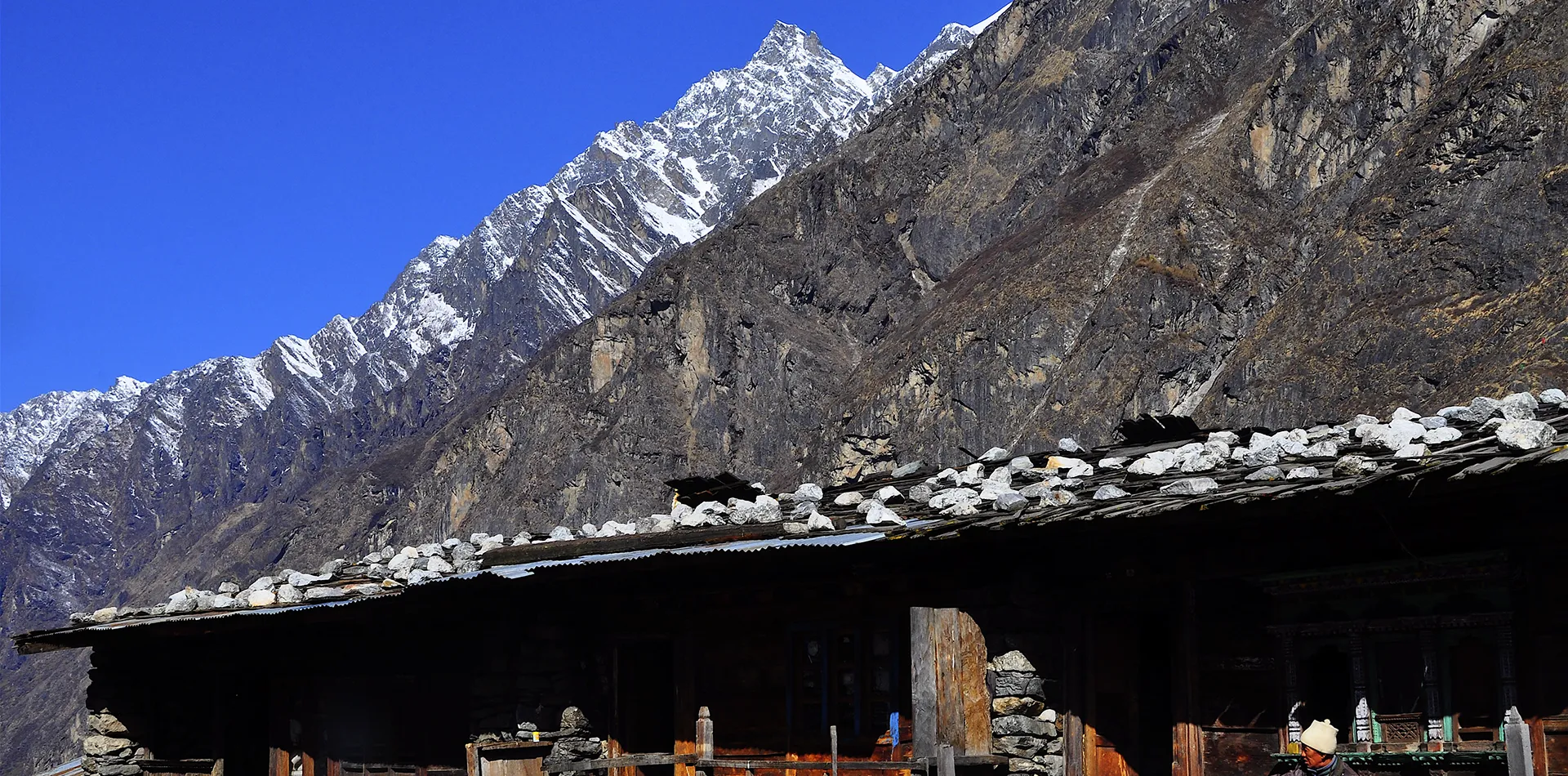
Langtang Valley Trek

Duration
8 Days

Trip Difficulty
Moderate

Max. Altitude
4,773m

Destination
Nepal

Group Size
1-16 People

Accommodation
Hotel, Teahouse

Transportation
Tourist Bus

Meals
B L D
Explore more facts about the trip
Overview of Langtang Valley Trek
Langtang valley trek is one of the most beautiful and cultural trekking in Nepal. This trek is mild and also suitable for those who would like to get a brief yet satisfying Himalayan trip at its very heart, the central Himalaya region, which is just a bit far from Kathmandu. The trail passes by the dense alpine forests, Tamang village heritage, alpine grasslands and eventually to the high Himalayan landscape with the close ups of the tall snowcapped mountains.
Langtang Valley is a component of the Langtang National Park which has a wide assortment of flora and fauna including red pandas, Himalayan black bear, musk deer, and a varied assortment of birds. The region is not massively crowded and it is a perfect place to explore by a trekker who loves quiet time, nature and real touch with those locals.
This trek normally begins with a picturesque driving to Syabrubesi. After that, the trekkers take a journey along the Langtang River with a dense jungle and slowly climb to the high alpine territories. The key points of this trek or walk are Lama Hotel, Langtang Village, Kyanjin Gompa and any other hikes that one can take to Kyanjin Ri or Tsergo Ri with its panoramic scenery of the Langtang range, Langtang Lirung, Dorje Lakpa and other peaks. The spot is well admired for its spectascular views.
The Langtang Valley Trek is relatively moderate trekking journey and can be suitable for beginners too. The number of hours that one spends on a daily basis walking is between 5 and 7 hours, allowing an individual time to adjust and have a look of the beauty around him/her. The highest altitude the trekkers can achieve is the Kyanjin Ri which is located at 4773 meters, and it offers one of the spectacular views in the area.
The opportunity to witness Tamang and Tibetan-style cultures through histories is one of the most attractive features of the Langtang trek. The people are very warm and you will find yourself learning a lot about their culture, their festivals, their dressings, and Buddhist culture.
Accommodation Teahouses, the basic yet comfortable guesthouses that are managed by local people, are available along the trail. They have simple lodgings such as clean beds, hot meals, and in some camps even hot showers with Wi-Fi at extra charge. Food is primarily Nepali (dal bhat / lentils and rice, noodles, soups and Tibetan bread) with some establishment possibly catering to: pancakes, pasta and momos (dumplings).
Langtang Trek generally takes between 7 to 8 days and begins and ends in Kathmandu. It is perfect to the one who wishes to see the beauty of Himalayas without bothering to take a long trip or torture oneself to cover the hills. Technical climbing experience is not needed in this trek but as always, it is preferable to build some physical strength by walking, hiking or cardio related exercises prior to the journey.
The major means of transport out of Kathmandu to Syabrubesi are bus or jeep. Local buses are cheaper and traveling is slow and jeeps are comfortable and faster. The trek route to Syabrubesi is a beautiful journey in itself, with fantastic views of the hills, through river valleys, and small villages on the way, which leaves one with a taste of Nepal countryside before even starting the trek.
Langtang Valley Trek can be regarded as a trail to having one of the best treks in Nepal in a very short period of time as one is allowed to experience all the natural beauty, mountainous view, and Nepalese culture. The trek is also cheaper than longer or more distant treks such as Everest Base Camp or even Annapurna Circuit treks. It is a decent option with an individual traveler, small groups, or even children in families who get used to walking.
Additional add-ons are also available in this trek such as an extra acclimatization day in Kyanjin Gompa, a visit to the local cheese factory and day hikes to high ridges to have a better view. Tsergo Ri and Kyanjin Ri form some of the most visited viewing platforms where one gets a 360-degree panorama view of the mountains and is usually credited as the best point of the trek.
With an extra day, Langtang trek may be extended to visit the Lakes of Gosaikunda or, even go further of the Tamang Heritage trail. All those extensions result in extra days, and also enable one to explore deeper the beauty of the region and its culture.
When it comes to the safety aspect of it, Langtang is a safe trekking trail and has well established tracks and history of tourism. Nevertheless, it is a high-altitude hike, and everyone should observe caution to avoid altitude sickness, just as they should do with any other hike of such nature. A successful and fun trek is one which involves staying hydrated, walking slowly and letting your body acclimatize. It is strongly advised to take travel insurance with high altitude evacuation.
The Langtang Valley Trek is a wonderful tasting of Himalayan Trekking in a conclusion. It is not long, yet all packed with experiences that a person remembers a lifetime; natural beauty, views of mountains, wildlife, the hospitality of the locals, and the cultural richness. Regardless of whether you are a first-time trekker or having been to the Himalayas previously, Langtang provides good value adventure in a comparatively short duration and cost.
The trek will meet all the needs of every type of traveler: magnificent scenery of the mountains to nature enthusiasts, a great culture to those who want to know something of the tradition and people, and a relaxing setting to all those who want to shed off the bustle of civilized life. It reminds people that even the short treks can provide profound experiences that are engaging and consequential-and Langtang is just that.
- Safety first, always
- Best prices guaranteed
- Expert travel team
- Easy booking, no extras
- Customize your journey
Based on 10 reviews

Trip Highlights
- Scenic drive from Kathmandu to Syabrubesi through terraced hills and mountain views
- Trek through lush forests of rhododendron, oak, and bamboo
- Stunning views of Langtang Lirung, Dorje Lakpa, and other snow-capped peaks
- Visit the traditional Tamang and Tibetan-influenced villages
- Explore Kyanjin Gompa, a peaceful Buddhist monastery in the heart of the valley
- Hike up to Kyanjin Ri (4,773m) for panoramic Himalayan views
- Chance to spot wildlife like red pandas, Himalayan tahr, and monkeys
- Walk alongside the Langtang River and through glacial valleys
- Experience warm local hospitality in teahouses along the route
- Ideal for trekkers seeking a moderate trek with high rewards in a short time
Photo and Video Gallery


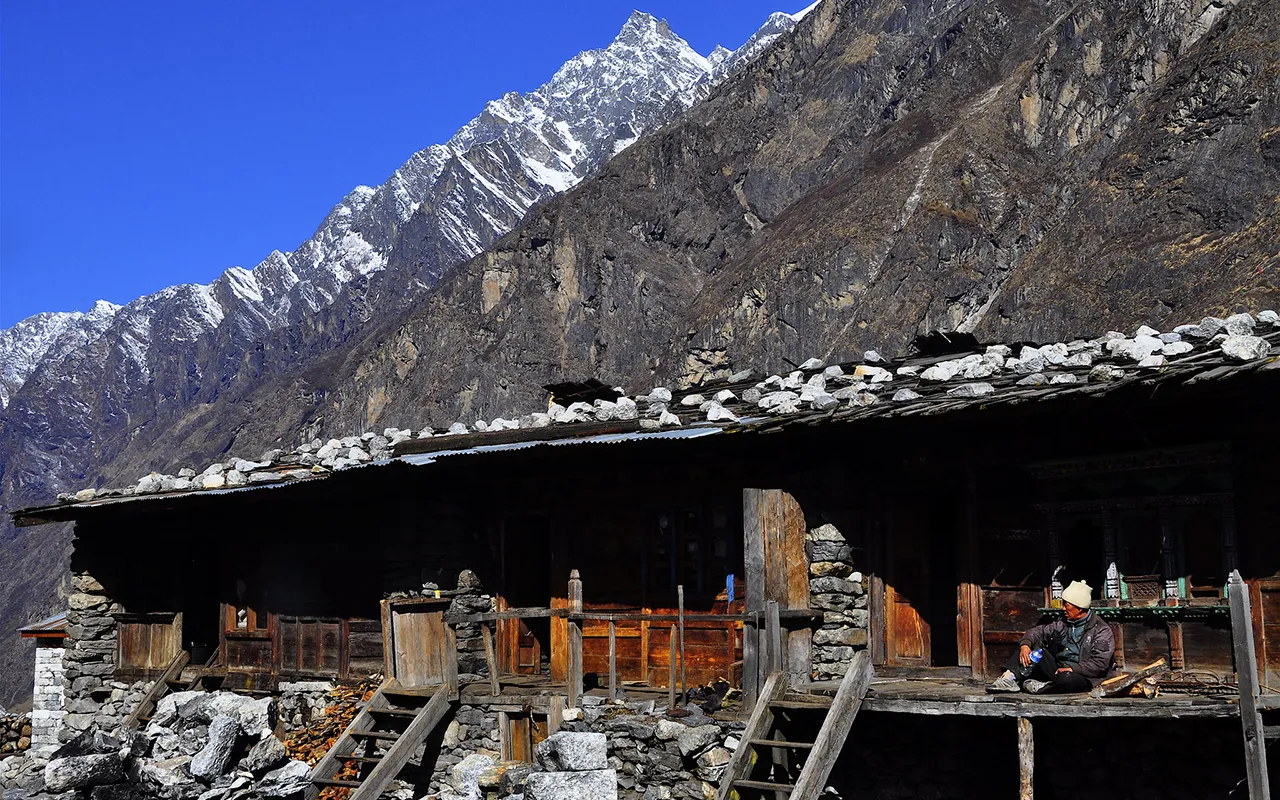


Langtang Valley Trek Detail Itinerary

Day 01: Drive from Kathmandu to Syabrubesi
Your adventure begins early with a scenic drive from Kathmandu to Syabrubesi, the gateway to the Langtang Valley. The journey covers approximately 120 kilometers, winding through rugged mountain roads alongside the Trishuli and Bhote Koshi Rivers.
Along the way, you’ll pass through terraced farmland, small villages, and forested hills. On clear days, distant snow-capped peaks of Ganesh Himal and Langtang Lirung punctuate the skyline. The road may be bumpy but offers a stunning introduction to Nepal’s natural beauty. Upon arrival in Syabrubesi, you check into a cozy teahouse lodge, where you’ll rest and prepare for the trek ahead. Dinner is served locally, and you’ll have time to soak in the peaceful Himalayan atmosphere.

Activity: 7-9 hrs drive

Max. Altitude: 1,550m/5,085ft. (Syabrubesi)

Meal: Breakfast, Lunch & Dinner

Accommodation: Teahouse
Day 02: Trek from Syabrubesi to Lama Hotel
Leaving Syabrubesi after breakfast, the trail descends briefly to cross the Bhote Koshi River before steadily climbing through dense forests of oak, rhododendron, and pine. Along the way, you cross several suspension bridges and pass small settlements such as Rimche and Bamboo.
The forest is alive with bird songs, and if lucky, you might spot Himalayan wildlife like langurs or red pandas. You’ll arrive at Lama Hotel by afternoon, a cluster of traditional teahouses offering warm hospitality and spectacular mountain views. It’s a perfect spot to relax and acclimatize.
Activity: 6-7 hrs trek
Max. Altitude: 2,470m/8,104ft. (Lama Hotel)
Meal: Breakfast, Lunch & Dinner
Accommodation: Teahouse
Day 03: Trek from Lama Hotel to Langtang Village
Today’s trail climbs steadily through mixed forest, eventually opening to alpine meadows and yak pastures. Along the way, you’ll cross the Ghoda Tabela area, a popular grazing spot for livestock. As you gain altitude, majestic peaks such as Langtang Lirung, Dorje Lakpa, and Naya Kanga come into clearer view.
You reach Langtang Village, a serene Tamang settlement rebuilt after the devastating 2015 earthquake. Here, traditional stone houses and prayer flags create an authentic Himalayan cultural experience. A visit to the local monastery and interaction with villagers offers insight into their Tibetan Buddhist heritage.
Activity: 6-7 hrs trek
Max. Altitude: 3,430m/11,253ft. (Langtang Village)
Meal: Breakfast, Lunch & Dinner
Accommodation: Teahouse
Day 04: Trek from Langtang Village to Kyanjin Gompa
The trek today is shorter but rich in stunning scenery. You traverse yak pastures, mani walls, and prayer flags fluttering in the wind. Upon reaching Kyanjin Gompa, a remote village surrounded by towering peaks, you’ll explore its small but historic Buddhist monastery and visit a local yak cheese factory, where families produce traditional dairy products.
The crisp alpine air and panoramic views of Langtang Lirung, Kimshung, and other snow-capped giants create a breathtaking backdrop. You can spend the afternoon resting or taking short hikes around the area.
Activity: 3-4 hrs trek
Max. Altitude: 3,870m/12,697ft. (Kyanjin Gompa)
Meal: Breakfast, Lunch & Dinner
Accommodation: Teahouse
Day 05: Acclimatization Day at Kyanjin Gompa – Hike to Kyanjin Ri (4,773m) or Tsergo Ri
This day is a day of acclimatization and exploration. You can hike to Kyanjin Ri over breakfast, which gives you a magnificent 360-degree panorama of the Ganesh Himal and Langtang Lirung and other peaks of the Himalayas.
To those who prefer something closer to a strenuous hike, Tsergo Ri has even more spectacular views and vantage points, but it is longer and is physically exhausting. The pace will be monitored by the guide and appropriate acclimatization will occur. Back to Kyanjin Gompa to rest and an early supper.
Max. Altitude: 4,984m/16,352ft. (Tsergo Ri)
Meal: Breakfast, Lunch & Dinner
Accommodation: Teahouse
Day 06: Trek from Kyanjin Gompa to Lama Hotel
Today, you will start a descent following the same trail through alpine meadows along yak pasture lands and pine forests. Downhill journey is less demanding to the legs yet still demands some focus in the non-even grounds. On your way down, you get a new outlook of the mountains and valleys you had gone through. Reach to Lama Hotel and spend your night there relaxing.
Activity: 6-7 hrs trek
Max. Altitude: 2,470m/8,104ft. (Lama Hotel)
Meal: Breakfast, Lunch & Dinner
Accommodation: Teahouse
Day 07: Trek from Lama Hotel to Syabrubesi
Onwards in the downhill direction through densely forested areas you walk across suspension bridges and go through the familiar villages of Rimche and Bamboo. The trek is mostly less demanding and it leaves a chance to think about the greatness and harshness of the journey.
This day, you will finally reach Syabrubesi where you can have your final evening in the valley and party with your trekking team or have some rest as you await the drive.
Activity: 5-6 hrs trek
Max. Altitude: 1,550m/5,085ft. (Syabrubesi)
Meal: Breakfast, Lunch & Dinner
Accommodation: Teahouse
Day 08: Drive from Syabrubesi to Kathmandu
After breakfast, you board the vehicle for the return drive to Kathmandu. The road retraces the stunning river valleys and terraced hillsides you saw on day one. Upon reaching Kathmandu in the afternoon, you’ll be transferred to your hotel for a well-earned rest.
This marks the end of your Langtang trek experience, if you would like to extend your trip in Nepal, simply let us Know we will be happy to customize trip as per your reference, otherwiae, leaving you with lasting memories of Himalayan beauty, culture, and adventure. Have a good time.
Activity: 7-9 hrs drive
Max. Altitude: 1,400m/4,593ft. (Kathmandu)
Accommodation: Hotel
If our standard itinerary doesn't fully meet your needs, we are happy to tailor it to your specific preferences and requirements.

Includes and Excludes
What’s Included?
- Airport pickup and drop in Kathmandu
- Transport from Kathmandu to Syabrubesi and back by local bus or private vehicle
- Hotel stay in Kathmandu before and after the trek
- Teahouse accommodation during the trek (sharing room)
- Breakfast at hotel in Kathmandu and breakfast, lunch, dinner during trekking days
- Trekking guide and porters as per group size
- Guide and porter salary, food, accommodation, insurance and transport
- Langtang National Park permit and all required trekking permits
- Basic first aid kit carried by the guide
- Sleeping bag, down jacket, duffel bag and walking poles if needed (return after trek)
- Trek completion certificate
- Government tax and service charge
What is not Included?
- International flight tickets
- Nepal visa fee
- Lunch and dinner in Kathmandu
- Personal expenses such as drinks, snacks, hot shower, Wi-Fi and charging
- Personal travel insurance including rescue and evacuation
- Tips for guide, porter and driver
- Extra hotel nights due to early arrival, late departure or flight delay
- Any extra cost due to weather, natural disaster, political issue or other unavoidable situation
Route Map & Altitude Chart
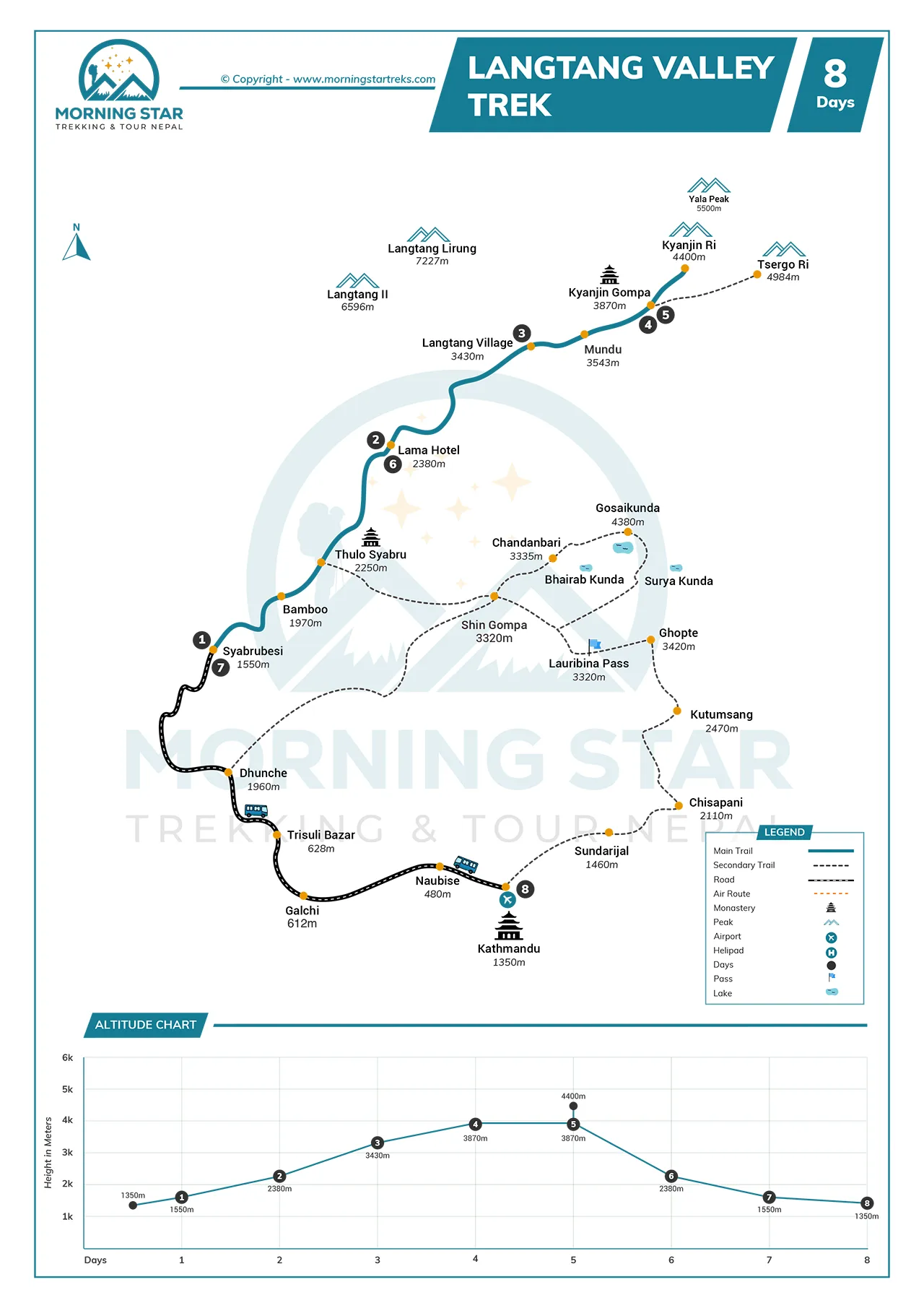
Trip Information of Langtang Valley Trek
Best Time to Trek the Langtang Valley
The Langtang Valley Trek can be undertaken throughout the year, but the best times to enjoy this beautiful trail are during the spring (March to May) and autumn (September to November) seasons. These months offer the most stable weather, excellent visibility, and comfortable trekking conditions.
Autumn (September to November) is the most popular time for the Langtang trek. After the monsoon rains, the skies are clear, the air is crisp, and the views of the surrounding Himalayan peaks like Langtang Lirung and Ganesh Himal are truly breathtaking. The temperatures are moderate during the day and can get quite cold at night, especially at higher altitudes. This season also coincides with major Nepalese festivals such as Dashain and Tihar, adding a cultural flavor to your trek.
Spring (March to May) is another excellent season for the trek. During these months, the rhododendron forests burst into vibrant bloom, painting the trail with shades of red, pink, and white. Wildlife is more active, and the weather is mild, making the walking conditions very pleasant. The mountain views are often still quite clear, and the overall landscape looks lush and fresh.
Winter (December to February) is a bit adventurous for Langtang due to the weather. But, the trail is less crowded, and the snow-covered peaks add a magical touch to the landscape. However, temperatures can drop significantly, especially at night, and heavy snow might occasionally block high-altitude paths.
Monsoon (June to August) is generally not recommended due to frequent rain, slippery trails, and limited visibility. However, for those who don’t mind trekking in the rain and want to experience a quieter route, it is still possible with proper gear and preparation.
In summary, the best time to do the Langtang Valley Trek is either in spring or autumn, when the weather is most favorable, the landscapes are stunning, and the trails are alive with culture and nature.
Preparation and Fitness for the Langtang Valley Trek
It is important to be well prepared before trekking in the Langtang Valley so that there will be a safe and pleasing trip. Keeping in view that the trek is moderate, but it still demands a reasonable fitness level, good planning, and mental preparation, particularly because it will involve walking on rugged ground daily and there is a lot of altitude gain.
Physical Fitness Requirments
The Langtang trek usually brings you to the height of 3,800m at Kyanjin Gompa, and some hikers may go at an elevation of 4,500m where the view is breathtaking e.g. Kyanjin Ri or Tserko Ri. No technical climbing skills are necessary but every day you will walk between 5-7 hours along rocky terrain, steep hills and some sidling suspension bridges. As the training will include some physical activity, an ideal preparation is to take on physical routines as early as 6 or 8 weeks prior to your trip. You should make it a habit:
Cardiovascular training: Physical exercises such as jogging or swimming, cycling, or vigorous walking strengthen the body stamina and help in shaping lungs, which is very crucial at higher altitudes.
Strength and Power: Legs, core, and back- training are required in order to deal with the requirements of sharp ascents and descents.
Practice hiking: Visit local hikes to learn just by carrying a filled backpack.
Flexibility and stretching exercises: Do some yoga or simple stretches to avoid injury and to decrease fatigue.
Mental Preparation
The Himalayas are a place that you can easily lose your mind in a not so good way. You can have an unpredictable weather, primitive conditions, strange food, and days that are very long and exhausting. Mentally equipping yourself to have your expectations realistic and maintaining flexibility and patience will help you a lot towards making it a good experience.
There are several things that you can do to mentally prepare yourself to take the trek; reading about it, watching videos, and connecting with former trekkers will inform how to prepare for the trek.
Packing Gear Checklist
Being properly equipped is a key part of preparation. While packing light is important, ensure you have the right gear, such as:
- Sturdy trekking boots (well broken-in)
- Moisture-wicking clothing
- Thermal base layers and a down jacket
- Lightweight backpack with rain cover
- Trekking poles (helpful on steep climbs and descents)
- UV sunglasses and high-SPF sunscreen
- Water bottles or hydration bladder (plus purification tablets)
- Personal medication and basic first aid kit
Permits and Paperwork – Langtang Valley Trek
Langtang National Park Entry Permit
- Cost: NPR 3,000 per person
- Available at: Nepal Tourism Board (Kathmandu) or park entry point in Dhunche
Local Permit (if required at Syabrubesi checkpoint)
- Cost: Around NPR 1,000
Documents Required
- Two passport-sized photos
- Copy of passport
- Original passport for verification
Accommodation and Food on the Langtang Valley
There are simple teahouses or guesthouses with local families, with a local dining experience, on the Langtang valley Trek. Such lodges offer simple rooms with twin beds and blankets, and bathrooms are common. Hot showers could also be provided at extra cost or may be found only in larger villages like Syabrubesi and Kyanjin Gompa. There is electricity and Wi-Fi,are available but tackling with power cuts are common. The facilities are very basic; however, they are generally decent and clean enough to get some rest and relax after a day of trekking.
Dining on the trek is usually Nepali regular and fattening to give the energy that is required on long hiking days. Dal bhat, a combination of steamed rice, lentil soup, vegetables and meat in some cases, is the staple meal. Other dishes that are common are momos (dumplings), noodles, soups and fried rice. Western cuisine such as pasta, and omelets are also served. Fresh vegetables and fruits may not be available at higher altitude and this way menus can be simplified. Foods are prepared daily and the meals will be served in regular dining places and even hot drinks are provided Trekkers prefer to have hot beverages such as tea, coffee, or chocolate powders etc to warm over the cold evenings in the mountains. The food in general is healthy and satisfying, which gives trekkers the energy and makes the journey more comfortable.
What to Expect?
- Meals are mostly simple, nutritious, and homemade by local families.
- Dal bhat is usually served twice a day and provides energy for trekking.
- Vegetarian options are available but meat dishes (chicken, yak, or goat) can also be ordered.
- Snacks like biscuits, nuts, and instant noodles are sold at teahouses for quick energy.
- Drinking plenty of water and staying hydrated with tea or soup is important.
- Food prices are slightly higher than in Kathmandu due to transportation costs.
- Bringing some favorite snacks or energy bars from Kathmandu is recommended.
Overall, the food is wholesome and warming, helping trekkers recover and enjoy their journey in the Himalayas.
Altitude Awareness
In Langtang Valley trekking, you are advised to know the altitude and its impacts on your body. The peak altitude of this trek is approximately 3,870 meters at the point called Kyanjin Gompa, a sufficiently high altitude to make some people experience the symptoms of altitude sickness. The higher the altitude, the lower the amount of oxygen in the air and this means that your body must have more to do in order to obtain the required amount of oxygen.
Mild altitude sickness is characterized by dizziness, headache, nausea, fatigue, and shortage of breath as some of the common symptoms. This kind of symptoms normally occurs during the first 24 to 48 hours of the altitude gain. These are warning signs so it should not be overlooked; resting, drinking water and not taking alcohol or being active may be helpful.
To minimize the chances of altitude sickness, the hiking schedule incorporates slow progression and acclimatization days like the rest day at Kyanjin Gompa where you have an option of hiking up a little further to get better views. Try not to progress too quickly and always listen to your body on whether or not you can keep moving and then tell your guide about any symptoms you may be experiencing.
Severe cases which may need urgent response or descent may also occur, although this is a rare experience. Thus, learning about altitude awareness and implementing measures of precautions will make the process of trekking safe and more memorable in the Himalayas.
Most Asked Questions
 General
How difficult is the Langtang Valley Trek?
The trek is considered moderate in difficulty. It involves daily walks of 5–7 hours over uneven and sometimes steep terrain, but no technical climbing skills are required.
 Preparation & Fitness
How physically fit do I need to be?
A moderate level of fitness is required. Regular cardio and strength training before the trek will help you enjoy the journey more comfortably.
 Permits
Do I need any permits for the Langtang Trek?
Yes, you need a TIMS card, a Langtang National Park entry permit, and sometimes a local permit at Syabrubesi. These are arranged before or at the start of the trek.
 Guides & Support Staff
Do I need to hire a guide or porter?
Hiring a guide is highly recommended for safety, navigation, and cultural insight. Porters can be hired to carry luggage, making the trek easier physically.
 Accommodation and Facilities
What kind of accommodation is available along the route?
Accommodation is mainly in simple teahouses offering basic rooms with shared bathrooms. Hot showers and electricity are limited but available in some villages.
Is it possible to get mobile or internet coverage on the trek?
Mobile coverage is available in some places but can be unavailable in remote areas.
 Food and Drinks
What food can I expect on the trek?
Food is mostly Nepali-style, including dal bhat (rice and lentils), momos (dumplings), noodles, soups, and some western dishes like pasta and omelets.
 Weather & Seasons
What is the best time to do the Langtang Trek?
The best seasons are autumn (September to November) and spring (March to May) when the weather is clear and temperatures are moderate.
 Health & Safety
Is altitude sickness a concern on this trek?
Yes, since the trek reaches nearly 4,984 meters, altitude sickness can occur. Proper acclimatization, hydration, and a gradual pace help minimize risks.
 Packing & Gear
What should I pack for the Langtang Trek?
Essentials include sturdy trekking boots, layered clothing, rain gear, sun protection, a good backpack, water purification tablets, and a basic first aid kit.
- Safety first, always
- Best prices guaranteed
- Expert travel team
- Easy booking, no extras
- Customize your journey
Based on 10 reviews
Have Questions?
+977 9767224414