
Unmissable holidays deals - Save up to 20%

 English
 Dutch
Dutch Japanese
 Hindi
Hindi Italian
 Spanish
 French
 German
 Chinese
 Korean
 Arabic
 Hebrew
 Russian
 Portuguese
 Danish
 Czech
Czech Polish
 Swedish
Introduction to Island Peak Nepal
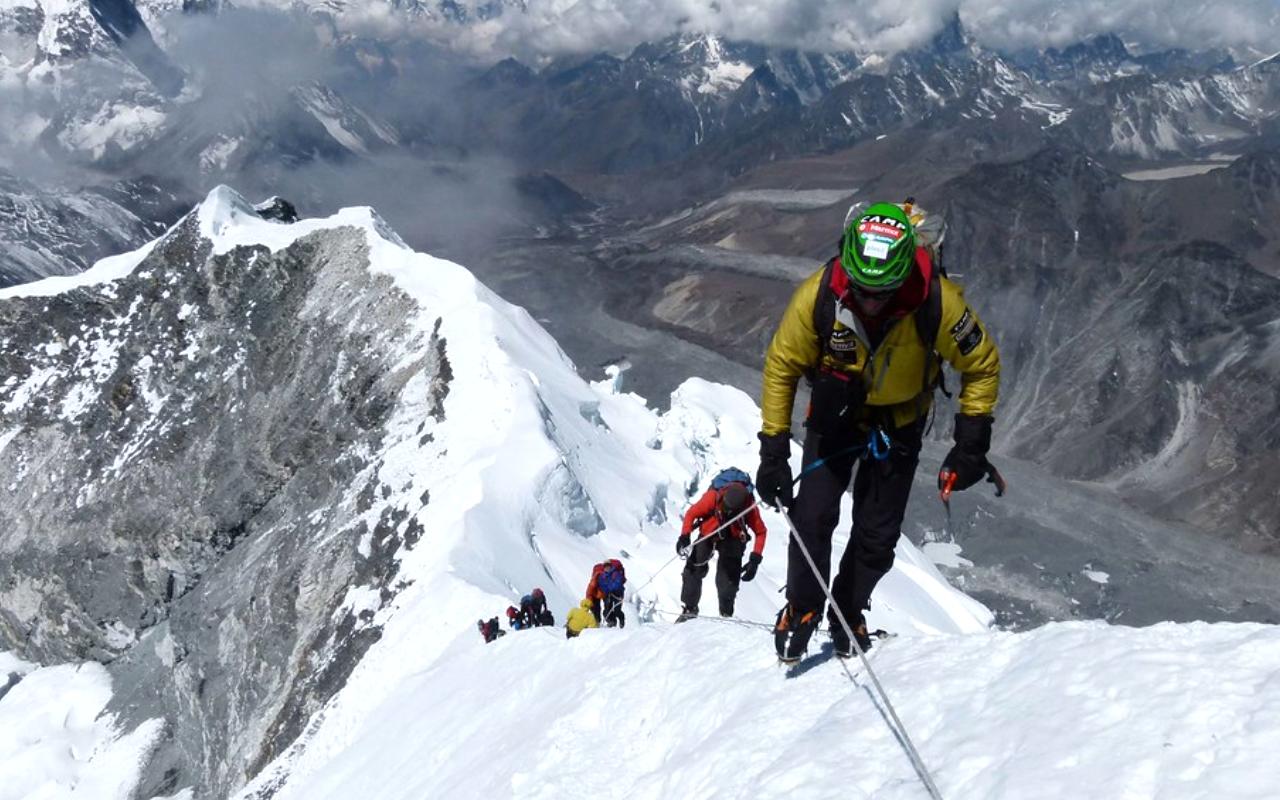
Imja Tse or Island Peak is one of the top mountains where first-time climbers in Nepal prefer to climb. It is six thousand one hundred eighty-nine meters tall and lies in the Imja Valley in the middle of glaciers and rocky ridges.
This peak was called Island Peak since it looks like a small snow island against a background of ice when seen from Dingboche. It is beautiful and memorable to the trekkers and climbers because it has a certain appearance that is exceptional.
Island Peak achieved fame when the 1953 British Everest Expedition members climbed Island Peak as part of pre-Everest training. Since then, it has become one of the most climbed trekking peaks in Nepal. Today, it attracts thousands of new mountaineers every year who want to try high altitude climbing for the first time in a safe and achievable way.
This guide explains everything a beginner needs to know: why the peak is suitable for first-timers, how to reach the mountain, best climbing seasons, required permits, training ideas, safety tips, and final thoughts. Each section is written in simple and clear language so you can plan your climb confidently, even if this is your first time in the Himalayas.
Island Peak gives you a complete mountaineering experience in one journey. You start with a trek through Sherpa villages, then learn climbing techniques at base camp, and finally attempt a real Himalayan summit with ropes, crampons, and an ice axe. It feels challenging but achievable for anyone who prepares well. Many climbers choose Island Peak as the perfect entry point before attempting higher mountains in the future.
Why Island Peak Nepal is Ideal for First-Time Climbers
The Island Peak is referred to as a beginner-friendly mountain since it is a mixture of trekking and simple mountaineering. The route is not extremely technical, but it still involves real mountaineering elements that will teach you the essential skills required for climbing in the Himalayas.
You get to know how to walk on snow, how to use a rope, how to take a slope, and also move safely on glaciers. These are the experiences that enable new climbers to have an upper goal in the future.
The climb has the appropriate level of difficulty and safety for first-time climbers. You take about a week of trekking to reach Island Peak Base Camp, which gives your body enough time to adapt gradually to the altitude.
This process of acclimatization can make the climb safe and comfortable. Even the walk itself is beautiful and pleasant as it traces forests, Sherpa villages, and breathtaking viewpoints.
Most guides give a basic training lesson at base camp, where you are taught:
- How to put on a harness
- How to walk using crampons
- How to hold an ice axe
- How to clip into a rope
- How to climb on fixed lines
- How to descend safely
This is an easy-going training intended to be used by amateurs. Even if you have never used climbing gear before, your guide will teach you everything step by step so you feel confident during the climb.
The ascent involves a glacier traverse and a last snow slope, which has a fixed rope. You ascend slowly in the footsteps of your guide. This arrangement renders this mountain perfect for the beginner since one will always be supported and guided. You learn as you are doing, and each of the steps seems to be progress.
The perspective is overwhelming. You are standing below high mountains like Lhotse, Nuptse, Makalu, and Ama Dablam. It is a life-changing moment for many individuals. It makes them see that after training and working hard, they can have bigger dreams about their future adventure.
Island Peak is not merely about summit achievement. It is also confidence, learning, and working in a team, and finding your power. This is the reason why it is still among the best climbs that can be recommended to all beginners.
Location and How to Get There
Island Peak Nepal is situated in the Khumbu region of Nepal, within the popular Sagarmatha National Park. The Everest Base Camp trek is conducted in the same place. The summit is located on a ridge to the south of Lhotse and is accessible via the Imja Valley. The path to the mountain is a trip in itself and is regarded to be one of the most scenic walks on the planet.
The starting point of your journey is Kathmandu. Then you have a short domestic flight to Lukla. The flight itself will only last about half an hour, yet it will transform you out of the bustling metropolis into an alpine setting that is pretty distant.
The Lukla airport is considered to have a mountain setting and a short runway that makes the start of your trip even more exciting. When you get there, your actual footing starts.
Lukla to Phakding is a walk along the Dudh Koshi River. The road takes us past high Sherpa villages, walled in stone and suspension bridges, and prayer flags. The air is cool and calm. The next day, you head toward Namche Bazaar. This is a significant climb because Namche sits at three thousand four hundred forty meters.
The trail includes the famous Hillary Suspension Bridge and then a long uphill stretch known as the Namche Hill. Namche is considered the main Sherpa capital of the region. It is lively with shops, bakeries, cafes, and stunning viewpoints. You spend at least one acclimatization day here to allow your body to adjust to a higher altitude.
After Namche, the trail continues through forests and open meadows to Tengboche. This area is famous for the Tengboche Monastery, one of the most important Buddhist monasteries in the region. From there, you walk to Dingboche, a village that sits at four thousand three hundred eighty meters. This is another important place for acclimatization. Many climbers take an extra rest day here.
The Island Peak Nepal route starts in Dingboche, after which the main trail of the Everest Base Camp deviates and heads towards Chhukung. The valley is a beautiful one and encircled by huge walls of Lhotse, Ama Dablam, and Nuptse.
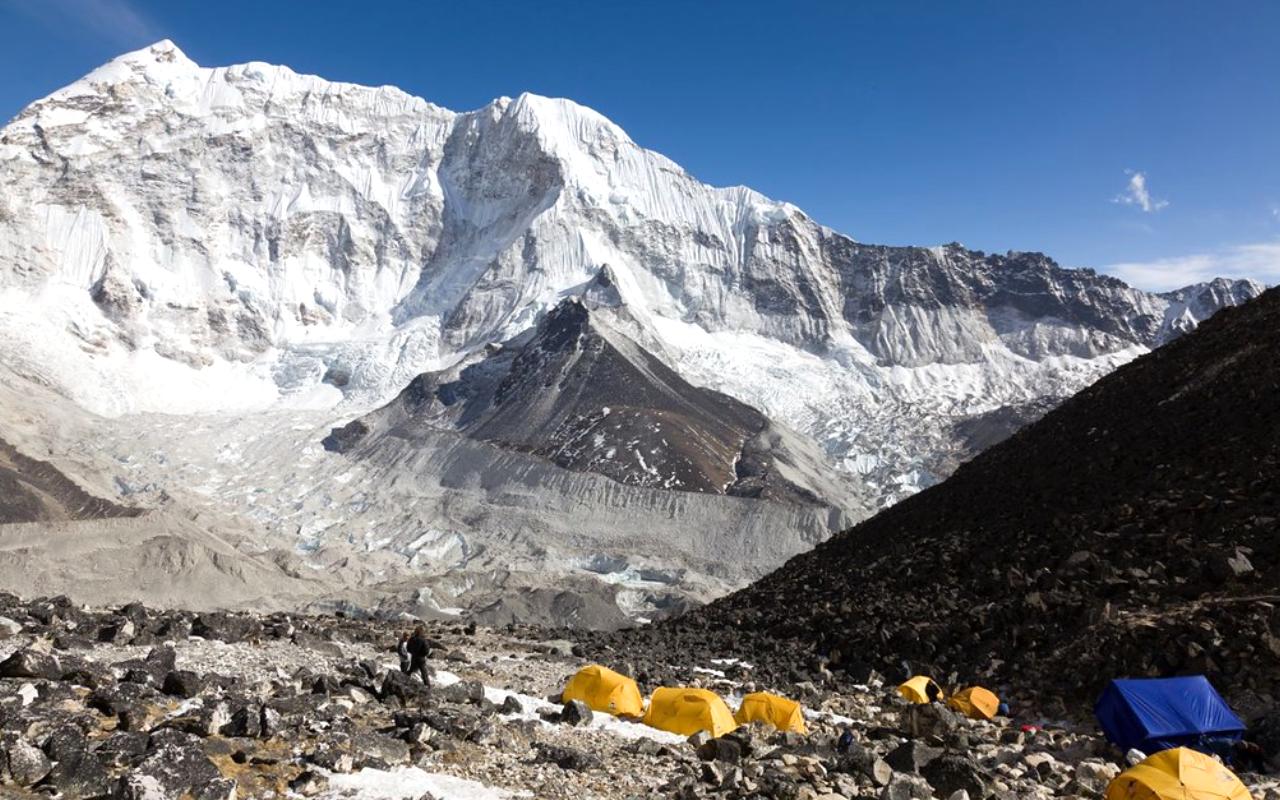
The Island Peak staging point is Chhukung, which is four thousand seven hundred and thirty meters. You then leave this place after a night to Island Peak Base Camp at approximately five thousand one hundred meters. This is the place you will be sleeping in tents and ready to climb the summit.
The total approach trek will last approximately a week, and this is sufficient time that allow your body to accustom. The travelling itself is laden with sceneries, cultural experiences, and meaningful moments. Each of the steps will lead you nearer to the mountain and will allow you to be physically and mentally prepared.
Best Time to Climb Island Peak Nepal
Choosing the right season is important for a safe and enjoyable climb. Island Peak is best climbed during Nepal’s two major trekking seasons: spring and autumn.
• Spring runs from March to May.
• Autumn runs from September to November.
Spring is characterized by good daytime weather, colorful forests, and predictable weather patterns. The hills below are in full blossom with rhododendrons, which provide a wonderful contrast to the snowy mountains.
Early spring offers crisp views and moderate temperatures. By late May, clouds from the approaching monsoon can begin to appear, so many climbers prefer March and April.
Autumn is equally popular. After the monsoon ends, the air becomes extremely clear. Visibility is at its best between mid-September and late October. During this period, mountains look sharp and bright under blue skies. The weather is cool but comfortable. Nights are cold but manageable with proper gear.
Winter, from December to February, is extremely cold. Temperatures can be harsh, and snowstorms can make the route difficult. Only climbers with high experience choose winter attempts. Summer, from June to August, is the monsoon season.
Trails become muddy, mountain views are blocked by clouds, and flights to Lukla face frequent delays. The peak also receives fresh snow, which increases the risk.
For first-time climbers, spring and autumn offer the safest and most predictable weather. These seasons give you the highest chance of reaching the summit comfortably.
Required Permits and Paperwork
Climbing Island Peak requires a few important permits. These documents are checked at various points throughout the trek. If you are traveling with a trekking company, they will arrange all the paperwork for you.
If you are traveling independently, you must obtain each permit yourself. As per the current trekking rules in Nepal, a licensed guide is required for Island Peak and for all trekking inside Sagarmatha National Park
- Sagarmatha National Park entry permit
- Khumbu Pasang Lhamu Rural Municipality permit
- Island Peak climbing permit
- Travel insurance that covers high altitude rescue
The Sagarmatha National Park entry permit allows you to enter the protected area. It is issued either in Kathmandu or at the park entrance in Monjo. The Khumbu permit is collected by the local municipality and helps support the region’s development and maintenance.
The Island Peak climbing permit is issued by the Nepal Mountaineering Association. The fee varies by season. Spring is the most expensive because it is the main climbing season. Autumn is slightly cheaper, and winter or summer permits are the lowest.
Even though travel insurance is not a government requirement, it is essential. Helicopter rescue in the Everest region is expensive. Your insurance must cover high altitude trekking and mountaineering up to at least six thousand five hundred meters. Always carry a copy of your insurance and permits in your daypack.
Physical Preparation and Training Plan
Climbing Island Peak requires good physical fitness. You will trek for several days, carry a backpack, sleep at high altitude, and finally climb a steep slope using ropes and crampons. A proper training plan helps you enjoy the journey and reduce the risk of altitude sickness.
Your training should focus on these key areas:
- hiking endurance and stamina
- regular cardio exercises
- leg strength and overall body stability
- balance and flexibility
- comfort walking uphill with a loaded backpack
- basic familiarity with climbing movements
Endurance training is important because you will walk for five to seven hours each day during the trek. Try to do long hikes once a week. Making gradual increments, lengthen the distance, the length of time, and the weight in your pack. In case you manage to hike three to four hours without difficulties, you will cope with the trek.
Running, cycling, or swimming are cardio exercises that are used to enhance lung capacity. It is possible to begin with brief sessions and gradually extend them. One should target a minimum of three cardio sessions a week. Weight lifting develops leg muscles, the back, and the core. Such exercises as lunges, squats, and step-ups train your legs to walk uphill.
Stretching and balance exercises help prevent injuries and keep your body flexible. Yoga or simple stretching exercises ensure that your body is long and loose. If you live near to mountain or a hill, practice hiking on steep terrain. If not, stair climbing or treadmill incline walking can replace it.
If possible, try using climbing equipment before your trip. A simple indoor climbing session, gym rope practice, or crampon walk on snow can build confidence. Many people climb Island Peak without previous technical experience, but learning the basics beforehand makes you more comfortable on summit day.
Safety Tips and Altitude Considerations
The most significant aspect of any Himalayan climbing is safety. Island Peak is considered beginner-friendly among the Himalayan peaks, but it still demands proper preparation because anyone can be affected by altitude.
The weather conditions are also a factor, including cold temperatures and physical exhaustion. It is possible to minimize risks and have an enjoyable time with adequate planning and awareness.
The following are important precautions:
- Climb gradually and observe days of acclimatization.
- Watch for the symptoms of altitude sickness.
- Keep hydrated by consuming a lot of water.
- Eat enough food to maintain high energy levels.
- Do not drink and smoke at altitude.
- Think about altitude medication when it is necessary.
- Keep your body warm and dry
- Remain attached to the rope during difficult parts.
- Always follow the directions of your guide.
- Go back in case the weather is not safe.
Altitude sickness is common. Light symptoms comprise a headache, nausea, or exhaustion. These symptoms are normally relieved by rest, fluids, and sleep. When the symptoms are aggravated, the best option is to descend. When one feels ill, never press on. Guides are also well taught and know how to deal with such situations.
The weather may also influence safety. The summit day is initiated early in the morning when the temperatures are very low. Strong winds can make glacier travel colder and more difficult, so wearing proper warm layers is very important. One should wear warm clothes, high-quality gloves, insulated socks, and good boots.
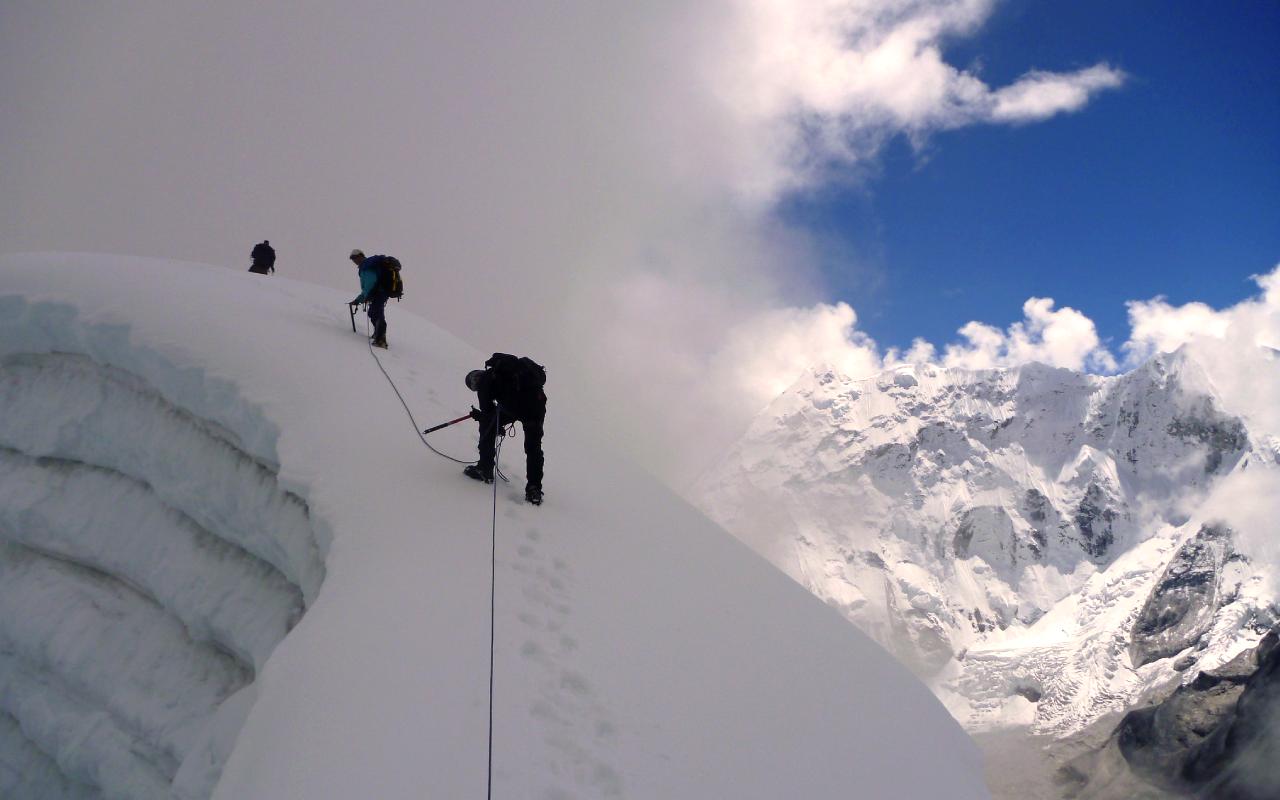
In the final climb, technical safety is of importance. It has a snow slope that has fixed ropes. Your ascender should always be securely attached to the fixed rope, and it must remain properly connected to your harness for safety at all times. On the way down, pay complete attention to your guide and take your time with the rope system.
Your guide becomes your main support and safety expert throughout the climb. Believe them when they make a decision, particularly when circumstances become unfavorable or when you start experiencing symptoms of altitude sickness. The mountain will be there to be tried again. You should always put safety first.
Final Thoughts
Island Peak is not just a mountain. It is a Himalayan trip full of culture, landscape, and self-exploration. The adventure takes you along the Sherpa villages, prayer wheels, yak pastures, and ancient monasteries. The spiritual power of the Khumbu area is experienced when walking through forests, crossing rivers, and ascending to high valleys.
These are the last tips that you should bear in mind as you get ready to go on your adventure:
- Have fun in every step and value the journey.
- Always remain positive even in bad times.
- Appreciate the local culture and traditions.
- Encourage other climbers and communicate well throughout the journey.
- Pack lightly but wisely.
- Use environmental guidelines and leave no trace.
Island Peak changed the lives of many climbers, as they claim. Patience, determination, and confidence are taught by the climb. You push yourself and create new strengths. It is also where you meet the people of the world with the same dream.
It is a fantastic experience to be at the top. The view is unforgettable. You are not going to the top, but the journey is in itself beautiful and meaningful. Each day has a fresh memory, whether it’s watching the sunrise over Ama Dablam, having a cup of tea in a Sherpa lodge, or strolling through the silent sky under stars at the base camp.
Island Peak provides beginners with an opportunity to enter the world of mountaineering safely and meaningfully. You can have a satisfying and motivating adventure to the Himalayas with proper preparation, guidance, and attitude. Good trip, good trip, speeding away and leaving any memorable moments behind.
