
 English
 Dutch
Dutch Japanese
 Hindi
Hindi Italian
 Spanish
 French
 German
 Chinese
 Korean
 Arabic
 Hebrew
 Russian
 Portuguese
 Danish
 Czech
Czech Polish
 Swedish
Have Questions?
+977 9767224414
Unmissable holidays deals - Save up to 20%
Shey Phoksundo Lake Trek – 11 Days

Duration
11 Days

Trip Difficulty
Moderate

Max. Altitude
3,660m

Destination
Nepal

Group Size
2-16

Accommodation
Teahouse

Transportation
Flight

Meals
Breakfast, Lunch & Dinner
Explore more facts about the trip
Overview of Shey Phoksundo Lake Trek – 11 Days
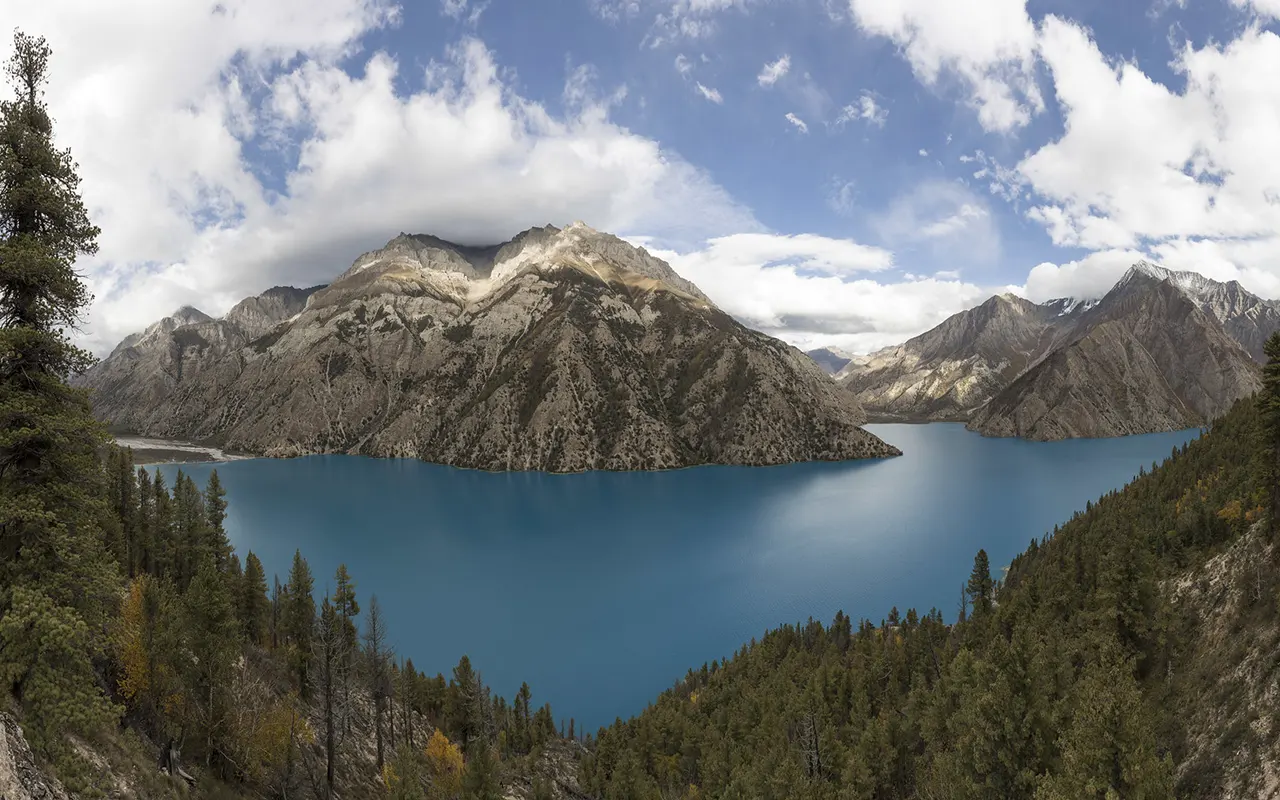
The Shey Phoksundo Lake Trek is an adventure to one of the most exotic and remote areas of Nepal. This hike follows the rugged valleys of Lower Dolpo, which is remote and does not have any roads. You will enjoy wilderness and serenity, trails not traveled by a lot of people. The best part of this walk is the Shey Phoksundo Lake – a clear turquoise lake that is encircled by massive Himalayan mountain ranges. When coming to this holy alpine lake, you will feel like a discoverer who has found some closed and primeval world.
The Shey Phoksundo Lake Trek is similar to one that exposes you to amazing cultural attractions along the way. You will go to the traditional Tibetan-influenced villages such as Ringmo and Jhupal, which are inhabited by people who follows both Bon and Tibetan Buddhist culture. Prayer flags that come in various colors are fluttering in Ringmo village around old gompas (monasteries). This walk is all about culture as much as it is about scenery: you get to meet people with Tibetan forebears and get to know about the Bon-Po religion of a secret neighbourhood in the Himalayas.
There are also plenty of wildlife encounters in the adventure. You walk through the Shey Phoksundo National Park, established in 1984, the largest protected area in Nepal, the home of the musk deer, blue sheep and snow leopard. The sight of Himalayan wildlife or the cry of mountain birds is a gratification to many trekkers. A view of the snow-capped giants, including the mighty Dhaulagiri to the east, is presented each day. It passes over the alpine pastures and pine forests, forming a constantly different picture of nature at every step.
The trip starts with the flights between Kathmandu and Nepalgunj and then a small plane in the hills at Juphal. It is there that you commence your walk along the Thulo Bheri River. The road climbs up to Dunai, the head of the Dolpo district, up through green glades. In the direction of Dunai, the road is steadily ascending into high meadows and woods. You walk to Chhepka (the national park entry point) and walk to Jharana, a village that is known because of its waterfall. Then, there is Ringmo, a remote village in Nepal’s Dolpa District, located along the lake, and there you are settled and among friendly locals.
Day 7 will be a whole day at Shey Phoksundo Lake, where you will visit the centuries-old temple that is called Tshowa Monastery, which is above the water. Then it is back you go – walking back via Chhepka and Dunai to Juphal for the return flights. During this 11-day adventure, you will stay in plain lodges and have a good local meal, relaxing in the expansive mountain range landscapes, and the Himalayan warm hospitality. The Shey Phoksundo Lake Trek is a distinctive and memorable cultural, nature, and adventure expedition that can be taken by travelers who want to have moderate, off-the-beaten-path hike.
- Safety first, always
- Best prices guaranteed
- Expert travel team
- Easy booking, no extras
- Customize your journey
Based on 10 reviews

Trip Highlights
- Awesome turquoise Shey Phoksundo Lake (one of the deepest lake in Nepal).
- Mountain flights (Juphal) from Kathmandu to scenic places.
- Bon and Buddhist culture are influenced by Tibetan culture in villages (Ringmo, Jhupal, etc.)
- There are also ancient monasteries such as Tshowa Gompa over the lake.
- Wildlife in Shey Phoksundo National Park (red panda, musk deer, snow leopard)
- Remote Dolpo 11-day (off-the-beaten-path adventure) trek.
- Breathtaking views of Himalayas including Dhaulagiri to the southeast.
Photo and Video Gallery


Shey Phoksundo Lake Trek – 11 Days Detail Itinerary

Day 01: Arrival in Kathmandu (1,400 m / 4,593 ft)
You come into Kathmandu, the bustling capital of Nepal, and a member of Morning Star Trek welcomes you to the airport. You switch to a nice hotel within the Thamel area and make your way. Tonight, you will attend a briefing on the welcome on the Phoksundo Lake Trek. The guide checks your equipment and itinerary, asks questions, and discusses the next day’s flight to Nepalgunj.
You may visit the bustling streets of Kathmandu, the Durbar Square temples, or take a rest. In the evening, partake in a welcome dinner with your group and guide, where you will be served Nepalese food. Overnight in Kathmandu.

Max. Altitude: 1,400m/4,593ft. (Kathmandu)

Meal: Dinner

Accommodation: 3-star hotel
Day 02: Flight from Kathmandu to Nepalgunj (150 m / 492 ft)
You have breakfast, and then you take the morning flight from Kathmandu Tribhuvan Airport to Nepalgunj. This is a flight within a short distance (approximately 45 minutes) traversing the Terai plains and landing 150 m / 492 ft above sea level. Nepalgunj is a busy border town that is close to India.
During the afternoon, you can walk around the town – you can visit the Bageshwori Temple (one of the oldest temples in Nepal), you can go through colorful markets, or you can sit in a local cafe. Explore Nepalgunj and experience the cultural diversity of the place with some snacks in Terai style. Overnight in Nepalgunj.
Max. Altitude: 150m/492ft. (Nepalgunj)
Meal: Breakfast
Accommodation: Hotel
Day 03: Flight to Juphal (2,502 m / 8,205 ft) Trek to Dunai (2,144 m / 7,037 ft)
It is an early start to adventure today. Juphal will be a mountain flight you take after breakfast in Nepalgunj. It is a picturesque 45-minute flight through the Himalayas, with the landing point being the small Dolpo airport (2,502 m / 8,205 ft). From Juphal, you begin your trek along the Thulo Bheri River valley to Dunai. The path is made across fertile meads and woods, over a small hamlet, with an ancient watermill.
The way leads downwards slowly as you go to the riverbank. It takes roughly 2-3 hrs of hiking to get to Dunai (2,144 m / 7,037 ft), a village located on the Thulo Bheri River and the biggest village in the Dolpo Valley. You will have a chance to go to the local bazaar, get to know friendly villagers, and have a rest in a lodge. Overnight in Dunai.
Max. Altitude: 2,144m/7,034ft. (Dunai)
Meal: Breakfast, Lunch & Dinner
Accommodation: Teahouse
Day 04: Trek to Chhepka Village (2,670 m / 8,760 ft)
The remainder of your journey is by a path along the bank of the Bheri River. The trail is a steady uphill hike through juniper and cedar trees. Passing through Sulighat, you rise in the point of view of the mountains. This is soon followed by the clean wilderness of Shey Phoksundo National Park – a park check-post is your initiation to this guarded region. The walk is not severe, but consistent, with the snow-capped mountains in the distance.
Upon reaching the national park after approximately 6-7 hours of walking, one gets to the entrance of the national park at Chhepka Village (2,670 m / 8,760 ft). You take a rustic lodge at night in Chhepka. Overnight in Chhepka.
Max. Altitude: 2,670m/8,760ft. (Chhepka Village)
Meal: Breakfast, Lunch & Dinner
Accommodation: Teahouse
Day 05: Trek to Jharana Village (3,370 m / 11,056 ft)
The path is steeply rising out of Chhepka in the Himalayan fir wood. The higher you go, the larger the perspectives become. After hours, you come to a ridge that is open with spectacular views. In front of you, you will find Jharana Village on a high cliff. The trail provides spectacular impressions of the Dolpo cascading Jharana waterfall.
You keep on climbing higher and finally reach Jharana Village (3,370 m / 11,056 ft) towards the end of the afternoon. Relax in the rustic lodge in Jharana and have a picnic in the valley below. Overnight in Jharana.
Max. Altitude: 3,370m/11,056ft. (Jharana Village)
Meal: Breakfast, Lunch & Dinner
Accommodation: Teahouse
Day 06: Trek to Ringmo (3,459 m / 11,348 ft)
The path cuts off Jharana, then rises a little and comes onto Ringmo once again. You pass through the Alpine meadows and small streams. The last road leads to the isolated Tibetan village of Ringmo, along the lake.
On your way, you will be able to observe blue sheep or musk deer grazing on the hills. Later in the afternoon, you arrive in Ringmo Village (3,459 m / 11,348 ft), where there are stone houses and prayer flags. The locals here follows both Bon and Tibetan Buddhist traditions. Overnight in Ringmo.
Max. Altitude: 3,459m/11,348ft. (Ringmo)
Meal: Breakfast, Lunch & Dinner
Accommodation: Teahouse
Day 07: Phoksundo Lake (3,660 m / 12,008 ft) and Tshowa Gompa
You have a whole day to spend at Shey Phoksundo Lake. In the morning, walk after breakfast a short distance to the waterside of the lake. The water is a remarkable turquoise blue, just like the reflection of the surrounding mountains. The lake is one of the deepest lakes (around 145m) and is located at 3,611 m / 11,841 ft.
You may walk around some portion of the shore or just rest by the side of the water. Lunch, and in the afternoon visit Tshowa Gompa, an old Bon monastery on a ridge over the lake. This serene temple has a lake view and prayer flags in the blowing wind. Give back to Ringmo in the evening. Overnight in Ringmo.
Max. Altitude: 3,660m/12,008ft. (Phoksundo Lake)
Meal: Breakfast, Lunch & Dinner
Accommodation: Teahouse
Day 08: Trek to Chhepka Village (2,670 m / 8,760 ft)
Today you go back the way to Chhepka. And then, after breakfast, you part with Ringmo and turn down a road through alpine meadows and woods. You cross over the little town of Renji and go down the hill.
The landscape is softer on the way down; nevertheless, it is a beautiful view. Towards late afternoon, you are back in Chhepka Village (2,670 m / 8,760 ft). You reach the same lodge and make merry with other trekkers about Phoksundo. Overnight in Chhepka.
Max. Altitude: 2,670m/8,760ft. (Chhepka Village )
Meal: Breakfast, Lunch & Dinner
Accommodation: Teahouse
Day 09: Trek to Juphal (2,502 m / 8,205 ft)
On the last trekking day, you start your descent with Chhepka to Juphal and through an aesthetic valley of the river. The road goes through the cultivated lands, forests, and small villages, and it will be the last opportunity to discover the natural beauty of the Dolpo region. It is primarily downhill in most sections after breakfast, and hence the walk becomes easier, and you have more time to cover the distance relaxed.
The mountains and woods are slowly disappearing in the crossroads of the lower valleys as a penumbra of the high adventure of adventure. In the afternoon, you come to Juphal, and with your guide, you celebrate the end of the Shey Phoksando trek, to tell stories and reflect on the journey.
On the last night on the trail, a substantial lodge dinner will fill you with the stamina to get ready for the flights to come. One night’s accommodation is booked in Juphal at a comfortable lodge where one can spend a night calmly before driving off.
Max. Altitude: 2,502m/8,209ft. (Juphal)
Meal: Breakfast, Lunch & Dinner
Accommodation: Teahouse
Day 10: Flight to Kathmandu through Nepalgunj
You also travel by domestic flights to Kathmandu after having an early breakfast. The initial one is between Juphal to Nepalgunj, which is a 45-minute flight taking place over the Dolpo valleys at a lower altitude and offers spectacular views. You take the second flight after a brief stay in Nepalgunj to Kathmandu, which is approximately one hour long that giving you a bird’s eye view of the Terai plains and the mountains in the Himalayas.
It is upon arrival at Kathmandu airport that a representative of Morning Star Treks meets you at the airport and gets you to your hotel. The remaining day is free time, and you can have time to relax after the trek, or you can go to Thamel and find souvenirs, handicrafts, and experiences in the local market.
You can get some rest and stay overnight in Kathmandu so that your high-altitude experience is not so unpleasant to remember.
Max. Altitude: 1,400m/4,593ft. (Kathmandu)
Meal: Breakfast
Accommodation: 3-star hotel
Day 11: Departure Day
On completion of breakfast, your Shey Phoksando Lake Trek comes to an end. There is a bit of spare time in Kathmandu, which you can spend either in one of the local markets or take a rest or sightsee a bit more. A representative will take you to Tribhuvan International Airport when you have to leave the country on your flight home. Farewell and safe travels!
Meal: Breakfast
If our standard itinerary doesn't fully meet your needs, we are happy to tailor it to your specific preferences and requirements.

Includes and Excludes
What’s Included?
- All internal flights (Kathmandu-Nepalgunj-Juphal round trip) and internal type of transfers.
- 1-night stay in Kathmandu (tourist standard hotel, B&B basis).
- Staying in mountain tea houses during trek (twin sharing rooms).
- All meals according to the plan: breakfast in Kathmandu/Pokhara, three meals (B/L/D) on working days of the trek.
- A skillful English-speaking trekking guide, assistant guides, and porters (one porter per two trekkers).
- All trekking permits and fees (Shey Phoksundo NP permit, Dolpo permit, TIMS card).
- All government taxes and ground transportation.
What is not Included?
- International flight tickets in/out Kathmandu and Nepal entry visa charges.
- Travel insurance (with emergency helicopter evacuation).
- In Kathmandu/Pokhara (except where otherwise noted), and additional meals outside of the itinerary.
- Snacks, soft drinks, and personal expenses on the trek.
- Guide, porter, and driver tips/gratuities.
- Rental of personal equipment (sleeping bag, down jacket) in case of necessity.
- Anything that is not mentioned in Price Includes.
Trip Information of Shey Phoksundo Lake Trek – 11 Days
Weather & Season for the Trek
Shey Phoksundo Lake Trek is in a high rain-shadow area, and therefore it has a different climate from that of the other lower parts of Nepal. Spring (March to May) and autumn (late September to late November) are also the most appropriate periods to visit this trek. In such months, the weather is quite clear, and an amazing view can be seen of the Himalayan mountains, vast valleys, and the amazing Phoksundo Lake.
The average temperature during the day in the mainland is 15-20 °C, while it is 5- 10 °C towards the lake. There is a considerable drop in temperature during nights, which sometimes reaches below freezing points, and warm attire and a nice sleeping bag are therefore necessary to keep us comfortable.
The monsoon winds fall in the period of June – August, and they cause excessive rainfall in areas such as Kathmandu and Nepalgunj. But in contrast, the Upper Dolpo area receives much less precipitation, but it is not recommended due to slippery trails and less visibility.
The season between December to February is very harsh as winter, and the trails tend to be snow-covered, and at higher levels, the temperature would be much below zero at night. The high sun, strong winds, and cold climates would demand that trekkers bring with them sunblocks that are protective, windproof jackets, and multi-layered clothes. Having the right equipment to venture into the area is not just safe but a great experience for the trekker in this isolated part of the Himalayas.
The difficulties notwithstanding, spring and fall are the times that offer a good, stable and scenic, and rewarding trekking experience as the skies are clear and the daytime temperatures are mild, and the views are breathtaking as the journey becomes really memorable.
Trip Difficulty
The Shey Phoksundo Lake Trek contains easy to moderate grades, and this makes it an accessible trek to a large section of trekkers. No special technical climbing skills are needed on the route since one does not encounter an obstruction of any kind, by glaciers, ropes, or other technical challenges. However, the journey consists of five to seven hours of hiking daily, and in hilly and mountainous areas, thus one should have a fair amount of fitness.
The elevation of the hike is at around 3,660 meters on Phoksundo Lake. Trails are usually clearly marked and maintained; however, they may be rocky, steep, or even uneven in certain areas, creating an average challenge, particularly to beginners.
Porters carry most of the heavy equipment and supplies, and give the trekkers time to concentrate on a day pack with basic needs such as water, snacks, an extra layer, and personal needs. Trekking, even for first-time trekkers who exercise regularly, can be accomplished the trek, although prior trekking experience can assist in pacing oneself and efficient energy consumption.
The speed of the trek is calculatedly slow, which will provide time to acclimatise as well as see to it that all parties are comfortable with the altitude. Generally, the Shey Phoksando Lake Trek is a hybrid of GI with adventure, where there is a lot of walking followed by cold nights and the views of the top of the world. It offers a sort of attainment but without excessive physical effort or technological complications, so it is an especially good choice for first-time high-altitude trekkers.
The Shey Phoksando Lake Trek will allow you to explore the beauty of the Dolpo region in a safe way and with a rewarding trip, which does not exhaust you too much, giving you time to acclimatize and explore beautiful scenes.
Altitude Sickness and Acclimatization
Even though the elevation of the Shey Phoksundo lake Trek is 3,660 meters, which is lower than the Everest base camp, the trekkers may still have an experience of the height. The itinerary is constructed well in advance to enable easy acclimatization, although one must be careful. Gradually increase counter-clockwise to ascend, particularly in steep parts, to enable your body to acclimatize to the thin air. Climbing fast also makes one more fatigued and prone to altitude sickness.
It is also imperative to be well hydrated; the amount of water one should consume per day is at least four liters to ensure that the body functions properly. Headache, nausea, dizziness, and fatigue are mild symptoms of altitude sickness. In case any of these take place, notify your guide.
Certain medications to consider that are prescribed by a doctor, including acetazolamide (Diamox), may be helpful in high-altitude areas in preventing or alleviating symptoms. Having a balanced diet, taking breaks, and resting periodically actually make your body adapt. In extreme situations, the best thing to do is to go to a lower altitude.
Every guide on this expedition is conditioned to observe every participant as well as ensure a manageable pace, complete with rest stops and acclimatization areas. Evenings and days in the highlands may prove to be colder than they would think; therefore, it is always necessary to bring multiple layers of clothes and warm equipment.
With good preparation, trekkers will be comfortable, minimize the risks to health, and have the time of their lives with the stunning scenery, and time spent in the high life is both within their reach and worthwhile.
Food & Drink during the Trip
The food on the Shey Phoksundo Lake Trek has been created to be wholesome, local, and to keep the body warm so as to give me the energy required to do lengthy days of trekking. Nepalese breakfast is usually served in the form of porridge or eggs, or Nepali pancakes, along with tea or coffee to warm up and get energy throughout the day. Weather-wise, lunches and dinners revolve around dal bhat (rice and lentils) and are complemented with vegetables, curries, and sometimes meat, e.g., yak or chicken.
Special and vegetarian food choices will be made by request. Along the route, tea-houses can also be found, which can serve soups, noodles, and Tibetan bread to make the menu a bit more varied. Water is supplied, which is normally boiled or treated, and bottled water is sold on demand. It is advisable to have a backup of carrying a reusable bottle and water purification tablets. Biscuits, chocolate, and nuts are also snacks offered in lodges to supplement mealtime energy.
In Kathmandu or Nepalgunj, alcoholic drinks are normally only served; in Dolpo, availability . Evenly spaced between three main meals in a day, supplemented by appropriate hydration, will make sure that the trekkers are kept warm, well-nourished, and energized at all times. The food is well prepared to help in sustaining body energy, body temperature, and enabling trekkers to experience the protracted walking days without danger, besides giving them an experience of local food.
All in all, the food and beverage scheme will ensure that all people are relaxed, content, and prepared to have a glimpse of the magnificent high-altitude sightseeing.
Visa and Permits
Tourists who visit Nepal have to be granted a tourist visa, and most countries can provide a tourist visa upon arrival at Kathmandu Airport or even via the Nepali embassy before traveling. The regular tourist visa lasts 30 days and will cost around USD 50. You can make extensions in case you intend to extend your stay. In going trekking in the Shey Phoksundo area, the usual visa is not sufficient. It needs extra permits.
These are a Dolpo (or Shey-Phoksundo) entry permit, a Shey Phoksundo National Park permit, and a TIMS card (Trekkers Information Management System). The permit fees are used to conserve the environment and promote local community development projects to ensure the Shey Phoksundo Lake Trek has a beneficial effect. Morning Star Treks will also take the responsibility of applying for all the permits and the paperwork on your behalf, and this will make the procedure hassle-free.
You have to carry your passport with blank pages and two passport-size photographs to process these permits. It should be mentioned that the cost of the trekking package does not cover visa and permit fees, which should be paid separately, typically in cash. It accepts payment in Nepalese rupees or US dollars; hence, enough cash in small denominations is required to avoid delays.
Carrying along your documents and payments can serve as a pleasant way of starting off the Shey Phoksundo Lake Trek, so that you can get to start enjoying the journey before you even think of the process of paying off. It is not only necessary to have proper documents so as to comply with the law, but also to have a great time viewing the trek without being interrupted.
Preparation will save time and eliminate complications with the local authorities, and you will get started on your adventure with confidence. Having these arrangements in place, trekkers have opportunities to work on acclimatization, landscape, and other cultural peculiarities of the way without focusing on the formalities since all formal needs are addressed effectively.
Health & Safety
Before the Shey Phoksundo Lake Trek, it is advisable to see a doctor regarding vaccinations like Hepatitis A, Typhoid, and Tetanus. At high altitude, the medication against malaria is not vital, although certain simple measures regarding the food and water should be taken. It is better to have a small first-aid kit and to carry personal medications in order to deal with small health problems. The primary health risk on the Shey Phoksundo Lake Trek is that of altitude, which may result in headaches, nausea, or even fatigue.
Guides will undergo training on how to oversee every trekker and treat symptoms to protect themselves. Trails are not well cleaned, and hence, they require hand sanitizer and only boiled or treated water. On high ground, the sun is quite intense and therefore a hat, sunscreen, and sunglasses are necessary. Lower Dolpo has very poor health facilities with basic first-aid facilities only.
Helicopter evacuation can be provided in the case of a serious emergency in areas like Juphal, which is quite costly. This is why high-altitude trekking, rescue, and medical emergency travel insurance are highly recommended. Always keep a duplicate of your passport instead of the original, thus carrying it on the Shey Phoksundo Lake Trek and taking proper care of it during road and air transportation because the mountain roads are not well-tarmac and flights may be postponed in case of weather.
Morning Star Treks pays close attention to the planning of logistics, which depends on the safety in every process. By observing these steps and acting on the suggestions of trained experts, trekkers will be able to concentrate on the adventure plans and admire the landscape and the high-altitude conditions that the expedition will embrace, as well as overcome the challenges and situations that may have endangered their lives in the event of information being exchanged.
Transportation
Domestic flights and road transfers are combined at the beginning of the Shey Phoksundo Lake Trek. Travelers fly from Kathmandu to Nepalgunj in the Terai, and then a short domestic flight is undertaken to Juphal in a small plane, which is operated by various Nepalese carriers. All these flights last approximately 45-60 minutes, and they also offer excellent views of the Nepalese beauty, which comprises multi-beauty landscapes.
The trekking package incorporates all domestic flights that will easily bring you into your journey. The airport transfer is offered in Kathmandu and Pokhara in a personal car or van, which is convenient and safe in overcoming the city traffic. One should remember to keep airline luggage limits, which are usually restricted to approximately 15 kilograms per passenger on the Dolpo flights. The weather in the Himalayan region is unpredictable and might delay or cause cancellations during flights because of fog, wind, and other unfavorable conditions.
In consideration of this, buffer days are included in the itinerary, and guides will help in moving the flights or securing alternative means of transport by road in case they are required. During trekking days, your transportation cannot be described as such, as everything is carried by foot, and this would be a great way of getting close to the landscape. When it comes to flight cancellations, they can arrive at the area of trekking area by road, though it is a long way. The trip is reversed and starts at Juphal and goes to Nepalgunj and further to Kathmandu.
The Morning Star Treks makes all the arrangements of airport pickups and drops and makes sure that the tourists are well escorted between the metropoles and the trail head. This is an organized plan that reduces stress, thus allowing trekkers to concentrate on acclimatization and enjoy the adventure, knowing that all logistical planning is taken care of in a professional manner.
Travel Insurance
The Shey Phoksundo Lake Trek needs Travel insurance, and the policy must cover high altitude trek, preferably to 4,000 meters. The coverage should cover emergency helicopter evacuation, medical care, and the related expenses since getting out of the mountain can be an incredibly costly affair, to the extent of thousands of dollars. A great number of regular travel insurance policies do not include rescues above the altitude of 3,500 meters, and this is why it is critical to read the fine print and make sure that it is covered in its entirety.
The optional features offered in the policy should be trip cancellation, trip delay, and bag losses to secure against any unexpected situations. Trekkers are supposed to have a paper or electronic evidence of insurance, and this could be demanded before the commencement of the Shey Phoksundo Lake Trek. Guides are also trained to liaise with the available local rescue services in the event of an emergency; however, with a very elaborate insurance, it is possible to provide the necessary help without being considered as having to strain their budgets.
The insurance also secures the trekkers as well as assures the guides, whose responsibility is to ensure that the group is safe. If you are leaving, read your policy in advance, and make sure that you have emergency contact details, as well as check that your policy satisfies all the trekking conditions. The Shey Phoksundo Lake Trek cannot continue in case of a lack of good insurance because the areas are remote, and safety takes priority in high altitudes.
The insured trekkers will enjoy the adventure and the magnificent scenery without any worry of medical emergencies, evacuation, or other unforeseen circumstances, since any emergency or incident will be well covered. Insurance is a safety net that is very important, and the guides and trekkers feel secure about the whole trip.
Language & Communication
The national language of Nepal is Nepali, though in Dolpo, the local tongue that has been affected by Tibetan is popular. In rural areas, there is little use of English, and thus, the communication is primitive. The majority of trekking guides and lodge employees are fluent in English and help with translation in case of need, so it is not hard to navigate and also interact every day.
English is widely spoken in Kathmandu, Pokhara, and Nepalgunj, though the services in the trail show no cellular service whatsoever. Mobile networks are mostly unavailable, and not all lodges have Wi-Fi, but some may have solar-powered charging stations after leaving Juphal. A pocket translation application or small phrasebook of basic Nepali words, like Namaste to mean hello and Dhanyabad meaning thank you, should be looked into.
The presence of a guide facilitates easy communication, and even though the communication with locals is not complicated, it is cordial and friendly. Gestures, patience, and a smile would go a long way.
On the whole, language will hardly be an obstacle during the Shey Phoksundo Lake Trek; still, being equipped with background knowledge of simple Nepalese expressions and knowledge that there will be very little to no access to the internet and telephones will help to create realistic goals and enjoy the process of the trek.
Don’ts on This Trip
No Littering: Dispose of all your garbage (plastics and wrappers, in particular). Help keep the trail clean.
Beauty Respect Local Customs: Do not disrespect temples or gompas. Take off and be silent in monasteries. Dress decently (women no shorts, cover shoulders).
No Damage: Do not destroy prayer flags, mani stones, and heritage sites.
No Feeding Kids or Pets: Do not give children money or sweets because this is against how the community should be. Do not feed or disturb wildlife either.
No Smoking Close to Gas: Take care of cigarettes or lighters inside (cooking is done on fuel).
No Drone Flying: The use of drones is limited (see below) – do not use drones without permission.
No Hard Walking on Arrival: Do not overexert oneself in Kathmandu before the trek in order to aid in acclimatizing. Do everything your guide says to do.
Photography & Drone Rules
Shey Phoksundo National Park is the haven of photographers, as it has amazing landscapes that will encompass not only crystal-clear alpine lakes but also coarse mountain ridges and medieval villages. Photographing landscapes is strongly promoted so that you are able to terraces a great view, the colorful scenery, and the light variations of the day.
Always get their consent before taking up photographs, particularly close-ups. The majority of the population living in the village will be helpful and will offer to smile at the camera as long as approached politely. It is important to respect it and never encroach upon personal spaces or capture religious activities without permission.
The use of drones is highly regulated in Nepal. A drone flight in the Shey Phoksando National Park needs a special permit issued by the government, and it is hard to obtain and are generally not permitted. Although authorized, drones have the capability of disturbing wildlife and the calmness of isolated places, and we highly recommend keeping them at home.
Rather, go with a handheld camera or cellphone with zoom lenses because they can help to focus safely and ethically on wildlife or far distant landscapes. Do not run around, bother animals to take a photograph.
Indoor photography within the monasteries and other religious places is not permitted at all until the authorities or monks give they are permitted to take pictures. This will guarantee the conservation of sacred practices and observation of the local culture. In these suggestions, you can be a responsible photographer, see the beauty of Dolpo, and also respect the people, animals, and holy places in your surroundings.
By ensuring that the core focus of the photography is ethical, you will not only enjoy it, but it will also leave the community and environment with a favourable impression.
Tips for First-Time Visitors
Adaptation: Take time: It is advisable to spend some time in Kathmandu before going to the high altitudes. Both the first and second days should be taken lightly.
Layered Clothing: There is a big fluctuation in the temperature. The thermal layers on the pack, warm hat, and gloves at night, and light layers during the day. At Ringmo, nights may fall down to almost freezing.
Quality Footwear: Good waterproof ankle-supported hiking shoes are needed. Break them in before the trek.
Sun Protection: Carry a good sunscreen, lip balm, sunglasses, and a wide-brimmed hat. The sun is scorching in elevated places.
Stay Hydrated: Take plenty of water (at least 3-4 liters of water a day). Bring purification tablets for water.
Pack Light: It is important to remember that porters can carry a weight of 15-20 kg per person. Your duffel bag is going to be carried. No more than the necessities in your daypack.
Cash: Get more Nepalese rupee (or USD) to spend on personal costs or tips, or snacks. There are ATMs available in Kathmandu, Pokhara, and Nepalgunj only.
Tipping: You are going to tip your guide and porter. One of the rules is that the approximate cost of the guide is about 10-15 a day, and per-porter cost is about 5-10 a day.
Documents – Photocopy: It is prudent to always have copies of your passports, insurance, and permits just in case they get lost.
Flexible: Weather or flights can alter plans. Maintain a positive attitude, and leave logistics to be dealt with by the guide.
Get to know Basic Phrases: Few Nepali or Tibetan greetings (e.g., Namaste, Tashi Delek) can do wonders when it comes to finding common ground with the locals.
Most Asked Questions
 General
What is the duration of the Shey Phoksundo Lake Trek?
The trek takes 11 days, and this includes the arrival and departure days.
How many hours of the day do we walk?
You spend 5-7 hours a day on an average walk, which varies according to the topography and the elevation.
How many kilometers will be the effective trekking length?
It is 65-70km of overall walking distance.
Does this qualify as a road less travelled?
Yes. Dolpo is among the remotest areas in Nepal and has the least number of trekkers as compared to Everest or Annapurna.
Can one trek independently?
No. Trekking will have to be accompanied by a licensed guide, and special permits are required in the region.
 Preparation & Fitness
Can beginners do this trek?
Yes. Good beginners in good physical conditions will be able to do the trek comfortably.
Is there any previous requirement for trekking experience?
It requires previous trekking experience, though it is not compulsory.
What is the type of fitness level needed?
You are to be capable of walking several hours a day, walking up and down steep paths with a light daypack.
Am I required to be a good technical climber?
No. This walk does not require glaciers, ropes, or technical climbing.
What should I do before the trek?
It is best to walk regularly, use stairs, do some cardio exercises, and strengthen the legs with the help of light exercises in a couple of weeks before the trek.
 Insurance and Visa
Is travel insurance mandatory?
Yes. The insurance is compulsory and has to encompass high-altitude trekking (up to 4,000 m) and helicopter evacuation.
Does regular travel insurance?
Not always. Most of the standard policies do not cover trekking above 3,500 m; therefore, make sure.
Do I need a visa for Nepal?
Yes. The majority of the travelers can obtain a visa upon arrival at Kathmandu Airport.
What does it cost to have a Nepal tourist visa?
Nepal tourist visa fees are USD 30 for 15 days, USD 50 for 30 days, and USD 125 for 90 days, payable on arrival or at a Nepali embassy.
Do trekking permits have to be issued?
Yes. You need: Shey Phoksundo National Park Entry Ticket, Dolpo (Lower Dolpo) Permit and TIMS Card. The trekking company organizes all permits.
 Guides & Support Staff
Is the trek fully guided?
Yes. The group is attended to by a licensed and English-speaking guide during the trek.
Are porters provided?
Yes. There is the provision of one porter per two trekkers.
What is the size of the weight that a porter can carry?
The expected weight that Porters carry is 15-20kg.
What do trekkers carry with them?
You are literally only carrying a daypack with water, snacks, a camera, and personal essentials.
Do the guides practice emergency response training?
Yes. There is training of guides on altitude awareness, first aid, and emergency coordination.
 Food and Drinks
Does it include the meals throughout the trek?
Yes. Trekking days include breakfast, lunch, and dinner.
What kind of food is served?
Vegetables, noodles, soups, Tibetan bread, most of the local dishes, such as dal bhat, and meat are taken occasionally.
Do they offer vegetarian or vegan diet options?
Yes, if requested in advance.
Is drinking water available?
Yes. Lodges have boiled or treated water.
Should I come with bottles of water purification?
Yes. It is also a good idea to have purification pills and a bottle that can be reused.
 Weather & Seasons
When is the most suitable time to go on the trek?
Spring: March to May
Autumn: Late September to November
How cold does it get?
Temperatures during the day go between 5-20 °C, yet it gets close to freezing point during the night when near the lake.
Is the monsoon season suitable?
Not advisable because of slippery trails and lack of visibility, though Dolpo does not get as much rainfall.
Is winter trekking possible?
Winter (December-February) is very severe, and there is much snow, and it is very cold.
 Health & Safety
Am I going to get altitude sickness?
Others might experience mild symptoms as the peak is 3600 m, and with correct acclimatization, the danger is minimized.
What are the symptoms of high-altitude sickness?
Headache, nausea, dizziness, loss of appetite, and fatigue.
What do I do in case I am feeling unwell?
Report this to your guide. The most appropriate solution is to go down in case the symptoms deteriorate.
Is it advisable to carry personal medication?
Yes. Also carry a first-aid kit and personal medicines.
Does it have a helicopter evacuation?
Yes, in emergencies. This is the reason why insurance is necessary.
 Booking & Payment
When should I book the trek?
It is advisable to have a minimum of 3-4 weeks’ notice as a result of permit processing.
Which forms of payment do we accept?
The payment is normally made through bank transfer or cash. Escalate with the trekking company.
Is orientation included in the package?
No. Tipping of the guides and porters is acceptable and welcome.
 Transportation & Flight
How can we get to the starting point of the trek?
Flights from Kathmandu – Nepalgunj -Juphal will get you to the starting point of the trek.
Are flights reliable?
Flights are not guaranteed and can be postponed or scrapped.
Does it have a contingency plan of delays of the flights?
Yes. Such possibilities as buffer days and services on roads of alternative roads are planned in case of necessity.
What is the domestic handling capacity of luggage?
Usually 15 kg per person.
Are transfers to airport included?
Yes. The trekking company arranges all airport collections and deliveries.
- Safety first, always
- Best prices guaranteed
- Expert travel team
- Easy booking, no extras
- Customize your journey
Based on 10 reviews
Have Questions?
+977 9767224414