
 English
 Dutch
Dutch Japanese
 Hindi
Hindi Italian
 Spanish
 French
 German
 Chinese
 Korean
 Arabic
 Hebrew
 Russian
 Portuguese
 Danish
 Czech
Czech Polish
 Swedish
Have Questions?
+977 9767224414
Unmissable holidays deals - Save up to 20%
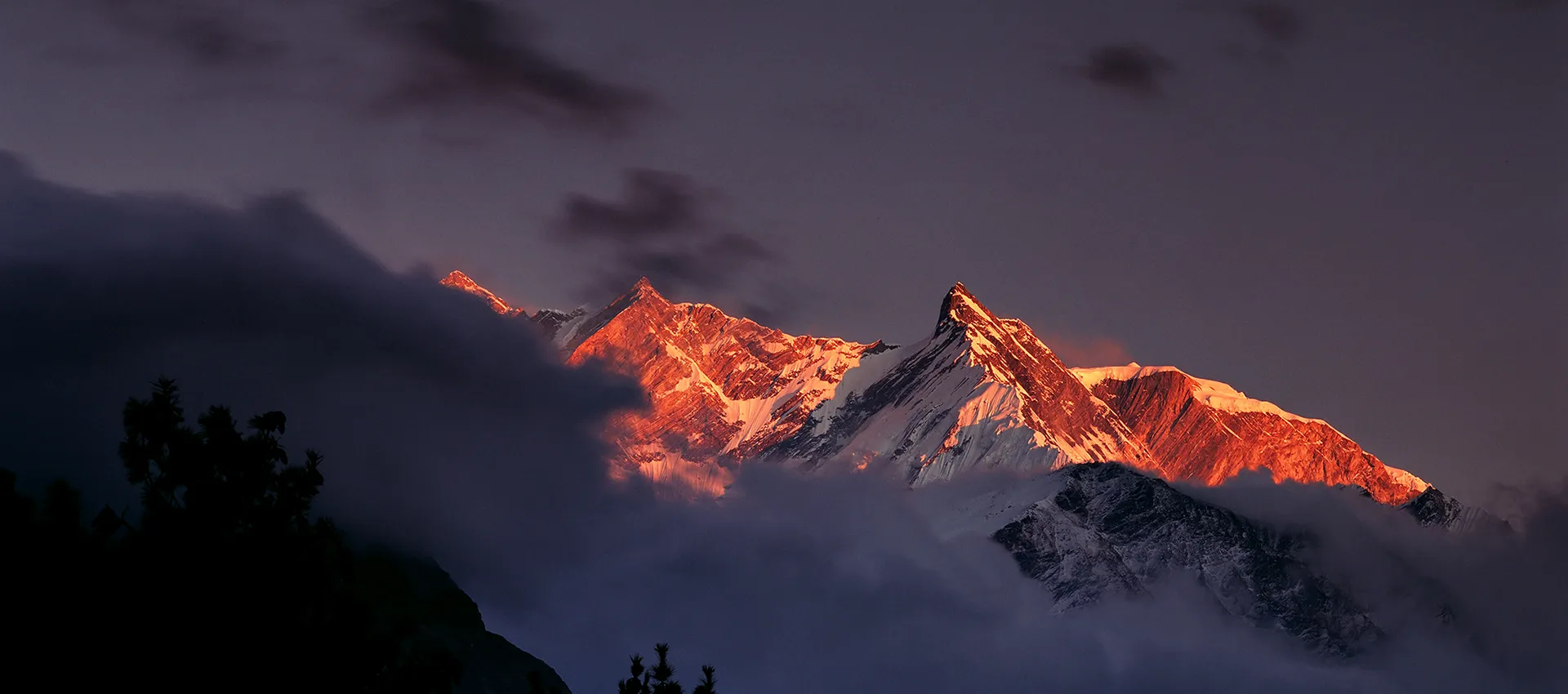
Arun Valley Trek

Duration
14 Days

Trip Difficulty
Moderate

Max. Altitude
3,415m

Destination
Nepal

Group Size
2-20

Accommodation
Hotel, Lodge, Teahouse

Transportation
Flight, Bus

Meals
Breakfast, Lunch and Dinner
Explore more facts about the trip
Overview of Arun Valley Trek
The Arun Valley Trek is a unique and less-crowded trekking journey in eastern Nepal that takes you through deep valleys, high mountain passes, and traditional villages. The trek is characterised by natural beauty, cultural diversity, and the tranquil paths, which make it the best place to be visited by those trekkers seeking to experience the true Himalayan landscape without the hustle and bustle of the mainstream paths.
The trek starts in the warm, low Arun Valley and then slowly ascends to alpine scenery, with spectacular variations in the scenery and climate. On the way, you go through terraced farm lands, forests, rivers, and mountain ridges and enjoy spectacular mountain ranges.
A wide variety of elevations is one of the exclusive traits of the Arun Valley Trek. The path begins with an altitude of approximately 500 m / 1,640 ft and ascends to high passes such as Salpa La at 3,350 m / 10,991 ft and Khari La at 3,415 m / 11,204 ft. This slow increment enables trekkers to have a variety of vegetation areas from tropical forest to alpine meadow.
You also have the sight of well-known Himalayan mountains, such as Makalu at 8,463 m / 27,766 ft and distant glances of Everest at 8,848 m / 29,029 ft. This route subsequently joins the traditional Everest area trail and finishes at Lukla, 2,860 m / 9,383 ft.
The Arun Valley Trek is very rewarding in terms of culture. You pass through Rai, Sherpa, and other ethnic villages, whose life is simple and traditional every day. The smiling inhabitants, prayer flags, small monasteries, and stone houses provide a close look at the mountain culture. There are teahouse accommodations on the way, which are simple yet cosy, offering warm food and a friendly environment after many walking days.
The Arun Valley Trek, in general, is a difficult but very rewarding experience. It involves being physically fit, because the days are usually long, and some of the climbs are very steep, but it is well-rewarded. This trek is really unique due to the silence of the trails, cultural experience and mountain views.
Good planning and support are also considered during the trek, and it is at this point that a professional organiser, such as Morning Star Treks, will assist in providing a safe, well-organised trekking experience that can be remembered.
- Safety first, always
- Best prices guaranteed
- Expert travel team
- Easy booking, no extras
- Customize your journey
Based on 10 reviews

Trip Highlights
- Walk through untouched and off the beaten tracks, experiencing the Himalayan lifestyle.
- See impressive changes in scenery, starting with the low tropical valleys and high alpine scenery.
- Cross high passages such as Salpa La at 3,350 m / 10,991 ft and Khari La at 3,415 m / 11,204 ft.
- See the spectacular scenery of the Himalayan mountains like Makalu (8,463 m / 27,766 ft and Everest at 8,848 m / 29,029 ft.
- Experience the traditional village life of the Rai and Sherpa people in isolated mountain villages.
- Walk across the fertile woodlands of rhododendron, pine, and oak, which are particularly beautiful during spring.
- Complete the trek on the classic route to Everest at Lukla, making the experience special and satisfying.
Photo and Video Gallery


Arun Valley Trek Detail Itinerary

Day 01: Arrival in Kathmandu (1,400 m / 4,593 ft)
You will arrive at Kathmandu, the busy capital city of Nepal, at an altitude of approximately 1,400 m / 4,593 ft above sea level. Upon landing at the airport, you are welcomed by the representatives of the Morning Star Treks and taken to a hotel. It is a light and comfortable day that will enable you to rest after your journey.
You can relax, take a shower or take a small stroll around the hotel premises to get a feel of the first impression of Nepal. You have a briefing of the trip in the afternoon, when your guide explains what to expect, the plan of the trek, and safety tips. This is when it is good to ask questions and check your gear.
You come to a welcome meeting in the evening, where you have dinner in a traditional Nepali way, taste Nepali dishes and get to know your guide and other trekkers.

Activity: Arrival, hotel pickup and welcome dinner

Max. Altitude: 1,400m/4,593ft. (Kathmandu)

Meal: Breakfast, Lunch and Dinner

Accommodation: Hotel
Day 02: Kathmandu Sightseeing (1,400 m / 4,593 ft)
The day is devoted to the exploration of the culture and history of Kathmandu, which is located at 1,400 m / 4,593 ft. You have a guided sightseeing tour post-breakfast to some of the key UNESCO World Heritage locations in the city.
You pay your respects to Pashupatinath Temple, which is a holy Hindu temple complex on river bank, and Boudha Stupa, which is one of the largest Buddhist stupas in the world. Your guide will explain to you the local practices, religious beliefs, and way of life.
You get to know about simple cultural practices as taking off your shoes before entering temples and greeting people with Namaste.
Afternoon is at your own convenience to rest, have a coffee in a cafe or buy the trekking gear and souvenirs. You can learn about the Nepalese culture on this day before venturing into the mountains.
Activity: Cultural city tour and preparation, 6 hrs city tour
Max. Altitude: 1,400m/4,593ft. (Kathmandu)
Meal: Breakfast, Lunch and Dinner
Accommodation: Hotel
Day 03: Flight to Tumlingtar & Trek to Kartike (523 m / 1,716 ft)
You board a short 30-35 minutes flight after having had an early breakfast to Tumlingtar, where you are 1,315 m / 4,314 ft, in the eastern foothills of Nepal. The flight will provide scenic hill and river scenery.
This is the day of a major transition when you say goodbye to the bustling city and come to rural eastern Nepal. Green hills, meandering rivers, and dispersed villages are first seen on your initial short flight to Tumlingtar at 1,315 m / 4,314 ft. Working the slower rhythm of life is instantly felt once on the ground.
You leave Tumlingtar and drive a short way to Kumal Gaon, and here you start your trek. The road is largely descending into a sub-tropical valley that is warm. You pass through tiny towns, agricultural land, and rolling meadowlands and can experience the local life firsthand. The trail is soft and easy to walk, and it is a pleasant introduction to trekking.
It is not long before you are at Kartike, at 523 m / 1,716 ft. You are staying in a small local lodge and spending an evening in peace with nature.
Activity: Flight, short drive and easy trek, 3 hrs hiking
Max. Altitude: 1,315m/4,314ft. (Tumlingtar)
Meal: Breakfast, Lunch and Dinner
Accommodation: Lodge
Day 04: Trek from Kartike to Gothey (1,128 m / 3,701 ft)
You start a gradual ascent from Kartike at 523 m m /1,716 ft to Gothey at 1,128 m m /3,701 ft, today. The trail cuts across tropical forests that are lush in greenery, birds and flowing rivers. You also visit the small villages and tea gardens, which provide an opportunity to observe life in the eastern part of Nepal.
Today is the beginning of a slow increase in height, and this aids your body in adjusting slowly to climbing. The forest trails are shaded, which helps the uphill walk to be more comfortable, and the rhythm of the flowing streams helps to give the day a relaxing rhythm. Regular pauses will allow savouring the environment without being in a hurry.
A large portion of the trail is shaded, and therefore, the climb becomes more comfortable. The daytime rise is approximately 600 m / 1969 ft in altitude. The walk is slow yet steady, and it gradually makes your body acclimatised to the increased altitude.
Towards the end of the afternoon, you come to Gothey, and you have dinner in a simple tea-house and rest for the night.
Activity: Uphill trek through forest and villages, 6 hrs hiking
Max. Altitude: 1,128m/3,701ft. (Gothey)
Meal: Breakfast, Lunch and Dinner
Accommodation: Teahouse
Day 05: Trek from Gothey to Salpa Phedi (1,680 m / 5,512 ft)
Starting at Gothey 1,128 m / 3,701 ft, you keep on hiking until you reach Salpa Phedi 1,680 m / 5,512 ft on this day. The path then leads through lovely rhododendron and oak woods, and cool air and quiet scenes.
When you reach the higher elevations, it is possible to see snow-covered peaks lying far off in the trees. The climb is not a rush, not excessive, and pleasant to walk up. In between, you have little pauses to have a rest and enjoy the landscape.
The air grows cooler and fresher today as you go higher. The woods are less loud, and the vegetation varies, changing is not hard to observe. The trees of rhododendrons and oak provide a colourful surrounding, particularly during spring, and the gradual ascent contributes to the development of strength and confidence.
Towards the afternoon, you come to Salpa Phedi, a little settlement on a ridge. It is a good viewpoint to see how much you have ascended into the valley. The night is silent and ideal to relax and set oneself to greater heights ahead.
Activity: Forest trek with gradual ascent, 5 hrs hiking
Max. Altitude: 1,680m/5,512ft. (Salpa Phedi)
Meal: Breakfast, Lunch and Dinner
Accommodation: Teahouse
Day 06: Trek from Salpa Phedi to Gurase Bhanjyang (2,500 m / 8,202 ft)
The walk of this day is further up into the alpine. The initial stage begins at Salpa Phedi, 1,680 m / 5,512 ft above the tree line, and ascends steadily above it. The scenery gradually evolves into alpine open meadowlands.
You approach Salpa Pokhari, a holy lake at approximately 3,030 m / 9,941 ft, a significant pilgrimage place to the locals. You proceed to Gurase Bhanjyang at 2,500 m / 8,202 ft. after spending some time in the serene region. The higher you get, the more the scenery expands, and so you can see mountains such as Makalu and Baruntse in the distance.
It is rewarding to get to Gurase Bhanjyang, 2,500 m / 8,202 ft above sea level. The low air and chill make you slow down and hydrate yourself. It is where the mountain views are brought nearer, and the landscape starts to really become Himalayan. Stay in a simple teahouse today with a warm dinner.
Activity: Steep ascent and mountain views, 7 hrs hiking
Max. Altitude: 2,500m/8,202ft. (Gurase Bhanjyang)
Meal: Breakfast, Lunch and Dinner
Accommodation: Teahouse
Day 07: Trek from Gurase to Sanam (2,850 m / 9,350 ft) via Salpa La Pass (3,350 m / 10,991 ft)
It is the most difficult and the most gratifying day of the Arun Valley Trek. Starting from Gurase Bhanjyang, 2,500 m / 8,202 ft, you move up early in the course of the journey to Salpa La Pass, 3,350 m 10,991 ft, the highest point of the journey.
The climb is not easy, but the views at the pass are amazing. Peaks such as Makalu, 8,463 m / 27,766 ft and Everest, 8,848 m / 29,029 ft, can be seen from here. Once you have had your time with panorama, a lengthy downhill of approximately 500 m / 1,640 ft. starts.
Once across the pass, the long drop is good to relieve the breathing as you come back to greener pastures. Through forest trails, you are slowly brought to Sanam, 2,850 m / 9,350 ft. At the time of arrival, the sense of achievement is high as you realise that you have passed the peak of the trip.
The path passes through some fine alpine woods and into a lovely ravine. At noon, you arrive at Sanam (2,850 m / 9,350 ft) and sleep in a mountain lodge.
Activity: Cross Salpa La Pass and descend to Sanam, 8 hrs hiking
Max. Altitude: 3,350m/10,991ft. (Salpa La Pass)
Meal: Breakfast, Lunch and Dinner
Accommodation: Lodge
Day 08: Trek from Sanam to Bung (1,900 m / 6,234 ft)
The trail is predominantly downhill, beginning in Sanam today at 2,850 m / 9,350 ft. You pass by serene fir and pines, the air is fresher, and the environment is calm. The road gradually descends as one gets further into the valley. You also cross the Hinku River on a long suspension bridge on the way, which is a thrilling day out.
Upon crossing the river, the path ascends towards an uphill direction. This part of the hike will give your body a moment to rest a little since you will have come down from a high level. A downhill walk-through forest is less difficult on the lungs, but still may not be pleasant on the knees. Pine and fir trees are cool in color thus making the stroll pleasant, and the presence of birds helps to enhance the quietness of the trail.
Then there is the Sherpa village of Bung, which is 1,900 m / 6,234 ft. Bung is a very beautiful village with high cliffs and green hills. The village is cosy and peaceful, and it provides an opportunity to rest and see life in the village.
The Buddhist influence here is very strong, as evidenced by stone houses and mani walls as well as prayer flags. In case of a sunny day, you can have a sunset with reflections of cliffs around.
The night is free to relax, wander in the village or admire the serene mountainous environment.
Activity: Downhill trek through forest and village walk, 6 hrs hiking
Max. Altitude: 2,849m/9,347ft. (Sanam)
Meal: Breakfast, Lunch and Dinner
Accommodation: Teahouse
Day 09: Trek from Bung to Gai Kharka (2,300 m / 7,546 ft)
At Bung at 1,900 m / 6,234 ft, have your breakfast, and once more, you begin to climb. The route passes through mixed forests and terraced farmland. The trail is going up and down through little ridges and down into the narrow ravines.
The trail today is less of a forest and more open, with you passing by the villages and entering pastureland. The evolving landscapes create great remoteness that is among the exceptional characteristics of the Arun Valley Trek.
You go through the fields, the trees and the grazing grounds where the people keep the animals. The hike is not strenuous and provides scenery that is not the same all day long. The higher you are, the colder the air and the broader the views.
In the afternoon, you arrive at Gai Kharka 2,300 m / 7,546 ft. It is a grazing field, open pasture, and it is surrounded by hills and mountainous outcroppings in the background. It is a perfect place to be in to relax and enjoy nature, due to the open landscape.
Since this region is seasonal grazing grounds, amenities are minimal, although calm. It is normally a quiet night with clear skies if the weather is clear. This environment makes the trekkers feel very close to nature and prepares them mentally for the higher passes yet to come.
Here you stay overnight, and sleep before the greater heights.
Activity: Uphill trek through forest and open pastures, 6 hrs hiking
Max. Altitude: 2,300m/7,546ft. (Gai Kharka)
Meal: Breakfast, Lunch and Dinner
Accommodation: Teahouse
Day 10: Trek from Gai Kharka to Panggom (2,850 m / 9,350 ft) via Panggom La (3,174 m / 10,413 ft)
This day’s trek is more strenuous and highly picturesque. The trail leaves Gai Kharka, 2,300 m / 7,546 ft and ascends over ridges and rocky terrain along the Hinku River. The slope only increases in steepness as you reach Panggom La Pass at 3,174 m / 10,413 ft. You can see spectacular views of Mera Peak and the Khumbu mountains from here.
The attempt at passing Panggom La 3,174 m / 10,413 ft is quite rewarding since the sight of the top justifies the tedious journey that led to it. It is a nice day to walk, not in a hurry, and take frequent breaks so that your body can adapt to the altitude.
When you have been up there a little, you get down the long one. The road goes down through woods and hilly tracks. By afternoon, you arrive at the Sherpa village of Panggom, which is 2,850 m / 9350 ft. It is a very vibrant and hospitable village that is surrounded by stone houses and mountainous scenery.
The trip down to Panggom restores one to village life. The settlement itself is the bustling kind as compared to the open pastures above. You can find locals farming or trading supplies. It is important to get a good sleep here, as there is another high mountain pass the next day. You spend the night in a local lodge and sleep after walking for an entire day.
Activity: Cross Panggom La Pass and descend to the village, 7 hrs hiking
Max. Altitude: 3,174m/10,413ft. (Panggom La)
Meal: Breakfast, Lunch and Dinner
Accommodation: Lodge
Day 11: Trek from Panggom to Paiyan (2,730 m / 8,957 ft) via Khari La (3,415 m / 11,204 ft)
Beginning at Panggom, 2,850 m / 9,350 ft, the current route gets you nearer to the Everest area. The trail ascends the slope gradually to Khatre at 2,830 m / 9,285 ft. Then it is steeper and up you go to Khari La Pass with a height of 3,415 m / 11,204 ft.
It is not easy to reach the pass, but the views are breathtaking in the distance of the Everest region and other high mountains. When you have enjoyed the views, you go gradually down into the Paiyan valley. The path leading down is through wooded hills and more peaceful streets.
This is the day with a good feeling of approaching the Everest territory as you proceed near popular trekking paths. The climb through Khari La Pass at 3, 415 m / 11, 204 ft is physically challenging and mentally satisfying, particularly when one can see the Himalayan mountains in the distance.
The way down to Paiyan is long, yet easy. The trails are forested, and the low altitude is useful to increase appetite and sleep. Paiyan is where one can relax and renew after one of the most difficult days in the Arun Valley Trek.
Towards the end of the afternoon, you reach the height of 2,730 m / 8,957 ft at Paiyan. You spend the night in a lodge and have a good night’s rest after another hectic day of trekking.
Activity: Ascend Khari La Pass and descend to Paiyan, 8 hrs hiking
Max. Altitude: 3,415m/11,204ft. (Khari La Pass)
Meal: Breakfast, Lunch and Dinner
Accommodation: Lodge
Day 12: Trek from Paiyan to Lukla (2,860 m / 9,383 ft)
You are now a member of the popular Everest Base Camp trail. You leave Paiyan at 2,730 m / 8,957 ft, where you pass through wooded hills and smooth trails. The road initially heads down to Kharikhola, where you find small villages and flags of prayer.
The road, crossing the river, again ascends toward Surke. The last part ascends to Lukla, 2,860 m / 9,383 ft. Though it has a few uphill climbs, the day is less stressful and shorter than other days.
Becoming part of the main Everest route will increase the number of trekkers, lodges, and activities. You can see the difference between the silent Arun Valley and the exciting Everest trail. The road gets broader, and the services are well-developed closer to Lukla.
It is the end of your long trekking path reaching Lukla, and this makes it a special moment. Arrival at Lukla is the successful end of a long, tedious journey. The night celebration is an opportunity to look back at the experience, exchange stories, and enjoy the distance that you have traversed in isolated Himalayan scenery.
During the afternoon, one can have some rest, go shopping for souvenirs or enjoy at the lodge. You have a special farewell dinner with your trekking crew in Lukla in the evening.
Activity: Trek on the Everest trail and celebration dinner, 5 hrs hiking
Max. Altitude: 2,860m/9,383ft. (Lukla)
Meal: Breakfast, Lunch and Dinner
Accommodation: Lodge
Day 13: Fly from Lukla to Kathmandu (1,400 m / 4,593 ft)
You take a morning flight back to Kathmandu after having breakfast at Lukla at an altitude of 2,860 m / 9,383 ft. It takes approximately 25-35 minutes and provides weaving views of the Himalayan mountains on the flight. As you move out of the Everest region, you get to see ridges, valleys and snow-covered mountains.
The early flight back to Kathmandu, a 2860 m / 9383 ft (2,860 feet) is usually an emotional one, with the final glimpses of the mountain. The view of the land you covered on foot when flying makes you view the magnitude of the Arun Valley Trek with different eyes.
On reaching Kathmandu at 1,400 m / 4,593 ft, you check into a hotel. The remainder of the day is at your own pace to relax, have a massage, or go shopping and get the souvenirs in Thamel.
The streets of Kathmandu are a real contrast to the mountains and much warmer. During the evening, you as a group have a special farewell dinner. It is high time to share something with memories, congratulate about your success, and spend the last evening in Nepal.
Activity: : Flight to Kathmandu and farewell dinner
Max. Altitude: 2,860m/9,383ft. (Lukla)
Meal: Breakfast, Lunch and Dinner
Accommodation: Hotel
Day 14: Departure from Kathmandu (1,400 m / 4,593 ft)
It is your last day in Nepal today. Your journey home begins after breakfast at your hotel in Kathmandu, which is 1,400 m / 4,593 ft. It can be some spare time to relax or have a little walk around, depending on your flight schedule of flights.
We have our employees from Morning Star Trek who help you to check out of the hotel and carry your luggage. You are then made to reach the international airport in Kathmandu. The drive provides you with the final glance of the busy streets and life of the city. Our team assists in departure formalities at the airport so that there is a smooth process.
This is how your exciting trekking experience in the eastern side of Nepal and the Everest region comes to an end. You leave behind new friends, fantastic memories and mountain experiences. Even safe travels, and do hope to meet you again.
Activity: Hotel checkout and airport transfer
Max. Altitude: 1,400m/4,593ft. (Kathmandu)
Meal: Breakfast
If our standard itinerary doesn't fully meet your needs, we are happy to tailor it to your specific preferences and requirements.

Includes and Excludes
What’s Included?
- Airport pick-ups and drop-offs.
- 3 nights’ stay in a 3-star hotel in Kathmandu, inclusive of breakfast.
- Accommodation in simple lodges or teahouses during the trek for 10 days.
- All meals (breakfast, lunch and dinner) during the trek.
- Domestic flights from Kathmandu to Tumlingtar and Lukla to Kathmandu.
- Experienced English-speaking guide and porters (1 porter for 2 trekkers, and carries a maximum of 20 kg per person) with their accommodation, food, insurance and salary.
- Required trekking permits, such as the TIMS card, Makalu-Barun National Park permit and Sagarmatha National Park permit.
- Necessary equipment for porters, such as duffel bags, sleeping bags, first-aid kits, and oximeters, is provided.
- Farewell group dinner in Kathmandu.
- Trek completion certificate
What is not Included?
- Air transferers to and from Nepal.
- Nepal visa and charges
- Personal travel insurance.
- Lunches and dinners in Kathmandu.
- During the trek, alcoholic drinks, snacks and bottled water.
- Personal trekking gears like a sleeping bag, down jackets (you can rent them)
- Personal expenses like snacks, drinks, a hot shower, gadget charging, and wifi fee during the trek.
- Guide and porter tips.
Trip Information of Arun Valley Trek
Weather and Season
Arun Valley Trek is most comfortable during spring (March-May) and autumn (September-November). The weather in these seasons would be quite stable, and the daytime temperatures would be moderate with warm conditions and clear skies. At the lower part of the Arun Valley Trek, the temperatures are generally between 10-20degC which makes walking pleasant.
The spring is particularly gorgeous since it is blanketed with rhododendrons on the hillsides, and in autumn, one gets fresh air and clear mountain scenery.
Monsoon from June to August is not the best season because this season has heavy rainfall, muddy trails, leeches and can have flight delays. Winters from December to February are colder and windy, especially over 2,500 m / 8,202 ft, but no heavy snowfall is seen on this route.
The most preferred season to experience the Arun Valley Trek is spring and autumn, as the seasons offer the most desirable combination of weather, landscape, and trail conditions.
Trip Difficulty
The Arun Valley Trek is a difficult trek and is only applicable to trekkers who are in good physical shape. You mostly walk 5-6 hrs per day on rough trails, steep stone steps and forest paths. Some days involve large amounts of gain in elevation with an average of 700-1,000 m / 2,297-3,281 ft.
The most difficult areas are the high passes like Salpa La 3350 m/10991 ft and Khari La 3415 m/11204 ft, which require strong legs, balance and stamina.
It is important to have prior experience in trekking, and it is also recommended that you be accustomed to carrying a day pack over long distances of 10-15 km through hilly slopes. The heavy gears may be assisted by the porters; nevertheless, you must be able to walk for many hours.
The Arun Valley Trek is challenging, but fully worth the effort as it offers serene paths with good cultural experience and mountainous beauty.
Altitude Sickness and Suggestions
Once you exceed 2,500 m / 8,202 ft, altitude sickness may affect the trekkers, and this is applicable with the Arun Valley Trek too. The highest point of the trek is the Salpa La Pass, 3,350 m / 10,991 ft, which means there is a chance of altitude sickness in the trek if not done and planned properly in advance.
You should walk slowly, consume a lot of water, and not hurry when climbing to the elevation to minimise the risk. The itinerary will be structured in such a way that it will provide progressive ascending and simple acclimatisation, though all people must be attentive to such symptoms as headache, nausea, dizziness, or lack of appetite.
In case the symptoms are so intense, the only thing that can help is to descend to a lower altitude. Some trekkers bring Diamox when a doctor prescribes it. Other useful tricks are that one should eat very light meals, no alcohol on the trek and ensure that one takes plenty of rest.
Morning Star Treks has guides that are trained to identify the symptoms of altitude issues. Most individuals can complete the Arun Valley Trek safely by listening to their body and following instructions.
Food & Drink
The food during the Arun Valley trek is basic, warm and filling and is intended to provide you with stamina during the long walking days. Dal Bhat is the primary meal, and it consists of rice, lentil soup, vegetables, and occasionally curry. It is a healthy traditional Nepali dish that is usually refilled.
Other common lodge menu feature is noodles, fried rice, soups, eggs, potatoes and momo dumplings. On the trekking days, three meals are served, including breakfast, lunch, and dinner. Teahouse food is simple yet clean and well-cooked. There are relatively many vegetarian choices, and larger villages have meat dishes.
It is not safe to drink untreated tap water; therefore, it is recommended that you drink filtered, bottled, boiled, purified or treated water. The guides assist in the boiling or purification of the water. For the Arun Valley Trek, bringing a personal water filter or purification tablets along with a reusable bottle is a good option.
Visa and Permits
In order to participate in the Arun Valley trek, every foreigner must have a Nepal tourist visa, which they get at Kathmandu airport. Visas can be 15 days, 30 days or 90 days, depending on your schedule.
Besides the visa, a number of trekking permits are also needed. This trek goes through conserved zones, and hence requires Makalu-Barun National Park and Sagarmatha National Park permits. It also requires a TIMS (Trekkers Information Management System) card. These permits are inspected at various points along the trail; they have to be available at all times.
Morning Star Treks prearranges all the permits and documentation for you, and you save time and trouble. Sightseeing in Kathmandu does not require any additional permit as long as one has the normal visa, but there may be entrance fees in some of the attractions. It is always advisable to carry your passport and permit copies with you on the trek.
Health & Safety
The Arun Valley Trek has some considerations for health and safety. Nepal is generally a safe country for visitors. Trekking places are very unlikely to involve serious crime, but simple precautions are necessary in the cities.
The primary dangers in the trek are altitude sickness, weather variation, and minor traumas such as blisters or strains. It is best to have a small personal first-aid kit and own medications. When you drink and eat freshly cooked food, it prevents stomach problems. Bedding is often clean, and toilets might be western or squat, often with a bucket-flush system.
Morning Star Treks guides are trained in first aid, and they carry emergency communication equipment.
Before visiting, it is prudent to ensure you are well-informed of the routine vaccines and consult a physician regarding the vaccines required when travelling.
The Arun Valley Trek can be a safe and rewarding experience by following instructions, being a responsible trekker and listening to your body.
Transportation
The Arun Valley Trek is a combination of road and flight journey that makes travelling through it scenic and efficient at the same time. It starts with a domestic flight from Kathmandu to Tumlingtar, which normally takes 30-35 minutes. This flight has beautiful scenery of hills and Himalayan peaks, which would be offered on a weather-permitting day.
Starting with the airport of Tumlinghar (approximately 1315m/4314 ft), you reach the starting point of the trek by jeep or private vehicle.
You fly from Lukla at 2,860 m / 9,383 ft at the end of the trek and have a final glimpse of the mountains before flying to Kathmandu.
The airport transfers and ground transportation are all pre-planned and included in your Arun Valley Trek package by Morning Star Treks, and thus, you do not have to worry about the logistics.
Flights in the mountainous areas are weather-sensitive, and therefore, they can be delayed. The itinerary typically has buffer days, and you will be prudent to carry warm clothes in case you are stuck at small mountain airports.
Travel Insurance
The Arun Valley Trek requires one to have the right travel insurance. A high-altitude trekking and emergency evacuation, which may involve a helicopter rescue, should be incorporated in your insurance.
Some of the places in this journey are over 3,000 m / 9,843 ft, and in isolated locations, where only a few medical centres exist. Emergency cases of severe illnesses or injury might necessitate a helicopter evacuation, which can cost several thousand US dollars. All these expenses have to be covered out of your pocket if you don’t buy comprehensive insurance.
Medical treatment and trip interruption should also feature in your policy. The Morning Star Treks can assist in the organisation of the rescue operation in case of necessity, but they cannot insure you, and hence you have to purchase the insurance before you arrive in Nepal.
It is important to always have a copy of your insurance information, either in paper or digital format, when you go on the trek. Good insurance also comes with a feeling of peace, and you can be able to enjoy the Arun Valley Trek knowing that you are covered in case some unforeseen event occurs.
Language & Communication
In the Arun Valley Trek, language is not a major issue for the travellers. The national language is Nepali, although English is commonly used by guides on the treks and a large number of lodges and teahouse owners along the way. The guides are trained to be effective in communication as well as assisting with daily needs.
In the smaller villages, you can hear local languages like Rai or Sherpa, yet people tend to be welcoming and supportive.
Coverage of mobile phones is available in certain regions as far as 3,000 m / 9,843 ft, but the signal is very weak and unreliable. The phone service tends to vanish entirely above this height.
Some teahouses have Wi-Fi at a small charge, but the speed is low. Guides also carry emergence satellite phone in case there is an emergency. Internet and mobile services are good and efficient in Kathmandu, hence connecting with family both before and after the trek is not very difficult.
Don’ts on This Trip
To safeguard nature and never disrespect local culture when attending the Arun Valley Trek, you should not do a few things. Never litter or leave trash on the trail; always take non-biodegradable waste. Do not harm wildlife, keep a look at animals and do not feed them. Use designated paths to avoid being injured and lost.
It is only good to respect people, homes, and sacred places, and only take photos with permission. Wasting water or electricity in teahouses is to be avoided since water and electricity are scarce resources in the mountains.
The teahouses and lodges in the mountains are not luxurious, and one should not complain about simple facilities. In Buddhist regions, do not step on prayer flags, mani stones or religious offerings. Drugs are strictly forbidden.
All that you need to do is respect and abide by these few rules, and you will contribute to preserving the environment and culture that made the Arun Valley Trek a unique experience.
Photography & Drone Rules
The Arun Valley Trek is the best for photography since the path has very attractive panoramas, villages and mountainous scenery. You can take photographs on the road, but always request before capturing pictures of people, monasteries and shrines in villages.
Certain places of worship and religious locations might not allow photography; therefore, read the signs, if there are any or ask your guides for confirmation if you are confused.
The use of drones in Nepal is controlled. The operation of the drone has to be specially authorised by the Civil Aviation Authority of Nepal, and further permission needs to be obtained in secured zones like the national parks. The fines or seizure can be a consequence of using a drone without permits. Most of the trekkers do not carry drones due to the time delay associated with the acquisition of permits.
All one needs is an ordinary camera or a smartphone to take memories. Never violate the local regulations and guidelines given by your guide to take photos during your Arun Valley Trek.
Tips for First-Time Visitors
It is a good idea to prepare a bit in case it is your first Arun Valley Trek. Carry durable and comfortable trekking shoes and layers of clothes, including thermals and raincoats, since the weather varies rapidly at various altitudes.
Get to know the simplest greetings, such as Namaste, that people here like. Never wear your shoes inside the homes or temples. Give or accept things with your right or both hands. Always carry enough Nepali because there are no ATMs other than in the main towns, such as Kathmandu.
Wear modest clothes in the villages, covering shoulders and knees. Consume enough water and bring purification tablets or a filter. Guides and porters are expected to be tipped, and it is perceived as a gesture of goodwill.
Through these few tips, you will be more relaxed, respectful to local culture, and have maximum enjoyment with your experience during the Arun Valley Trek.
Most Asked Questions
 General
What is the Arun Valley Trek?
Arun Valley trek is a 14-day trekking path in eastern Nepal between Tumlingtar and Lukla in remote valleys along high passes and traditional villages.
What are the beginning and the endpoints of the trek?
The trek begins in Tumlingtar and concludes in Lukla, joining the traditional Everest area route.
What makes this trek special?
It is not so crowded, culturally diverse, and presents drastic landscape transformations of tropical lowlands to alpine scenery.
 Preparation & Fitness
What would be my fitness requirements for this trek?
Good physical fitness is a requirement because the trek entails numerous walking days, steep climbs and mountain passes.
Should I have previous experience in trekking?
Past experienceof trekking is highly desired since the trek is challenging and the terrain will be difficult.
What is the number of hours we walk every day?
You generally walk 5 to 8 hours on a daily basis, depending on the path and height.
 Insurance and Visa
Is travel insurance necessary?
Yes, high altitude trekking and emergency helicopter evacuation travel insurance is a must.
Is a Nepal visa required?
Yes, a Nepal tourist visa will be required by most travellers, and it can be acquired upon arrival in Kathmandu at Tribhuvan International Airport or any overland border.
What are the required permits for the trek?
You require a TIMS card, Makalu-Barun National Park permit and Sagarmatha National Park permit.
 Guides & Support Staff
Does it include a guide onthis trek?
Yes, there is an English-speaking experienced guide included during the trek.
Are porters provided?
Yes,the trek has porters, one porter per 2 trekkers on average.
What is the maximum weight a porter can carry?
A porter carries a maximum of 20 kg per person, and you have to carry your personal daypack during the trek.
 Accommodation and Facilities
What kind of accommodation is offered during the trek?
You will be staying inbasic teahouses or lodges with simple but comfortable facilities.
Are private rooms available?
There are typically twin shares in the rooms, so the rooms might not be private in peak seasons, but with a minimal upgrade fee in other seasons, you can get a private room. It is also a matter of availability.
Does it have hot showers and Wi-Fi?
Some lodges will offer hot showers and Wi-Fi at an additional fee.
 Weather & Seasons
When is the Arun Valley Trek best?
The most favourable times of this trek are spring (March-May) and autumn (September-November).
What is the weather condition on the trek?
The low regions are hot, and the high areas are cool to cold, particularly at night.
Is winter trekking possible to this destination?
Yes, but it is colder and windier in winter, especially above 2500 meters of elevation. It is not recommended to do this trek in winter.
 Health & Safety
Does this trek have any altitude sickness problems?
Yes, there is a possibility of altitude sickness above 2,500 meters, especially inthe high passes.
What is the prevention of altitude sickness?
The itinerary enables gradual ascendency, and guides are trained to identify and treat symptoms. Walk slowly, drink plenty of water, listen to your body and let your guide know about your health condition during the trek.
What happens if an emergency arises?
Guides have first-aid kits and tools of emergency contacts, and evacuation can be organised.
 Booking & Payment
What is the way I make a reservation for the Arun Valley Trek?
You can reach out to Morning Star Treks via call, email or WhatsApp to make your reservation for this trek.
Is it inclusive of permits and logistics?
Yes, trekking permits, domestic flights, accommodation and meals during the trek.
What are the costs not included?
Costs that are not included in this trek package are international flights, Nepal visa charges, traveller insurance, personal expenses and tips.
 Transportation & Flight
How do we reach the trek starting point?
You take a domestic flight from Kathmandu to Tumlingtar and then drive to the trek start point.
How do we come back after the trek?
The trek ends at Lukla, from where you fly back to Kathmandu.
Are the flights weather-dependent?
Yes, mountain flights are weather-dependent and might be delayed.
- Safety first, always
- Best prices guaranteed
- Expert travel team
- Easy booking, no extras
- Customize your journey
Based on 10 reviews
Have Questions?
+977 9767224414