
 English
 Dutch
Dutch Japanese
 Hindi
Hindi Italian
 Spanish
 French
 German
 Chinese
 Korean
 Arabic
 Hebrew
 Russian
 Portuguese
 Danish
 Czech
Czech Polish
 Swedish
Have Questions?
+977 9767224414
Unmissable holidays deals - Save up to 20%
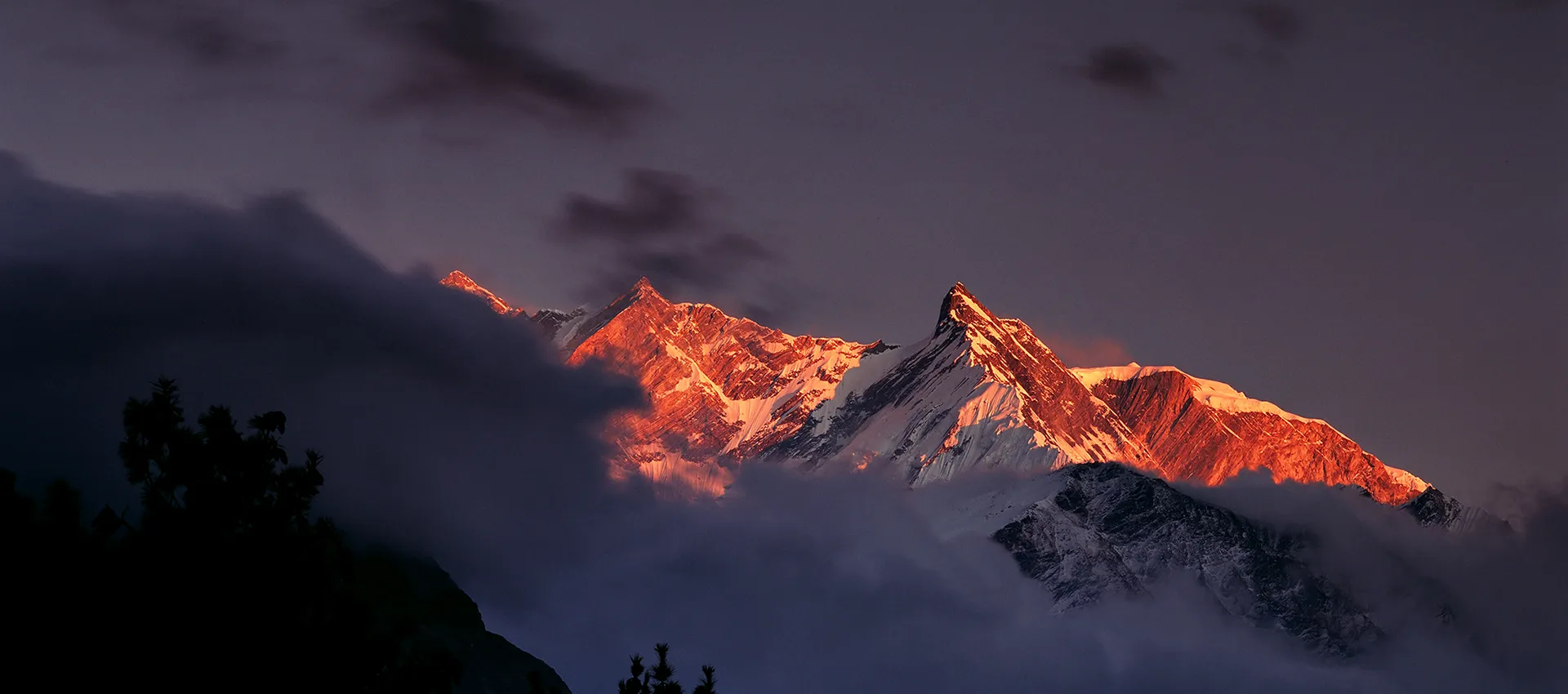
Chulu West Peak climbing with Thorong La Pass

Duration
16 Days

Trip Difficulty
Moderate

Max. Altitude
6,419m

Destination
Nepal

Group Size
2-16

Accommodation
Teahouse, Hotel

Transportation
Tourist Bus

Meals
Mar-May, Sep-Nov
Explore more facts about the trip
Overview of Chulu West Peak climbing with Thorong La Pass
Chulu West Peak climbing with Thorong La Pass is an exciting adventure in Nepal that combines high-altitude trekking with mountaineering. It is the trip across the beautiful Annapurna region and provides you with an experience of culture combined with scenic mountain ranges and demanding climbing conditions. The path starts from the well-known Annapurna Circuit and then shifts towards Chulu West Peak, where the trekkers have an opportunity to visit remote valleys, traditional villages, and stunning Himalayan scenery.
The journey typically starts in Kathmandu with an altitude of approximately 1,400 m / 4,593 ft, where you visit historical temples and cultural landmarks, and then proceed to the mountains. You then take the road leading to the Annapurna region.
As the walk starts, the path goes through forests, rivers, and villages, then to the higher areas like Manang at approximately 3,500 m / 11,483 ft. This is a significant acclimatization point, which enables the trekkers to adapt to the thin mountain air.
In the Chulu West Peak climbing with Thorong La Pass, the terrain slowly transforms from green valleys to open alpine terrain. Trekkers take a path through the yak pastures and rocky routes and arrive at the base camp of Chulu West at approximately 4,900 m / 16,076 ft. Here, mountaineering training, such as crampons, ropes, and ice axes are used as basic preparation for the climbers towards the summit.
The ascent to the top of Chulu West covers an elevation of 6,419 m / 21,059 ft, giving spectacular panoramic views of the Annapurna and Dhaulagiri Mountain ranges. It is a good experience to have spent days trekking and preparing to stand at the summit.
Also, the other highlight of the trip is the Thorong La Pass at 5,416 m / 17,769 ft, which is one of the highest trekking passes in Nepal. The pass has beautiful scenery with snow-capped mountains and colored prayer flags, which identify the summit. Beyond the pass, the road leads to the Mustang valley and the sacred Muktinath Temple at 3, 762 m / 12,342 ft, one of the key pilgrimages of Hindus and Buddhists.
On the whole, Chulu West Peak climbing with Thorong La Pass is the perfect journey to take if a trekker is interested in a full Himalayan experience that is based on trekking, climbing, and cultural experience. Having trained guides, proper acclimatization, and logistics, the trip is safer and more pleasant, and Morning Star Trek is able to make the expedition well-planned and memorable.
- Safety first, always
- Best prices guaranteed
- Expert travel team
- Easy booking, no extras
- Customize your journey
Based on 10 reviews

Trip Highlights
- Summit Chulu West Peak and have panoramic views of the Annapurna and Dhaulagiri Mountain ranges.
- Pass through the renowned Thorong La Pass, which is among the highest trekking passes in the world.
- Hike along the beautiful Manang Valley, with its dramatic Himalayan scenery.
- Experience the perfect blend of high-altitude trekking and technical peak climbing in a single adventure.
- Visit the holy Muktinath Temple, a significant religious attraction for Hindus and Buddhists.
- Stay at Chulu West Base Camp and spend the nights at the approximate altitude of 4,900 m / 16,076 ft, living like a man in the wilderness.
- Visit picturesque villages, the mountain culture, and the way of life of Annapurna.
Photo and Video Gallery


Chulu West Peak climbing with Thorong La Pass Detail Itinerary

Day 01: Arrival in Kathmandu
You arrive at Tribhuvan International Airport and meet the Morning Star Trek crew outside the terminal. They receive you and bring you to your city hotel.
Kathmandu is located approximately 1,400 m / 4,593 ft, and therefore, the air can be slightly different for some visitors. You have a day to rest after your international flight.
During the afternoon, you can make a small walk along the nearby streets, go to small cafes, or treat yourself to a warm cup of tea.
Your trekking guide provides a briefing in the evening on the nature of the trek, safety, pace, and preparation of gear that you will need for the trek.

Activity: Arrival, briefing, 30–45 minutes

Max. Altitude: 1,400m/4,593ft. (Kathmandu)

Meal: Dinner

Accommodation: Hotel
Day 02: Kathmandu Tour and the preparation
Today, you get to know the cultural attractions of Kathmandu Valley. Your guide will take you to the well-known heritage sites, which include ancient temples, stupas, and old squares, after breakfast. Most of them are UNESCO World Heritage sites. The monuments demonstrate the rich history of Nepal, Nepalese art, and religion.
The valley of Kathmandu is situated at approximately 1,400 m / 4,593 ft, which is still a comfortable level to prepare before going to the mountains. You also make sure that you check your trekking gear during the day. Make certain that you have good shoes and that you have warm clothes for the trek.
In case you have to hire climbing gear such as crampons or a harness, this is a good day. During the evening, pack your bags and get ready to move up the next day to the area of Annapurna.
Activity: Heritage tour and gear check, 4–6 hours sightseeing
Max. Altitude: 1,400m/4,593ft. (Kathmandu Valley viewpoints)
Meal: Breakfast
Accommodation: Hotel
Day 03: Drive from Kathmandu to Bagarchap via Besisahar and Chamje
Your morning begins with a long, picturesque ride in the direction of the Annapurna area. The road will take the main highway, and then it will turn to the smaller roads of the mountains along the rivers and hills.
You arrive at Besisahar, a popular entry point to the Annapurna routes, at some 760 m / 2,493 ft, some hours later. Here, the road grows more rugged as one goes further into the Marsyangdi Valley. On your way, you pass villages, terraced farms, waterfalls, and forests.
Then you arrive at Chamje at approximately 1,410 m / 4,626 ft, a place on the river. The road then goes on to climb the mountain until you reach Bagarchap, with its stone houses and mountains, at approximately 2,160 m / 7,087 ft, a peaceful little village.
Upon the end of a tedious journey, rest, dine, and sleep well in preparation for the journey ahead.
Activity: Scenic drive into the Annapurna region, 8–10 hours
Max. Altitude: 2,160m/7,087ft. (Bagarchap)
Meal: Breakfast, Lunch and Dinner
Accommodation: Hotel
Day 04: Trek from Bagarchap to Pisang via Chame
Today is the start of your trekking journey, and you will follow the Marsyangdi River. It is a cool morning, fresh in Bagarchap. The journey is through pine and fir forests, little villages, and suspension bridges. The valley gets narrower as you climb up, with cliffs on either side.
At about 2,670 m / 8,760 ft, the headquarters of the district of Manang, you arrive at Chame. Here, the pathway proceeds with splendid mountainous scenery, with a glimpse of the Annapurna mountains.
Then you walk to Pisang and then on to Upper Pisang at approximately 3,300 m / 10,827 ft. The village is located on a ridge and has broad panoramas of the Himalayas. Due to the elevation, walk slowly, have water, and be warm at night.
Activity: Trekking, 6–8 hours
Max. Altitude: 3,300m/10,827ft. (Upper Pisang)
Meal: Breakfast, Lunch and Dinner
Accommodation: Teahouse
Day 05: Trek from Pisang to Manang
It is the best trekking day in the Annapurna area. The path moves slowly upwards out of Pisang and takes the upper road, which offers the beautiful scene of the mountains. On gaining height, the scenery grows drier and more open.
You are on the road that passes through the traditional villages, prayer walls, and fields where the local people farm barley and potatoes. As you get closer to Manang, the air gets thinner at around 3,500 m / 11,483 ft, a centre of interest to the trekkers working on their preparations for greater altitudes.
Once in Manang, take time to rest and slowly walk around the village to get your body used to it. You can also go to little bakeries or have tea in hot dining rooms. Proper hydration and constant pacing are relevant as the adventure proceeds towards higher altitudes in the mountains.
Activity: Trekking and acclimatization, 5–7 hours
Max. Altitude: 3,499m/11,480ft. (Manang)
Meal: Breakfast, Lunch and Dinner
Accommodation: Teahouse
Day 06: Acclimatization Day at Manang
You will have a significant rest and acclimatization day today at Manang. You do not have to walk long distances, but take a quick walk to the elevated points in the village. This activity, referred to as climb high and sleep low, assists the body in acclimatizing to warmer air.
Several people hike to hills or tiny lakes over the village as high as 4,000 m / 13,123 ft and then head back to sleep again in Manang at 3,500 m / 11,483 ft. The rhythm is slow and easy-going.
In the afternoon, your guide might instruct you in some practical trekking and climbing techniques, including how to use trekking poles, walk effectively up the mountain, and how to deal with clothing layers. This day will make your body ready to climb further at high altitude, and the coming climbing days of Chulu West Peak.
Activity: Acclimatization hike and prep, 3–6 hours total
Max. Altitude: 3,502m/11,490ft. (Manang)
Meal: Breakfast, Lunch and Dinner
Accommodation: Teahouse
Day 07: Trek from Manang to Letdar (Ledar)
Leaving Manang, the trail joins a more open alpine world. The number of trees is decreased, and the scenery of icy mountains is expanded. The road goes through yak herding grounds and lodges on the road. You can halt at Yak Kharka, and then proceed upwards to Letdar.
The mountain is not too steep to walk on, though it is not flat at all, which means that your body will adapt as you continue to climb.
By afternoon, you have arrived at about 4,200 m / 13,780 ft, a little village called Letdar, amongst a group of rocky hills, with broad mountain views. The elevation is over 4,000 m, so walk gradually and have frequent rest. Take lots of water and watch out for altitude sickness. It can be extremely cold during evenings here; warm clothing is necessary once the sun sets.
Activity: Trekking into the high alpine zone, 4–6 hours
Max. Altitude: 4,200m/13,780ft. (Ledar)
Meal: Breakfast, Lunch and Dinner
Accommodation: Teahouse
Day 08: Trek from Letdar to Chulu West Base Camp
Today, you get off the main Annapurna Circuit trail and go to the base camp of the Chulu West Peak. The higher into the mountains you go, the rougher and more remote the landscape is. The trail ascends slowly through sloping rocky terrain and open glacial terrain.
Several hours later, there is Chulu West Base Camp at approximately 4,900 m / 16,076 ft. Here, the mode of trekking is transformed into an expedition setting. The climbing team will install tents, an eating area, and cooking facilities.
After lunch time and a rest, your climbing guide presents the simplest mountaineering skills. You train on using crampons, a harness, an ice axe, and rope techniques, which will come in handy during the summit attempt. Take the evening to rest and get ready for what is ahead on the climb.
Activity: Trek and camp setup and skills intro, 4–6 hours
Max. Altitude: 4,900m/16,076ft. (Chulu West Base Camp)
Meal: Breakfast, Lunch and Dinner
Accommodation: Teahouse
Day 09: Trek from Base Camp to High Camp
Today, you proceed to the high Camp. The trail is gradually ascending up the rocky slopes and snowy areas, depending on the season. Since you are already up the mountains, each step is the more difficult one. Base Camp is located at about 4,900 m / 16,076 ft, and from there the route climbs higher to High Camp at around 5,600 m / 18,373 ft.
The speed is kept low and constant so as to aid your body in adapting to the height. Once at camp, it is time to get some sleep and get ready to climb the mountain. Crampon skills, rope skills, and filling your summit bag are among the key skills that your climbing guide instructs you on.
During the evening, have a warm meal, get your gear packed, and go to bed early as the ascent of the summit starts before daylight.
Activity: Move camp and summit prep, 3–5 hours
Max. Altitude: 5,600m/18,373ft. (High Camp)
Meal: Breakfast, Lunch and Dinner
Accommodation: Teahouse
Day 10: Summit Chulu West, back to High Camp, and Lobuche Base Camp.
The summit day starts at an extremely early time, in the dark. Using crampons and ropes, you are climbing slowly up the snow and ice to the Chulu West Peak. The summit reaches 6,419 m / 21,059 ft and offers amazing panoramic views of the Annapurna and Dhaulagiri Mountain ranges.
Once you have had your peak experience and captured photos, it is time to start the downhill climb. The process of descending can be time-consuming due to the uneven level of the terrain and snowy conditions.
Later in the day, you proceed to the Lobuche Base Camp at approximately 4,900 m / 16,076 ft, where you sleep and regain your strength after a hard and tedious day.
Activity: Summit day and descend and reposition, 9–12 hours
Max. Altitude: 6,419m/21,060ft. (Chulu West Summit)
Meal: Breakfast, Lunch and Dinner
Accommodation: Teahouse
Day 11: Trek from Lobuche Basecamp, Summit Lobuche Peak, and back to Basecamp.
An optional second summit attempt of Lobuche Peak is provided to strong climbers who feel well acclimatized today. Lobuche Base Camp is at an elevation of approximately 4,900 m / 16,076 ft, where you begin early in the day to climb Lobuche Peak.
The path has snow slopes and rocky areas where ropes can be used as safety measures. Your guide walks the team in a pacing manner as everybody walks gradually and consistently. Lobuche Peak is approximately 6,119 m 20,075 ft, which offers extensive vistas of the Everest region mountains and other Himalayan ranges.
Once you are up, you take time to slowly go back to the base camp. The day may be exhausting following the preceding summit, so the team moves at a safe pace. During the evening, rest, drink water, and be ready to be back in trekking mode.
Activity: Optional summit attempt and return to camp, 8–12 hours
Max. Altitude: 6,119m/20,075ft. (Lobuche Peak Summit)
Meal: Breakfast, Lunch and Dinner
Accommodation: Teahouse
Day 12: Trek from Lobuche Base Camp to Thorong High Camp.
As soon as you do a few days of climbing, you come out of the base camp and resume the main trekking path of the Annapurna Circuit. The path leads to the well-known Thorong La Pass. It is a very open landscape with rolling hills and high mountain views.
The trail, beginning at approximately 4,900 m / 16,076 ft, ascends slowly, winding up to Thorong High Camp approximately 4,880 m / 16,010 ft. Although it is not that long distance, the walk at this altitude is still difficult. Go at a slow pace and have frequent respiratory pauses.
When you get to High Camp, you sleep and get ready to start early the following day. Prepare warm clothes, gloves, snacks, and headlamps. It is well to get a good night’s sleep before crossing the high mountain pass tomorrow.
Activity: Trek and pass prep, 4–6 hours
Max. Altitude: 4,900m/16,076ft. (Thorong High Camp)
Meal: Breakfast, Lunch and Dinner
Accommodation: Teahouse
Day 13: Trek from Thorong High Camp to Pass Muktinath via Thorong La
It is one of the most memorable days of the journey today. You get up early in the morning before sunrise and start gradually climbing the Thorong La Pass at 5,416 m / 17,769 ft, one of the highest trekking passes in Nepal. The journey is gradual but rewarding.
At the pass summit, there are colorful prayer flags, which provide amazing mountain scenery. You then take a brief break and begin your way down to the Mustang region. The terrain is transformed into a dry and open one, in contrast to the Annapurna side.
Muktinath is a holy site of Hindus and Buddhists and is reached after a long descent. A lot of visitors visit this place on pilgrimage and for spiritual visitation.
Activity: High pass crossing and pilgrimage town arrival, 7–10 hours
Max. Altitude: 5,416m/17,769ft. (Thorong La Pass)
Meal: Breakfast, Lunch and Dinner
Accommodation: Teahouse
Day 14: Travel from Muktinath to Jomsom
Morning in Muktinath starts with calm mountainous scenery and fresh air. You can visit the Muktinath Temple area before departing. The complex of the temples is known because of the sacral water spouts and its religious value.
Then you come to Jomsom via the Kali Gandaki Valley after having breakfast. This valley is known to have heavy winds and sceneries that are dramatic, with dry hills and expansive riverbeds. Some groups walk some of the way and use vehicles available in the area, based on the schedule and the state of the road.
By afternoon, you reach Jomsom at about 2,743 m / 8,999 ft, a small town which is a key entry point to the Mustang region. The low altitude is much warmer and more comfortable after numerous days in high mountains.
Activity: Cultural visit and travel to Jomsom, 4–7 hours
Max. Altitude: 3,762m/12,343ft. (Muktinath)
Meal: Breakfast, Lunch and Dinner
Accommodation: Teahouse
Day 15: Fly from Jomsom to Pokhara and back to Kathmandu.
Today you are going to leave the high mountains and move back to the capital cities. In the morning, you make a scenic flight from Jomsom at about 2,743 m (8,999 ft) to Pokhara. The brief flight goes between the valleys and the high mountain ranges of the Himalayas.
Pokhara is situated by the side of Phewa Lake, which is beautiful and 822 m / 2,697 ft. Once there, you take a flight to Kathmandu. The views of rivers, hills, and distant snow mountains may be enjoyed during the flight.
In Kathmandu, back at an altitude of approximately 1,400 m / 4,593 ft, you get to your hotel and unwind following the strenuous expedition. Many trekkers have a farewell dinner in the evening where they recall some of their experiences during the Himalayan adventure.
Activity: Scenic flight and return to Kathmandu, 30 min flight (Jomsom–Pokhara) and onward travel
Max. Altitude: 2,743m/8,999ft. (Jomsom)
Meal: Breakfast
Accommodation: Hotel
Day 16: International Departure
Today, the Chulu West Peak climbing with the Thorong La Pass adventure ends. You may either spend some time having breakfast, visiting the streets around your location, or shopping, depending on your flight schedule.
Kathmandu is a drastic contrast when compared to the chilly camp at the mountain that you had during the trip.
Upon leaving your hotel, the team will take a transfer to Tribhuvan International Airport. The journey makes lasting impressions of the Himalayas, local culture, and individual accomplishment.
Activity: Departure, 30–45 minutes
Max. Altitude: 1,400m/4,593ft. (Kathmandu)
Meal: Breakfast
If our standard itinerary doesn't fully meet your needs, we are happy to tailor it to your specific preferences and requirements.

Includes and Excludes
What’s Included?
- Airport transfer in Kathmandu
- Land-based transportation from Kathmandu to the Annapurna trekking area
- Flight from Jomom to Pokhara and Kathmandu
- 3-night stays in Kathmandu Hotel, including breakfast.
- Teahouse/lodge accommodation during the trek and fully tented lodging at Chulu West Base Camp.
- Full board meal during the trek (Breakfast, Lunch, Dinner)
- Well-trained English-speaking trekking and climbing guides with Sherpa personnel, cook, and porters, including their salaries, food, accommodation, insurance, and expedition logistics
- All the required trekking and climbing permits
- Camping gear such as tents, a kitchen, mattresses, a group medical kit, and group climbing equipment.
- Expedition duffel bag, down jacket, and four-season sleeping bag. (to be returned after the trek)
- Expenses on taxes, government papers regarding the expedition.
What is not Included?
- Nepal tourist visa fees and international airfare to/from Kathmandu.
- Additional hotel accommodation in Kathmandu as a result of early check-in, late arrival, or long stay.
- Lunch and dinner in Kathmandu and Pokhara.
- Personal travel and rescue insurance.
- Harness, crampons, ice axe, and personal climbing equipment
- Individual costs such as beverages, snacks, Wi-Fi, powering devices, hot showers, laundry, and phone calls throughout the trek.
- Other services include a personal climbing guide, additional porter service, or special equipment requests.
- Expenses incurred as a result of a change of itinerary due to weather, illness, or premature end of the trek.
- Oxygen, use of an altitude chamber in case of emergency, or evacuation via helicopters (where necessary).
- Guide and porter tips and gratuities.
- Anything else not mentioned on the inclusion list.
Trip Information of Chulu West Peak climbing with Thorong La Pass
Kathmandu Cultural Sightseeing
Kathmandu sightseeing provides the cultural insight of Nepal to the traveler before traveling to the mountains. The city is located approximately at an altitude of 1,400 m 4,593 ft and has well-known heritage sites, including Kathmandu Durbar Square, Swayambhu Stupa, BoudhaStupa, and Pashupatinath Temple.
These temples reveal the relationship between Buddhist and Hindu cultures. The visits to temples, courtyards, and ancient streets assist the visitors learn about the local life. The day will also assist the travelers to adapt to long flights before going on higher-altitude trips.
Scenic Drive through the Annapurna Region
The drive from Kathmandu to the Annapurna region provides beautiful landscapes. The road traverses green mountains, terraces, rivers, and traditional villages. On the way, the trail moves along the mountain valleys and meandering streets along the Marsyangdi River.
You will arrive at places of tour interest such as Bagarchap at an altitude of approximately 2,160 m / 7,087 ft, where mountainous terrain starts to emerge. It is a long drive that offers the first glimpse of rural Nepal and the dramatic Himalayan setting.
Manang Valley and Himalayan Views
One of the most beautiful areas of the Annapurna is the Manang Valley. Manang village is approximately 3,500 m / 11,483 ft in the middle of an area of high mountains and expansive valleys.
Here, trekkers have a view of the Himalayan snowy mountains and rough terrain. The region also aids the body to acclimatize to the elevated altitude and then moves on to the mountains.
The valley is a significant and beautiful place to visit; one should walk around Manang, visit the nearby viewing spots, and observe the changing landscape.
Chulu West Peak Summit (6,419 m)
Chulu West peak is 6,419 m / 21,059 ft, which is a satisfying accomplishment for climbers within the Annapurna area. The ascent is deserving of patience, cautiousness, and cooperation. The ascent is not easy due to snow slopes, rocky parts, and cold temperatures.
Climbers normally begin at high camp early in the morning, so that they can reach the summit safely. Wide Himalayan views stretch across a vast landscape of towering peaks and deep mountain valleys. Being at this spot is quite an accomplishment after days of walking and mountain climbing.
Lobuche Peak Summit (6,119 m)
Lobuche Peak is approximately 6,119 m / 20, 075 ft and is regarded as a popular climbing peak in Nepal. It is a challenging climb with snow slopes and rocky parts that need cautious movement and simple climbing expertise.
However, it is worth climbing to the peak where the surrounding Himalayan mountains have spectacular views. The mountain is not easy to climb, but well-prepared trekkers with good acclimatization can usually make it. Climbers are likely to feel a great deal of achievement and mountain sense when standing on a summit of over 6,000 m / 19,685 ft.
Thorong La Pass Crossing (5,416 m)
Thorong La Pass is one of the highest trekking passes in Nepal, at 5,416 m / 17,769 ft. It is normally initiated at dawn when the weather is not very hot. The ascent is gradual yet challenging due to the elevated altitude and freezing winds.
On the summit, there are colorful prayer flags that identify the pass and provide breathtaking mountain scenery. From the peak point, the trekkers continue their descent to the Mustang region, where the terrain is drier and more exposed.
Visit the Holy Muktinath Temple.
Muktinath Temple is located in the Mustang region at an altitude of approximately 3,762 m / 12,342 ft. It is a temple that is holy to both the Hindus and the Buddhists and has visitors representing numerous countries.
It contains one of the most popular characteristics, the 108 water spouts, where pilgrims take ritual baths. After crossing Thorong La Pass at 5,416 m / 17,769 ft, the trail descends to Muktinath, a peaceful and welcoming place for trekkers. The visit to the temple also brings the culture to the mountain trip.
Gear and packing notes
The Chulu West Peak climbing with Thorong La Pass is very dependent on the preparation of the right equipment. Due to the elevations of the trip, such as Thorong La Pass of 5,416 m / 17,769 ft and Chulu West summit of 6,419 m / 21,059 ft, a climber requires warm and dependable equipment.
Begin by establishing a layering system of clothing. The first layer to keep off the sweat, the second layer should be a warm one, like a fleece, and the third layer should be a waterproof jacket against the wind and snow. Cotton is not good as it remains wet and cold. You need warm gloves, a hat, sunglasses, and a face covering when the weather is cold.
Strong shoes are also necessary. The trekking boots must be comfortable and must be already broken in prior to the trip. In the case of summit climbing, insulated mountaineering boots, which fit crampons, are needed. Gaiters can be used to keep the snow off your feet, and carrying blister care supplies helps to keep your feet dry when trekking long distances.
A harness, a helmet, crampons, an ice axe, and safety carabiners are typically part of the technical equipment. The guides offered by Morning Star Trek offer training at the base camp, typically at elevations of around 4,900 m / 16,076 ft. The climbers are instructed on the proper use of the equipment and ropes before ascending the mountain.
A sleeping bag that is warm even in very cold weather is also essential since nights in high camps higher than 5,000 m / 16,404 ft are excruciatingly cold. Morning Star Trek does offer sleeping bags and down jackets, but having a liner is a nice addition to keep you very warm and comfortable.
Small items also matter. To pack a headlamp with additional batteries, a thermos or insulated bottle, water purification tablets, snacks, sunscreen, and a power bank. Maintaining gear is a way to be comfortable and remain focused during Chulu West Peak climbing with Thorong La Pass.
Trek Difficulty
The expedition is not easy since the Chulu West Peak climbing with Thorong La Pass is a high-altitude trek and mountaineering. The Trekkers pass the villages and valleys and then arrive at the mountain areas where they are above 4,000 m / 13,123 ft.
The summit of Chulu West is 6,419 m / 21,059 ft, and the air is extremely thin. The trek also involves the Thorong La Pass (5,416 m / 17,769 ft. at 5,416 m). Long days of walking, snow, and cold mornings are expected, so it is a difficult trek.
Weather and Best Season
The best season for the Chulu West Peak climb would be the spring (March-May) and autumn (September-November) seasons. These seasons are normally characterized by clear skies and improved mountain views.
In the elevated areas like Manang 3,500 m / 11,483 ft or Thorong La Pass 5,416 m / 17,769 ft, the weather may shift rapidly. Even in good seasons, snow, wind, or clouds may be seen. Morning Star Trek will ensure an itinerary to give trekkers more favorable windows to reach the summit and an excellent opportunity to see clear skies.
Food & Drink
During Chulu West Peak climbing with Thorong La Pass, the food is different depending on where you stay. In trekking lodges along the trail, you get simple local meals. At climbing camps, the expedition cook prepares warm and basic camp meals for the team.
Simple food can be found in villages, including dal bhat, noodles, rice, eggs, and soup. These foods are sources of energy to cover many days of walking.
At greater camps at a height of about 4,900 m / 16,076 ft, warm meals are prepared as porridge, pasta, and rice dishes by cooks. Morning Star Trek offers balanced foods in the expedition. One should drink plenty of clean drinking water, particularly in high altitudes.
Altitude Sickness
One of the risks that is common with Chulu West Peak climbing with Thorong La Pass is altitude sickness. The body receives reduced oxygen as the trekkers ascend above 3,500 m / 11,483 ft. The ascending point later extends to 6,419 m / 21,059 ft, where the air is very thin.
The symptoms may be headache, fatigue, or nausea. Morning Star Trek schedules acclimatization days to ensure that the trekkers take their time.
In case there are some symptoms, it is vital to notify the guide in time. Resting, drinking fluids, and occasionally going down to a lower level assist the body get back on its feet.
Preparation and Fitness
Good physical fitness is important for Chulu West Peak climbing with Thorong La Pass because the trek includes long walking days and high-altitude climbing. Trekkers usually have 6-8 hours of walking and ascend steep trails that exceed 4,000 m / 13,123 ft. in height.
Train endurance through hiking, stair climbing, cycling, or running. Leg and core strength exercises are also useful on rocky trails. Morning Star Trek guides give basic climbing training at the base camp with an altitude of about 4,900 m / 16,076 ft., including how to use crampons and ropes.
Visa and Permits
Tourists who are taking the Chulu West Peak climbing with the Thorong La Pass require a tourist visa for Nepal and a trekking permit. Visas are normally issued at Tribhuvan International Airport at Kathmandu (1,400 m / 4,593 ft).
An Annapurna Conservation Area Permit is required by trekkers to travel in the Manang area. There is also a need to have a TIMS card and a peak permit to Chulu West.
Morning Star Trek assists in organizing such permits so that trekkers are able to concentrate on the journey and climbing experience.
Health & Safety
During Chulu West Peak climbing with Thorong La Pass, safety is very crucial. Trekkers traverse elevated regions such as Thorong La Pass of 5,416 m / 17,769 ft, at which cold winds and elevation have the potential to impact the body.
Exercising by walking at a slow pace, eating at regular intervals, and staying hydrated keeps you healthy. Morning Star Trek guides are monitoring strategic trekkers for altitude symptoms and have a medical kit.
Strong sun and cold mountain weather are also guarded against by using sunscreen and warm layers, as well as wearing sunglasses.
Transportation
Chulu West Peak climbing with Thorong La Pass transportation involves road and flight transport. The expedition typically starts with a road journey to the Annapurna region from Kathmandu (1,400 m / 4,593 ft).
Following the expedition, you fly scenically to Pokhara after the trek from Jomsom at 2,743 m / 8,999 ft. Sometimes the weather postpones mountain flights, so additional time is helpful.
Morning Star Trek takes care of transportation and updates in case of changes in the traveling plan during the expedition.
Travel Insurance
The Chulu West Peak climbing with Thorong La Pass requires strong coverage of travel insurance. The ascension goes up to 6,419 m / 21,059 ft, hence the insurance needs to cover mountain climbing and trekking.
The emergency helicopter rescue is also considered good in case of sickness or injury in such remote places as Thorong La Pass at 5,416 m / 17,769 ft, and Morning Star Trek recommends the trekkers to take policies that expressly cover the rescue operation and mountaineering actions as a security measure during the expedition.
Alternative Routes
Different climbers may follow different routes for Chulu West Peak climbing with Thorong La Pass, depending on their experience, route preference, and acclimatization plan.
The usual path begins at Besisahar and includes villages such as Chame and Manang at 3500m / 11483ft prior to reaching base camp at around 4900m / 16076ft. The other route starts from Jomsom at 2,743 m / 8,999 ft in the Mustang area.
All the routes provide variations in the scenery and customization. Morning Star Trek can recommend the most appropriate route based on weather, timing, and experience in trekking.
Your Extra Expenses
Chulu West Peak climbing with Thorong La Pass includes personal expenses that are not covered in the package. Travelers may need to pay for these separately, like the lunches and dinners in Kathmandu (1,400 m / 4,593 ft), beverages on the trail, Wi-Fi, and charging in lodges, etc. Trekkers can also spend money on hot showers, snacks, or renting personal equipment.
Morning Star Trek breaks down these additional expenses to allow the travelers to plan an adequate budget.
Language & Communication
During Chulu West Peak climbing with Thorong La Pass, communication is generally easy since most of the guides usually communicate in English. The national language is Nepali, and local groups surrounding Manang at 3,500 m / 11,483 ft can speak local dialects.
It is easier to learn a few Nepali greetings and make the interactions friendlier. Morning Star Trek guides assist in communication with the local lodge owners and porters. In the team, there is also a need for proper communication between the fellow trekkers and with the guide.
Mobile Network, Internet & Charging Facilities
Mobile signal is effective in Kathmandu at 1,400 m / 4,593 ft, and grows weaker as one goes up in altitude during Chulu West Peak climbing with Thorong La Pass.
Such villages as Manang at 3,500 m / 11,483 ft might have some internet or Wi-Fi. Charging gadgets can be expensive in teahouses. There can be a shortage or no electricity in the higher camps above 4,900 m / 16,076 ft.
Morning Star Trek suggests carrying power banks and warming devices since cold weather kills batteries very fast.
Don’ts on This Trip
When climbing Chulu West Peak with Thorong La Pass, you should not hurry at a high altitude. The route climbs gradually through mountain villages to Thorong La Pass at 5,416 m / 17,769 ft and later to Chulu West at 6,419 m / 21,059 ft. Moving too fast, skipping acclimatization, or ignoring symptoms can increase the risk of altitude sickness and other health problems.
Morning Star Trek guides recommend the early start of long days, and according to proper acclimatization.
Do not fly drones without permission, and follow the local traditions and mountain conditions during the trip.
Is this Trip Beginner-Friendly?
Thorong La pass climbing with Chulu West Peak is not suitable for a complete beginner. The expedition goes very high with the peak of Chulu West being 6,419 m / 21,059 ft and Thorong La Pass at 5,416 m / 17,769 ft.
Trekkers must be well-fitted and have a background in trekking. Morning Star Trek provides guides and training to the participants, yet they must be well-acclimated to hiking multiple days in a row at high altitudes and familiar with the most basic aspects of climbing, walking on crampons, and using a rope.
Private Trip vs Group Joining
In preparation for the Chulu west peak climbing with the Thorong La pass, you can opt to go out as a group or as an individual. A private trip gives the ability to travel at one’s own pace and take the comfort they need, especially when trekking at an elevated altitude like Manang at 3,500 m / 11,483 ft., where the support of a group is not easily accessible.
Morning Star Trek plans the two alternatives. Smaller parties tend to have a quicker pace in the technical sections around 6,419 m / 21,059 ft, which may assist in summit day.
Photography & Drone Rules
The photography in the Chulu West Peak climbing with Thorong La Pass provides stunning images of the landscape, villages, and the mountain. Mountain top locations such as Thorong La Pass of 5,416 m / 17,769 ft are a source of amazing mountain and sunrise views. Carry spare batteries since the winter is cold and consumes a lot of power. Always seek permission before taking shots of local people or temples.
The use of drones in Nepal is supposed to be authorized by the authorities. Morning Star Trek will be able to provide the travelers with the local guidelines for taking pictures respectfully and responsibly.
Tips for First-Time Nepal Visitors
The beginner travelers who will be doing Chulu West Peak climbing with Thorong La Pass must be ready to take on the special kind of traveling in Nepal. The city of Kathmandu is located at 1,400 m (4,593 ft), and the majority of travel starts there.
Exchange money early and bring little notes into villages on the road. Wear modest clothes around the temples, and obey customs. Morning Star Trek guides show the cultural practices and trekking rules. It is also important to remain adaptable when it comes to plans since the weather and mountain conditions can shift relatively fast.
Typical Daily Routine on the Trip
In Chulu West Peak climbing with Thorong La Pass, the days of trekking start earlier. Breakfast is followed by several hours of hiking before stopping for lunch along the trail. The path passes frequently through high villages, such as Manang at 3,500 m / 11,483 ft, and then on to higher camps, such as 4,900 m / 16,076 ft, before reaching the next destination by afternoon, where the trekkers have lunch and dinner.
Morning Star Trek plans the itinerary to ensure that the climbers are given a chance to acclimatize to the elevated level and rest at night.
Mental Preparation & Trekking Mindset
Chulu West Peak climbing with Thorong La Pass requires a positive attitude. The expedition reaches very high peaks as high as 6,419 m / 21,059 ft on Chulu West. At this height, one has to be patient and walk slowly.
Morning Star Trek guides challenge climbers to work on little objectives, including remaining hydrated and walking regularly. The weather, altitude, and trail conditions may shift fast; therefore, flexibility and teamwork would make the experience safer and enjoyable.
Most Asked Questions
 General
What climbing permits are needed to climb Chulu West Peak?
Climbers require a Chulu West peak permit granted by Nepal Mountaineering Association, an Annapurna Conservation Area Permit, and a TIMS card.
Does Chulu West need prior mountaineering experience?
Experience in mountaineering is not compulsory; however, the basic trekking experience and an understanding of high-altitude trekking significantly enhance the safety and success on the peak.
What is the average number of hours that summit day takes?
According to the weather, conditions of the route, and the speed of the team, the summit day of a climb usually takes between 9 and 12 hours, including the ascent and descent.
Does the Chulu West climb involve the use of fixed ropes?
Yes, fixed ropes are used on steeper snow or loose rocky areas above the high camp, so that it is even safer.
What kind of accommodation can be offered in the trek?
During the trekking stage, teahouses and lodges are provided, and at Chulu West Base Camp, tented camps are given for accommodation.
Does the expedition require bottled oxygen?
Guides keep a close watch on the climbers and provide emergency aid in case of problems with the altitude, so that oxygen in bottles is not necessary.
Is it possible to accommodate dietary needs like vegetarian food or vegan food?
Yes, on the way, vegan and simple vegetarian meals are often offered at trekking lodges and expedition camps.
What is the maximum weight porters are likely to carry on the trek?
Porters normally carry 20-25 kilograms of group items or individual duffel bags, depending on the local trekking policies.
Does the trail have safe drinking water?
Yes, water can be found in the villages and camps, but the trekkers ought to treat or purify it with the help of tablets, filters, or boiling.
Should climbers carry personal technical climbing gear?
Most of the climbers carry their own equipment; however, agencies do supply or hire some basic climbing gear, including harnesses, helmets, and crampons.
What emergency evacuation options are available during the trip?
Helicopter evacuation can be organized at convenient points on the trekking path in case of severe illness or injury.
Does it include rest days to assist in acclimatization?
Yes, there will be acclimatization days on the itinerary at the major elevations to ensure the safety of the trekkers before proceeding to higher elevations.
Can you charge the electronic devices during the trek?
Some villages can provide charging facilities at a fee, and in remote mountainous places, power can be cut off.
What are some of the wildlife trekkers find in the Annapurna region?
In the higher parts of the Alps, trekkers are likely to come across Himalayan birds, blue sheep, yaks, and some other wildlife in the mountains.
How far in advance should this expedition be booked?
It is better to book several months beforehand in order to get climbing permits, experienced guides, and preferred dates of traveling.
- Safety first, always
- Best prices guaranteed
- Expert travel team
- Easy booking, no extras
- Customize your journey
Based on 10 reviews
Have Questions?
+977 9767224414