
 English
 Dutch
Dutch Japanese
 Hindi
Hindi Italian
 Spanish
 French
 German
 Chinese
 Korean
 Arabic
 Hebrew
 Russian
 Portuguese
 Danish
 Czech
Czech Polish
 Swedish
Have Questions?
+977 9767224414
Unmissable holidays deals - Save up to 20%
Chisapani Nagarkot Trek – 3 Days

Duration
3 Days

Trip Difficulty
Easy

Max. Altitude
2,425m

Destination
Nepal

Group Size
2-16

Accommodation
Teahouse, Hotel

Transportation
Tourist Bus

Meals
Breakfast, Lunch & Dinner
Explore more facts about the trip
Overview of Chisapani Nagarkot Trek – 3 Days
Chisapani Nagarkot trek is a fulfilling three-day trip that takes one through the beautiful eastern hills of Kathmandu Valley. This is not the long trek that makes one traverse several feet to get a full Himalayan experience. It is a good alternative for anyone who wants to experience the wonders of Nepal within a limited period.
The trail starts at Sundarijal and enters the calm Shivapuri Nagarjun National Park. This is a preserved zone that is full of vegetation and a major source of water to Kathmandu. In your walk along the path, you pass through varying forests, from the lower sub-tropical plants through to the elevated parts with oak and rhododendron trees. The highest point of the hike is approximately 2,425 m (7,956 ft) and does not present any danger of high-altitude sickness, with fresh air and gorgeous views.
The Chisapani Nagarkot trek is associated with wildlife and birds. You can also observe such birds as Spotted Forktail and Plumbeous Water Redstart, particularly along streams. If you are lucky, you may see animals like the barking deer, wild boars, or monkeys on the trail.
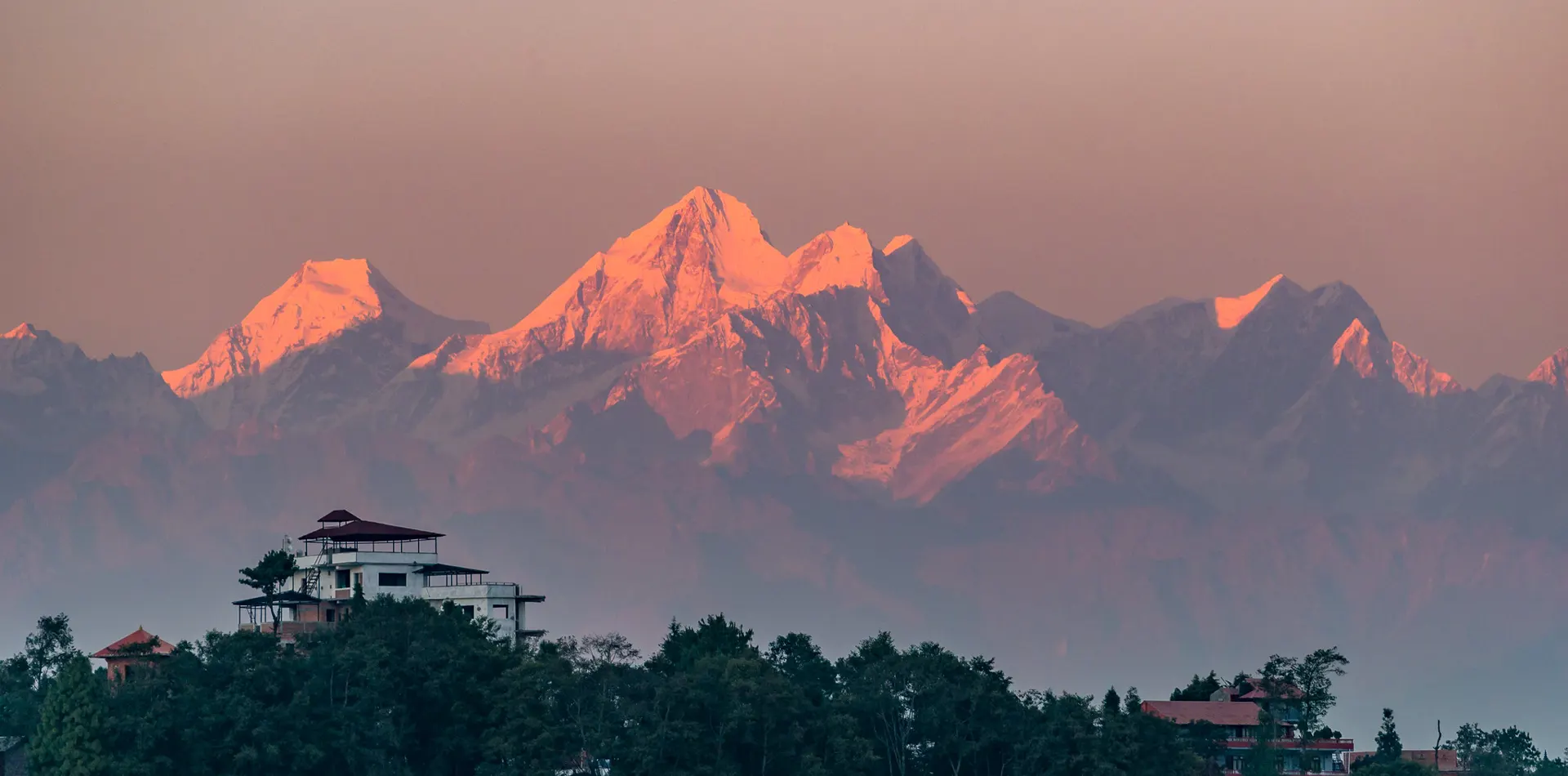
The mountain scenery is among the best things about the trip. It is possible to observe mountains such as Everest, Langtang, Ganesh Himal, and Dorje Lakpa during clear days, which span the horizon of the place. During the journey, travelers also experience local culture along the way. You go through Tamang villages that follow strong Buddhism, and then you go through the Newari heritage in Changu Narayan Temple.
The Chisapani Nagarkot trek, in a nutshell, is an ideal combination of nature, culture, and a light adventure. Morning Star Treks organized the route, and it is well planned, combining nature, culture, and comfort in an easy-to-follow itinerary.
- Safety first, always
- Best prices guaranteed
- Expert travel team
- Easy booking, no extras
- Customize your journey
Based on 10 reviews

Trip Highlights
- Visit Shivapuri Nagarjun National Park and its biological diversity.
- Experience some of the best views of the sunrise in Mount Everest and Langtang.
- Walk through the traditional Tamang culture of mountain villages.
- Hiking easy paths that are family and beginner-friendly.
- See the Changu Narayan Temple, a UNESCO site.
- Have a three-day satisfying Chisapani Nagarkot hike.
- Capture panoramic Himalayan images without extreme altitude exposure.
Photo and Video Gallery


Chisapani Nagarkot Trek – 3 Days Detail Itinerary

Day 01: Drive from Kathmandu to Sundarijal and Trek to Chisapani
The trip starts with a brief but picturesque road trip from Kathmandu to Sundarijal. The hike begins after approximately an hour’s drive from Kathmandu at the gate of Shivapuri Nagarjun National Park. Before entering the peaceful forest territory, the permits are verified. The path starts with an unbroken ascent on stone steps, along the course of the Bagmati River. As you continue into the forest, you will find oaks and rhododendron trees of different colors.
On the road, you will go by Bagdwar, a holy spring of Hindu pilgrims. The journey is enriched by cultural elements such as small shrines and a stone tiger statue found along the way. The path leads to Mulkharka village, where lunch is taken, and local Tamang culture and agricultural terraces are seen.
The trek then ascends to Borlang Bhanjyang (2,425 m / 7,956 ft), which is the highest point of the day, after lunch. At this point, the trail winds gradually down along silent forest trails to Chisapani (2,150 m / 7,054 ft). It is not till late afternoon that you get to your teahouse, and have a warm meal and a quiet night.

Activity: Scenic forest hike and cultural observation, 1-hour drive, 5-6 hours trek

Max. Altitude: 2,425m/7,956ft. (Borlang Bhanjyang)

Meal: Breakfast, Lunch and Dinner

Accommodation: Teahouse
Day 02: Trek from Chisapani to Nagarkot
The day begins with waking up early in the morning in Chisapani with the mountain air and the views of the sunrise over the Dorje Lakpa and Ganesh Himal ranges. The walk then proceeds on a long and very nice trail towards Nagarkot after breakfast. The trail goes through peaceful and green trees that nest birds and the sounds of nature.
This trail is not as steep as the first day, but more of a level one with slow inclines and declines. It enables you to take a walk as you enjoy the environment. The forest is sometimes opened to give expansive perspectives of the valley and small agricultural villages, below. You cross through the local villages such as Chauki Bhanjyang and Jhule, where you can have little breaks and have tea or snacks.
The trail gradually increases in elevation towards Nagarkot (2,175 m / 7,136 ft) as the day goes on. When you get to Nagarkot, you go and check into the hotel and take time to rest. You have one of the best sunsets in the Kathmandu region in the evening, as the mountains take on different colors.
Activity: Long-distance ridge walk and sunset viewing, 6-7 hours trek
Max. Altitude: 2,175m/7,136ft. (Nagarkot)
Meal: Breakfast, Lunch and Dinner
Accommodation: Hotel
Day 03: Trek from Nagarkot to Changu Narayan and Drive to Kathmandu
The last day, you will wake up early in the morning to see a beautiful sunrise at Nagarkot (2,175 m / 7,136 ft). The perspective has expansive views of the Himalayas with remote mountains such as Everest, Annapurna, and Manaslu seen on a clear day. You then have breakfast and get ready to go down.
The road goes down through the quiet Telkot forest. The environment around you is slowly shifting to traditional settlements as you keep walking. You start to observe the Newari culture, houses of red bricks, and beautifully carved wooden windows. This section of the trek offers a cultural and natural view.
The trek leads to Changu Narayan Temple, one of the oldest temples in Nepal, dating back to 464 AD. You go sightseeing around the temple and look at the carvings, statues, and historical buildings. The journey ends at Kathmandu with a relaxing 1.5-hour drive after lunch.
Activity: Sunrise viewing, historical temple tour, and return journey, 4 hours trek, 1.5-hour drive
Max. Altitude: 2,175m/7,136ft. (Nagarkot)
Meal: Breakfast, Lunch and Dinner
Accommodation: Hotel
If our standard itinerary doesn't fully meet your needs, we are happy to tailor it to your specific preferences and requirements.

Includes and Excludes
What’s Included?
- Private transfers from Kathmandu to Sundarijal and back to Kathmandu
- Accommodation in the teahouse in Chisapani and the hotel in Nagarkot
- Breakfast, lunch, and dinner throughout the trek.
- Professional English-speaking guide.
- Porter service (shared basis)
- Permits and entry fees
- Employee insurance, remuneration, and taxes.
What is not Included?
- Flights and Nepal visa charges.
- Travel insurance
- Hotel and meals outside of the trek.
- Beverages (alcohol, coffee, tea, bottled water)
- Personal gear and equipment
- Additional facilities (Wi-Fi, power, hot showers)
- Tips for guide and porter
- Anything else not mentioned on the inclusion list.
Trip Information of Chisapani Nagarkot Trek – 3 Days
Weather and Season
The weather contributes to the experience of the Chisapani Nagarkot Trek. One of the most suitable seasons to visit is spring (March to May) when the weather is warm, and the rhododendron woodland is in blossom, giving color to the trail. The other season, which is perfect, is the autumn (September to November), because of clear weather, fresh air, and mountainous scenery.
Winter (December to February) is colder, particularly at night, though in the mornings it is usually sunny and clear, and the winter is ideal as far as sightseeing is concerned. The highest elevation of the tour is approximately 2,425 m (7,956 ft), and the air is cool there.
During monsoon (June to August), it rains, the trails are muddy, and visibility is limited, hence making the trekking hard.
All in all, the spring and autumn offer the most optimal weather, landscape, and comfort to this short Himalayan trip.
Trip Difficulty
Chisapani Nagarkot Trek is an easy-to-moderate walk, which can be completed by ordinary people with only basic fitness. Trails are generally clear, and there are forest trails, smooth hills, and a few stone steps. It is safe and manageable since it does not have any technical sections.
The toughest part is the initial day of climbing uphill to Borlang Bhanjyang (2,425 m / 7,956 ft). The speed is, however, slow with ample rest intervals en route. The successive days are not so hard, and the way has some slower places and descents.
Trekking for 5 to 6 hours a day can make the experience enjoyable as the trekkers would not be in a hurry. Most of the people can do the trek comfortably with light preparation, such as walking or jogging, prior to the trip.
Altitude Sickness and suggestion
The issue of altitude sickness will not be an issue in the Chisapani Nagarkot trek since the altitude is not very high. The highest point is Borlang Bhanjyang at (2,425 m / 7,956 ft), which is lower than the altitude where issues of altitude normally start.
Trekkers will have an opportunity to walk, sleep, and have fun during the journey without fear of severe health risk factors caused by height. Acclimatization days are unnecessary, and hence the trek is easy and non-stressful.
Nevertheless, one should not forget about keeping hydrated and eating in a proper way. Consumption of sufficient water and the consumption of carbohydrate rich food can ensure strength during the hike.
The body is kept comfortable through walking at a slow rate and taking short breaks. These are just some of the simple measures that will guarantee a good and secure trekking experience.
Food & Drink During the Trip
The Chisapani Nagarkot Trek food is plain, fresh, and nourishing. Teahouses on the way have a wide variety of meals to keep the trekkers going. Foods such as eggs, pancakes, porridge, and tea or coffee are commonly taken as breakfast.
During lunch and dinner, Dal Bhat is the most common meal, and it consists of rice, lentil soup, vegetables, and pickles. It gives the stamina to spend days walking long distances. Noodles, pasta, momos, as well as soups are also available in many teahouses.
Meals are included in the package by Morning Star Treks, making the trip more convenient for travelers. Use of boiled or treated water is suggested instead of untreated water. With a reusable bottle, it is possible to avoid plastic in order to keep the environment safe and remain hydrated.
Visa and Permits
It is easy to obtain the papers required when doing the Chisapani Nagarkot trek. Purchasing a Nepal tourist visa is relatively simple since the visa is available at Tribhuvan International Airport in Kathmandu, where a form is filled out, and a fee is paid. The visa duration is offered under various periods of stay.
Treks require a park entry permit to go to Shivapuri Nagarjun National Park. Morning Star Treks organizes this permit at the point of origin in Sundarijal. It leads from the forest area into a protected zone.
One has to pay another entrance fee to see the Changu Narayan Temple at the end of the trek. The process in general is simple, and there is no special trekking permission required to do this trek, which makes this trek easy and affordable.
Health & Safety
The Chisapani Nagarkot Trek can be considered safe by nature, though simple measures should be taken. Morning Star Treks has trained first-aid guides who understand the road and are familiar with it. They pack a first aid kit to treat minor injuries in the course of the trek.
Hygiene should be upheld. Washing of hands or the use of sanitizer should be done before eating anything. To prevent stomach problems, it is better to consume freshly cooked meals.
The trek is also close to Kathmandu, which provides easy access to medical services in an emergency. Cars or even helicopters can be set up where necessary. With the right advice and some basic precautions in place, trekkers will be able to experience a safe and comfortable experience.
Transportation
The Chisapani Nagarkot Trek is easy to reach by means of transportation. All the transfers are organized by Morning Star Treks with the use of private vehicles. The trip starts with a one-hour drive between Kathmandu and Sundarijal, where the trek will start.
The trekking part is done on foot and traverses forests, villages, and picturesque ridges. Porters carry your heavy luggage so that you can walk easily and you have a light bag.
Trekking finishes at Changu Narayan where you re picked by a privately hired vehicle and being transported to Kathmandu in the time span of approximately 1.5 hours. It is an easy mode of transport that ensures that the whole journey is stress-free.
Travel Insurance
The Chisapani Nagarkot Trek requires travel insurance. Although this journey is not a very dangerous one and remains under 2,425 m (7,956 ft), there are still some unanticipated events that may occur. An insurance policy provides peace of mind and financial cover in the course of the trip.
Trekking activities to a minimum of 3,000 meters must be clearly covered by your insurance. It should also involve emergency medical assistance and evacuation. Helicopter rescue can be extremely costly when required in the very rare instances of illness or injury.
It also comes in handy should you have insurance for trip delays, cancellations, and lost luggage. Theft or damage to security is also helpful since many trekkers come with their personal equipment and cameras.
Before purchasing a policy, Morning Star Treks recommends that one carefully examine all the details. An all-inclusive insurance will give a stress-free and safe trekking experience.
Language & Communication
Chisapani Nagarkot Trek is easy in terms of communication. English is commonly spoken on the trail, particularly by guides as well as employees in teahouses. Morning Star Treks has well-trained guides who lead on the local culture and also help with any requirements during the trek.
Although English is widely used, it is always better to learn some of the local words so that the tour can be more valuable. The greetings of saying Namaste and saying Dhanyabad as a thanksgiving build a friendly relationship with the locals.
The mobile network coverage is excellent in most places during the trek, even in the high places such as 2,175 m (7,136 ft) in Nagarkot. A local SIM card can be used easily to make calls and have internet. Wi-Fi is also available in some teahouses at a small charge.
The Chisapani Nagarkot trek offers a great balance between staying connected and enjoying nature.
Don’ts on This Trip
When you are enjoying the Chisapani Nagarkot Trek, some rules should be observed in order to appreciate the local culture, safeguard nature, and save your life.
Tourists must wear modest clothes covering shoulders and knees, especially when traversing villages or accessing places of worship such as Changu Narayan Temple.
Wearing a modest dress is a sign of respect to the local culture. One should also avoid using the left hand to either give or take things since this is considered rude in the Nepalese culture.
Trekkers are advised not to capture the photos of an individual without requesting permission, especially in rural villages. Privacy is an aspect that should be respected to create positive interactions.
Avoid littering or leaving trash along the trail and in protected areas like Shivapuri Nagarjun National Park (2,425 m / 7,956 ft).
Do not walk away from the marked trail or disregard the instructions of your guide. By staying on the right trail, one will have a peaceful and healthy Chisapani Nagarkot Trek experience.
Photography & Drone Rules
Chisapani Nagarkot Trek has attractive sceneries fit to take photos. Walking along forests and vistas such as Nagarkot (2,175 m / 7,136 ft), you can be as free to take photos using your phone or camera as you desire.
The use of drones is, however, highly regulated in Nepal. It is not allowed to fly a drone without a government permit. The unapproved flying may result in a fine or a seizure of your drone.
The use of drones in places of worship, including Shivapuri Nagarjun National Park and close to various cultural sites such as Changu Narayan Temple, is also restricted. Such regulations assist the safety, nature, and local customs.
In case you just want to take photos on the ground, then it is not restricted. The Chisapani Nagarkot Trek offers a lot of scenic shots without the use of a drone.
Tips for First-Time Visitors
Chisapani Nagarkot Trek can be considered the best option for first-time trekkers and is a good balance in the combination of nature, culture, and walking distance that is not too difficult. With proper preparation, the experience can be made a lot more enjoyable.
It is best to carry a simple daypack with only the essential items. It is also important to wear comfortable and broken-in hiking shoes, that is easier to walk on stone steps and uneven trails.
Wearing layers is one of the things that will allow you to adapt to the fluctuating temperatures all day long. Evenings and mornings are cool, and afternoons may be warm. A steady and slow pace is important, especially on the first day of the uphill hike to 2,425 m (7,956 ft). Even taking short breaks will give your body the rest it needs and will make you enjoy the surroundings better.
Maintaining hydration and taking periodic food will ensure that your energy levels are maintained. Carrying cash comes in handy since the villages hardly accept card payments. As a part of a good trekking experience, respecting the local traditions and being polite to those you come across on your way contribute to a pleasant experience.
Most Asked Questions
 General
Is the trail infested with leeches?
The wet monsoon season is the only time that leeches are common. Spring, autumn, and winter trekking ensure that there are no leeches at all.
What are the possible wildlife that trekkers can find?
Shivapuri National Park is home to various wildlife. Rhesus macaques, barking deer, wild boars, and hundreds of colorful bird species can be seen by trekkers.
Does the national park have bears?
The Himalayan black bears are found in the deep Shivapuri forests. But they are very elusive, and they will never show up on the trekking paths.
Are there trekkers allowed to swim in the Bagmati River and waterfalls?
Swimming in the park is strictly prohibited. The Bagmati River is a holy water body in Kathmandu and has to be kept completely in an environmentally friendly manner.
Does it have a large number of other tourists on the route?
The path is very comfortably quiet. Although it can be busy on weekends with local hikers, the foot traffic is still much lower than in the Everest or Annapurna regions.
Is insect repellent necessary for the trekkers?
In the warmer evenings of lower subtropical forested areas of the trail, it is prudent to pack a simple insect repellent to stop being bitten by mosquitoes.
Is the trail in the shade or in the sun?
The trail is densely covered with forests on the first and second days, which shade most of it. The last road to Changu Narayan has exposed sun.
Are there any dangerous snakes on the road?
Snakes are found in the subtropical areas, but there are very few encounters. Loud footsteps alert them to human presence, and they quickly move away.
 Accommodation and Facilities
Do the teahouses have blankets at night?
The tea houses provide warm blankets. Nevertheless, trekkers can carry their own sleeping bag to enable the greatest level of warmth and cleanliness, particularly during winter when the weather is colder.
Does the trail have western-style toilets?
Hotels in Nagarkot have standard Western toilets. Teahouses in Chisapani usually offer Western toilets, but some rural lunch stops may only have basic squat toilets.
Are there any hot showers in teahouses?
Yes, the majority of teahouses have hot showers in both Chisapani and Nagarkot.
Can I charge my electronic devices in the room?
Yes, you can charge your gadgets in the room in both Nagarkot and Chisapani.
Does it have strong Wi-Fi at the places where we stay?
Nagarkot Hotels offer top-tier and free Wi-Fi. Wi-Fi is also available in Chisapani teahouses at a minimal fee, but the speed varies with the weather.
Does Chisapani have any private rooms?
Teahouses have twin-sharing rooms. The rooms are simple and equipped with two beds, which have foam mattresses, pillows, and clean sheets.
Are there heating systems in the teahouses?
The bedrooms are not heated. Nevertheless, the teahouses in Chisapani might light a central fire every night in the main hall using wood to ensure that the trekkers are warm.
Does it have laundry facilities on the trek?
The trail does not have laundry facilities. Trekkers bring in adequate, rapid-drying clothes sufficient to last throughout the three days and clean up after they are back in Kathmandu.
 Food and Drinks
Are vegans able to find food easily when hiking?
The teahouses have vegan and vegetarian foods. They serve vegetarian Dal bhat, vegetable noodle soups, vegetable fried rice, and simple potato meals.
Does the trail sell energy bars and snacks?
Chocolates and biscuits, chips are sold in small village shops along the route. Nevertheless, it is much cheaper to buy them in Kathmandu.
Is it necessary that trekkers bring their own lunch?
The guide organizes lunch breaks at the local teahouses on a daily basis in such villages as Mulkharka, where the local teahouses make hot and fresh meals for the group.
Can we safely eat meat on the trail?
Morning Star Treks advises that one should abide by a strict vegetarian diet. Teahouses are not properly refrigerated, and eating meat is very risky to the person’s digestive system during the hike.
What types of tea does the lodge serve?
Teahouses offer regular black tea, milk tea, ginger tea, lemon tea, and Nepalese traditional masala tea spiced with cardamom and cloves.
Are fresh fruits served when hiking?
The availability of fresh fruits may be unbelievable on the trail. Fruits like apples and oranges are easily available in Kathmandu, and trekkers can carry them in their daypacks.
Do the meals include dessert?
Most meal packages do not include desserts. The teahouse menus have a selection of sweet items such as apple pie, chocolate rolls, or rice pudding, which are supposed to be purchased by trekkers themselves.
Do gluten-free trekkers have an appropriate choice of food?
Trekkers preferring gluten-free food depend greatly on Dal Bhat (rice and lentils), boiled potatoes, and dishes made of eggs. They do not take any noodles or bread.
 Packing & Gear
Do we need trekking poles on this route?
The use of trekking poles greatly minimizes the strain on the knee on the steep staircase made of stone steps from Borlang Bhanjyang to Chisapani.
Which kinds of shoes are the most effective?
Wear strong, broken-in hiking shoes that have high ankle support. Basic running shoes are sufficient, but they should have a good grip for muddy sections.
Are heavy down jackets necessary for trekkers?
A heavy down jacket comes in handy during winter. During spring and autumn, a medium-weight fleece and a windbreaker can be used to be warm enough.
Is it possible to leave additional luggage in Kathmandu?
Morning Star Treks offers safe storage in Kathmandu office or their hotel to the trekker who does not need to carry all their luggage on the trail.
Is it necessary to carry toilet paper?
Yes, toilet paper and hand sanitizer can be carried individually. These hygienic supplies are not always available in rural teahouses and trailside bathrooms.
Do I need a headlamp for this trip?
A headlamp is very important in going through dark corridors of teahouses at night and in going to the Nagarkot sunrise in the early morning.
Should trekkers carry a first aid kit?
The guide includes a basic medical kit. Nevertheless, trekkers carry personal medicines, blister pads, and painkillers to treat minor illnesses.
What is the recommended size of a daypack for a trekker?
A daypack of 20- 30 liters is ideal. Its size is spacious and carries a water bottle, rain jacket, camera, sunscreen, and snacks that one takes daily.
 Booking & Payment
What is the amount of money that a trekker needs in a day?
On average, Trekkers spend between 2,000 and 3,000 Nepalese Rupees each day to use up on personal items such as Wi-Fi, hot showers, additional snacks, and tips.
Do you have an ATM in Chisapani or Nagarkot?
There are a few ATM machines in Nagarkot, whereas Chisapani does not have any ATM machines. Trekkers take all the required cash from Kathmandu before the trek.
What are the currencies that the teahouses take?
The tea houses do not accept the use of currencies other than the Nepal rupee. Trekkers can change their US Dollars or Euros at the official exchange counters in Kathmandu before they go out.
Are there discounts for children on the trek?
Morning Star Treks has better prices for children below the age of 12 years who share a room with their parents on the trek.
What is the way of tipping the guide and porter?
Trekkers usually set aside tip money during the trip and give it to guides and staff on the final day. One of the guidelines recommends tipping 10-15 percent of the overall trek expense.
Do teahouses accept credit cards?
The rural teahouses are on a cash basis. Hotels that are of premium quality within Nagarkot may accept credit cards; however, they usually charge an extra bank service fee.
What is the price of boiled water at the teahouses?
The price of boiled drinking water is about 100 to 200 Nepalese Rupees a liter in the teahouses. There is a slight increase in prices with elevation.
Are the national park entry fees expensive?
Shivapuri National Park entry fee is around USD 7.50 for foreigners. This is a required cost that is already included in the tour package.
- Safety first, always
- Best prices guaranteed
- Expert travel team
- Easy booking, no extras
- Customize your journey
Based on 10 reviews
Have Questions?
+977 9767224414