
 English
 Dutch
Dutch Japanese
 Hindi
Hindi Italian
 Spanish
 French
 German
 Chinese
 Korean
 Arabic
 Hebrew
 Russian
 Portuguese
 Danish
 Czech
Czech Polish
 Swedish
Have Questions?
+977 9767224414
Unmissable holidays deals - Save up to 20%
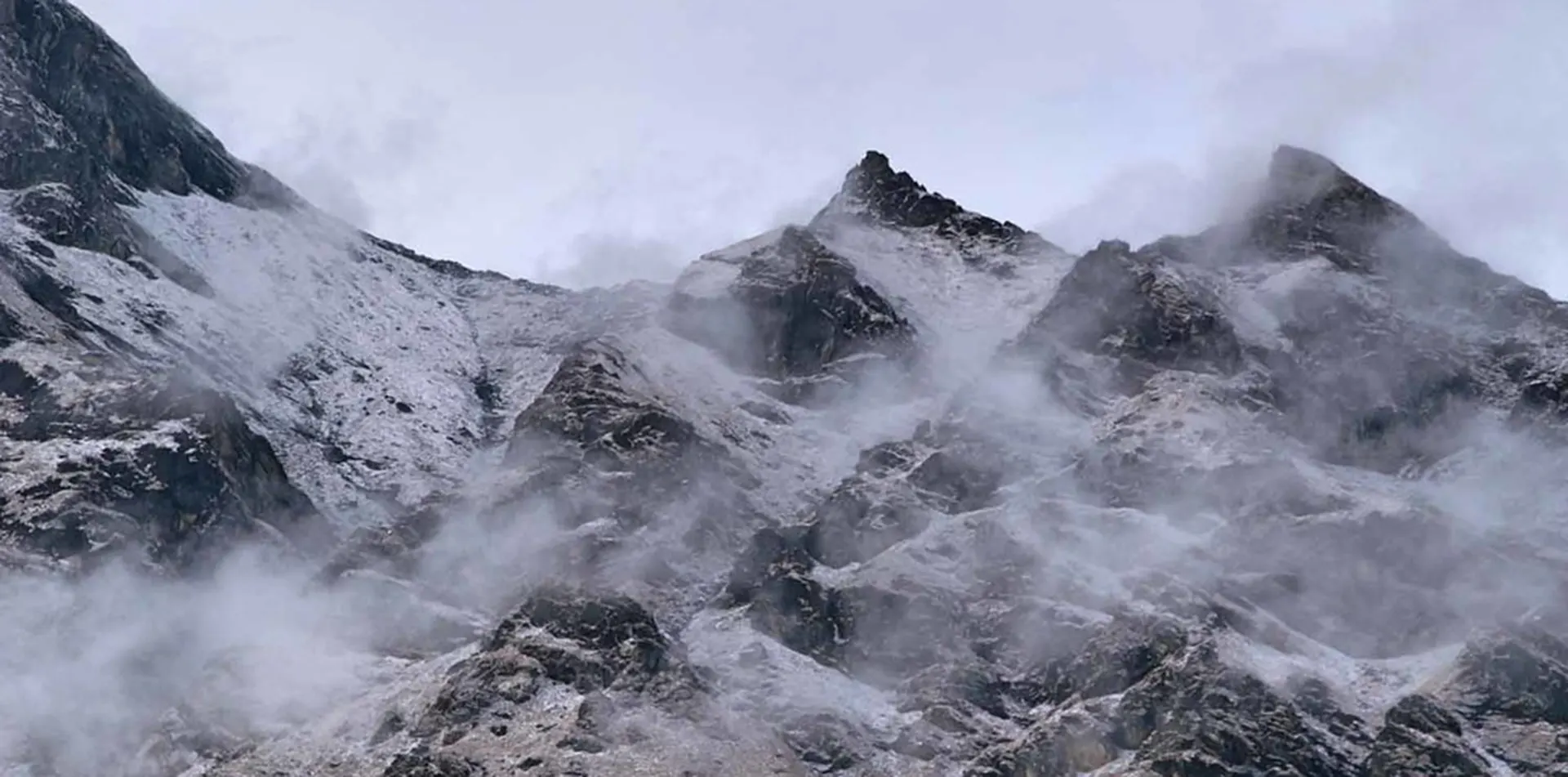
Api Base Camp Trek

Duration
15 Days

Trip Difficulty
Moderate

Max. Altitude
4,000m

Destination
Nepal

Group Size
2-16

Accommodation
Hotel, Teahouse

Transportation
Flight, Bus

Meals
Breakfast, Lunch & Dinner
Explore more facts about the trip
Overview of Api Base Camp Trek
The Api Base Camp Trek is a beautiful and least explored trekking adventure in the far-western Himalayas of Nepal. The journey is ideal for those travellers who are interested in the undisturbed nature, serene paths, and unadulterated village living without the commotion of the tracks of Everest and Annapurna. The 15-day Api Base Camp Trek will put you into the remote Api Nampa Conservation Area and onto the base camp of Mount Api (7,132 m), one of the highest and most sacred mountains of Western Nepal.
The Api Base Camp Trek adventure starts with a flight to the Terai region, where there is a long scenic drive to the least developed part of Nepal. At Makarigaad, the actual trekking begins. The trail leads to the green forests and river valleys, narrow gorges, and silent mountain paths. The higher up you walk, the more the landscape alters, and is more of an alpine meadow with a great diversity of natural scenery.
Solitude is one of the key features of the Api Base Camp Trek. There are very few trekkers who take this trail; hence, you may have relaxing days and be in touch with nature. You will pass across beautiful rivers like Chameliya and Mahakali, pass through pine and rhododendron forests, waterfalls, open grazing lands and yak pastures. Each day, there is a fresh and new sight of far-western Nepal.
Cultural experiences are also abundant in the Api Base Camp Trek. Other villages, such as Ghusa and Khaikot, enable you to see Bhotiya and other communities in the mountains who still practice the traditional way of life. The experience of being in the local homestays or camps, having simple meals, and being educated about their customs is an important cultural addition to the trip.
The Api Base Camp Trek is characterised by a highlight comprising the reaching of the Api Base Camp at approximately 3,860 meters. The location is really magical as it is encircled by Mount Api, Mount Nampa, and other snow peaks. The appropriate spiritual break is visiting the sacred Kali Dhunga Lake nearby to have a serene and spiritual experience in the core of the Himalayas.
In general, the Api Base Camp Trek is a moderate-to-challenging trek that should be chosen by anyone who is an adventurous trekker willing to get an unusual and rewarding experience in the Himalayas. This trek is an experience of a lifetime with good preparation and good guidance that will take one on a journey into the wild and hidden west of Nepal.
- Safety first, always
- Best prices guaranteed
- Expert travel team
- Easy booking, no extras
- Customize your journey
Based on 10 reviews

Trip Highlights
- Visit the remote Api Nampa Conservation Area, where there is no crowd.
- Reach the Api Base Camp (3,861m / 12,667ft) and witness the mountain Api (7,132m / 23,389ft).
- Go to the holy Kali Dhunga Lake (4,000m / 13,123ft), which is crystal-clear with reflections of the Himalayan mountains.
- Trek in the peaceful forests, alpine meadows and glacial valleys on beautiful paths.
- Learn about the real local culture in such villages as Ghusa, Khaikot, and Simar.
- Enjoy panoramic views of Api, Nampa and Bobaye mountains at each elevation point.
- Camp under stars and rugged wilderness in remote areas, with high mountains.
Photo and Video Gallery


Api Base Camp Trek Detail Itinerary

Day 01: Arrival in Kathmandu (1,350m / 4,429ft) – Trek Preparation
The Api Base Camp Trek Day 1 starts with the arrival for the trek at Kathmandu (1,350m or 4,429ft). Once you have landed at Tribhuvan International Airport, our team welcomes you and takes you to your hotel. The first day is very casual and free, so that you can rest after the international travel and adapt to the Nepalese climate.
In the evening, a short briefing on the Api Base Camp Trek is done. Your guide tells you the entire schedule, the time you would be walking each day, the safety precautions, and what you would expect on the trail. The trekking equipment is scrutinised to ensure that everything is appropriate to the isolated environment of the Api region. In case it lacks anything, your guide will assist you in making last-minute orders.
You can also visit the bustling streets of Thamel in case you have free time. The place is crowded with stores, cafes, and colourful markets that will give you a first glance into the Nepali culture. The combination of old temples, busy streets and welcoming people in Kathmandu forms an exciting beginning to the Api Base Camp Trek. You take dinner and stay at the hotel overnight, preparing to venture out.

Activity: Arrive & briefing & 30-min drive

Max. Altitude: 1,350m/4,429ft. (Kathmandu)

Meal: Dinner

Accommodation: 3-star Hotel
Day 02: Kathmandu Sightseeing and Permit Preparation (1,350m / 4,429ft)
The second day of the Api Base Camp Trek is the day of cultural research and last preparations. Following breakfast, you go on a sightseeing trip around Kathmandu Valley with a guided trip. This day will make you learn about the history of Nepal and the spiritual traditions of Nepal.
You pay a visit to Pashupatinath Temple, which is a holy Hindu place situated on the river Bagmati. Then you visit Boudhanath Stupa, which is one of the largest stupas in the world, and is surrounded by the prayer wheels and monasteries.
After this, you ascend to Swayambhunath or the Monkey Temple, and it is a site that offers you expansive scenery in Kathmandu Valley. The tour proceeds to Kathmandu Durbar Square, where you observe old palaces and well-hewn temples.
Once you complete sightseeing, your guide ensures that you are given all the permissions needed to carry out the Api Base Camp Trek, such as conservation area permits and trekking documents. Your equipment is inspected again. The evening is at leisure, to shop or to rest. Spend the night at the hotel, ready to travel to the west.
Activity: Cultural sightseeing & 4–5 hours
Max. Altitude: 1,350m/4,429ft. (Kathmandu)
Meal: Breakfast
Accommodation: 3-star Hotel
Day 03: Fly to Dhangadhi (109m / 358ft) and drive to Attariya (340m / 1,115ft)
The Api Base Camp Trek will take you to the hills and the lowland of far-west Nepal. In the morning, you do a flight from Kathmandu 1,350m (4,429ft) to Dhangadhi 109m (358ft). The flight has very beautiful scenes with the green hills gradually transforming to broad flat plains.
Once you have landed in Dhangadhi, you start a brief journey to Attariya, which is 340m (1,115ft). It is warmer here, and the landscape is by no means similar to Kathmandu. You go through flat agricultural regions, small towns and villages where the local citizens lead simple lives.
From Attariya, you get yourself into a hotel or a guesthouse there. During the afternoons, it is possible to walk around the town, visit local markets, or rest after travelling. In the evening, dinner is taken.
You spend the night at Attariya and get ready to make the long road journey.
Activity: Flight & road trip & 1 hour flight & 1 hour drive
Max. Altitude: 109m/358ft. (Dhangadhi)
Meal: Breakfast, Lunch & Dinner
Accommodation: Teahouse
Day 04: Drive from Attariya to Ganna, Darchula (940m / 3,084ft)
The 4th day of the Api Base Camp Trek is a long but scenic road trip into far-western Nepal in the hills. This is an8–10-hour drive with an early breakfast at Attariya to Ganna in Darchula District. The highway is initially made in the lowlands and gradually ascends into green hills. Small towns, quiet villages, terraced farms, and dense forests are seen along the way.
The biggest attraction in the current drive is the journey side by side the Mahakali River, creating the natural boundary between Nepal and India. The shifting sceneries make the journey worthwhile and entertaining. The higher you are, the colder the air is, and you can see both hills and mountains in the distance. It has several brief stops where lunch, rest and refreshments are made.
Towards the end of the afternoon or early evening, you arrive at Ganna (940m or 3,084ft). It is a far-flung village and a notable entrance into the Api Base Camp Trek. Accommodation is quite easy; either camping or simple local lodges. You have dinner, and then sleep with the silent sky to the far west, waiting now to begin the trek.
Activity: Long drive & 8–10 hours
Max. Altitude: 940m/3,084ft. (Ganna, Darchula)
Meal: Breakfast, Lunch & Dinner
Accommodation: Teahouse
Day 05: Drive to Makarigad and Trek to Ghusa (2,000m / 6,562ft)
During the Api Base Camp Trek,start your walking journey on Day 5 with Breakfast in Ganna and then a jeep ride to Makarigad, which is a rough ride, takes around 2 hrs. The highway runs along the Chameliya River and, going through untamed and beautiful sceneries, offers a preview of the remote world.
The road terminates at Makarigad, and the walk commences. You begin on a footpath of a less-travelled approach to the Api Base Camp Trek. Its route then goes through terraced agriculture and small country houses. Slowly, the path turns into green forests, pine, and rhododendron trees. The stroll is serene, and there is no sound or air pollution around.
Ghusa village, which is 2,000m (6,562ft) high, can be reached after a 4-5 hour trek. Ghusa is a small and remote town that has few facilities. You remain in an ordinary homestay or camp. During the evening, you take a warm dinner and go to bed. It is your very first night in the real Api Himal area.
Activity: Off-road drive & trekking & 2–3 hours drive
Meal: Breakfast, Lunch & Dinner
Accommodation: Teahouse
Day 06: Trek from Ghusa to Simar / Ghopte (3,000m / 9,843ft)
Day 6 of the Api Base Camp Trek is the entire trekking day that takes you further into the mountains. You start a good uphill hike through the thick woods after breakfast in Ghusa. The path is inside the pine, oak, and rhododendron trees, and it is indeed a very remote path. Your leader walks along winding paths.
The landscape gradually transforms as you climb high. Dense trees become open meadows of the alpine plains with grasses and shrubs. You can find yak shelters and marks of the seasonal herders on your way. As you climb higher up the trail, you begin to view snow-covered mountains in the distance, which brings to mind that the Api Base Camp Trek is heading to the Himalayan highlands.
It takes about 7 hours of trekking with rests to reach Simar, also known as Ghopte, which is approximately 3,000m (9,843ft) high. It is a steep hill and a cliff-enclosed high pasture land. The camping field is serene and lovely. After the dinner, you sleep in tents, with the cold mountain air and sky full of stars.
Activity: Trekking (forests & meadows) & 7 hours trek
Max. Altitude: 3,000m/9,843ft. (Simar/Ghopte)
Meal: Breakfast, Lunch & Dinner
Accommodation: Teahouse
Day 07: Trek from Simar (Ghopte) to Dhuli Odar (3,550m / 11,646ft)
This is day 7 of the Api Base Camp Trek, which is one of the most exciting and challenging. Post breakfast at Simar (3,000m / 9,843ft), a gradual ascent to the high camp at Dhuli Odar starts. The path soon climbs over the tree line and turns steeper and rockier. You are walking on winding paths, over little glacier streams, and through rugged mountain terrain.
The higher you are, the thinner and colder the air is. You move slowly with many pauses to have a rest and drink water. The terrain is entirely wild with no village and settlements. You are surrounded by huge rocks, glacial moraine and bare open slopes. Nevertheless, the opinions are spectacular, as deep valleys lie and mountain peaks harshly ascend everywhere.
It is 3,550m (11,646ft) and takes 6-7 hours of trekking to reach Dhuli Odar. We camp there in a distant location. You have a hot dinner and then sleep under the starry sky.
Activity: Trekking (steep climb to high camp) & 6 –7 hours trek
Max. Altitude: 3,550m/11,647ft. (Dhuli Odar)
Meal: Breakfast, Lunch & Dinner
Accommodation: Teahouse
Day 08: Trek to Api Base Camp (3,861m / 12,668ft) and Kali Dhunga Lake (4,000m / 13,123ft)
The most significant day of the Api Base Camp Trek is day 8. You get up early and, with light packs, walk away from Dhuli Odar (3,550m / 11,646ft). The path ascends sharply up rocky and grassy slopes. It takes approximately 2.5 hours of climbing to Api Base Camp at 3,861m (12,668ft).
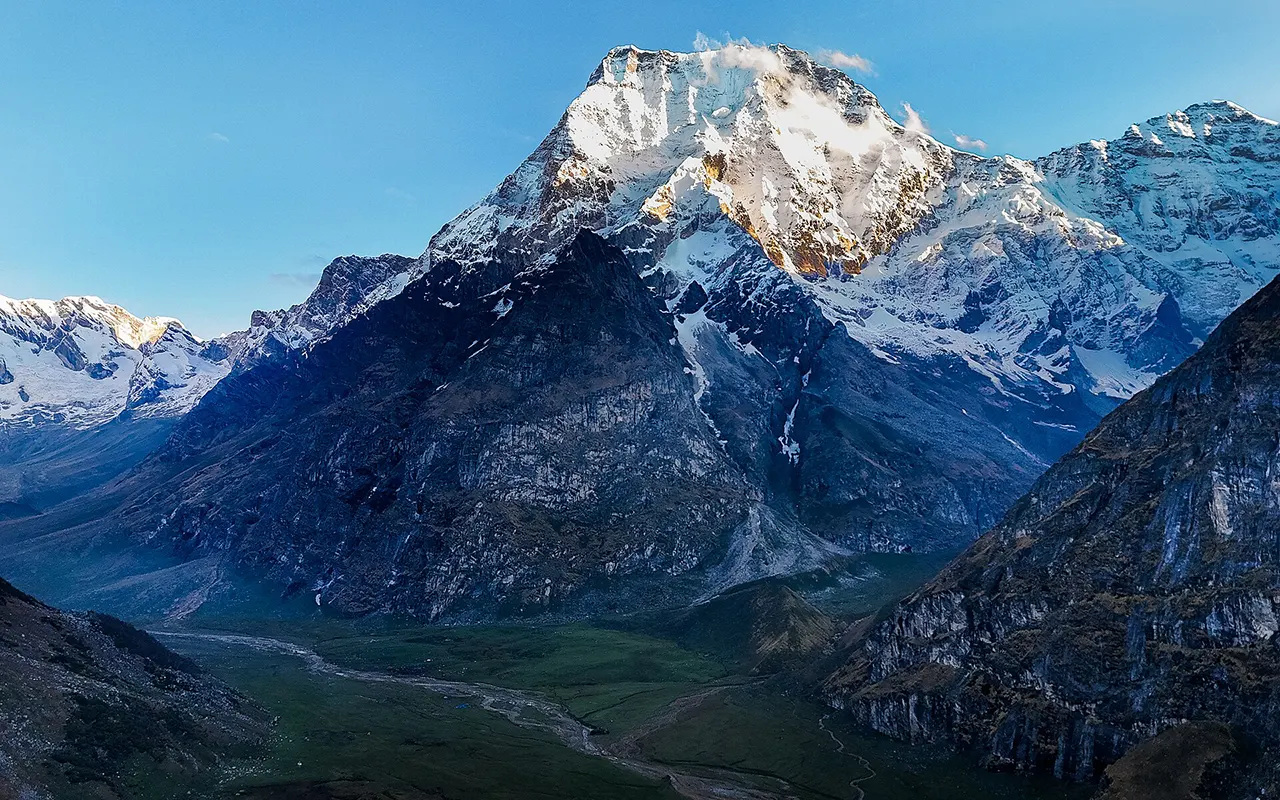
It is an emotional experience when one is standing at the Api Base Camp. The area is flanked by huge mountains, such as Mount Api (7,132m / 23,399ft), Mount Nampa and Mount Bobaye. The perspectives are broad and stunning. You spend time taking photographs, sleeping, and basking in the success of having arrived in this faraway place of the Api Base Camp Trek.
It is the base camp to Kali Dhunga Lake, 4,000m (13,123ft). On sunny days, this holy lake is calm and absolutely quiet, mirroring the mountains. You have lunch by the lake and get a peaceful environment. Then, after that, you go down to Dhuli Odar.
Activity: Summit to Base Camp & lake excursion & 5 hours trek (with stops)
Max. Altitude: 3,861m/12,667ft. (Api Base Camp)
Meal: Breakfast, Lunch & Dinner
Accommodation: Teahouse
Day 09: Trek from Dhuli Odar to Khaikot (1,900m / 6,234ft)
The Api Base Camp Trek Day 9 starts with a camp pack-up at the Dhuli Odar (3,550m/11,646ft). The day is generally downhill, and it is easier, though still there is a need to take caution on rocky paths. The air gets warmer and easily breathable as you get down.
You pass by the elevated meadows and open landscapes and then come back into the green forests. Slowly, pine and rhododendron trees emerge, and the path seems more like home. In between, there are variable sceneries, with snowy mountains above and deep valleys below. Lunch is had somewhere in the trail.
It takes 6- 7 hours of hiking to get to Khaikot, which is 1,900m (6,234ft). It is a little village, with terraced fields and pleasant folk. Once wespend days camping, a village is cosy and calming. You spend the night in a basic homestay or lodge, have a home-cooked meal and go to sleep.
Activity: Trekking (descent to village) & 6–7 hours trek
Max. Altitude: 3,550m/11,647ft. (departing Dhuli Odar)
Meal: Breakfast, Lunch & Dinner
Accommodation: Teahouse
Day 10: Trek from Khaikot to Ghusa (2,000m / 6,562ft)
The 10th day in the Api Base Camp Trek is a very relaxing and easy trekking day as one keeps descending towards Ghusa. You start at 1,900m (6,234ft) in Khaikot after eating breakfast and continue by the same path you took the previous day. The route is a smooth descent, and it is not as taxing on the body as the steeper parts of the trek.
We go past terraced lands, green woods and little brooks. The trail goes along the flowing river of Chameliya a few times, and the flow of water makes the experience of walking a relaxing one. The warmer the air is, the further down you go and the easier it is to breathe. You also see more of village life, including the houses made of stones, farmland, and animals grazing.
On the other hills, one can see waterfalls and hear birds in the forest. The stroll is calm with rest and lunch intervals in between. It takes some 5-6 hours of walking to get back to Ghusa, which is at 2,000m (6,562ft) high.
You can spend the night in a homestay or camp in Ghusa. You are free to sightsee the village, have some conversations with people and have a nice dinner.
Activity: Trekking (descent through forest) & 5–6 hours trek
Max. Altitude: 2,000m/6,562ft. (Ghusa)
Meal: Breakfast, Lunch & Dinner
Accommodation: Teahouse
Day 11: Trek from Ghusa to Khandeshwar (2,000m / 6,562ft)
The last day of the full trek of the Api Base Camp Trek is Day 11. You start descending the valley further after having breakfast at Ghusa at 2,000m (6,562ft). The path runs along the river Chameliya as well as through trees, open fields and shaded walks.
The landscape is not new and is easy and enjoyable to walk in. You spend time savouring the final experience of the walk in this isolated area. You can also encounter local people on their way to doing business, taking loads, or looking after animals. The ambience is cosy and relaxing.
It takes approximately 5 hours of walking to get to Khandeshwar. This is a small village that can be said to be the final destination of the trekking route in the Api Base Camp Trek.
Simple accommodation will be camping or a tea house. During the evening, the trekking crew takes a special dinner in celebration of the successful end of the trek. The atmosphere is happy, easy-going.
Activity: Final day of trekking & 5 hours trek
Max. Altitude: 2,000m/6,562ft. (starting Ghusa)
Meal: Breakfast, Lunch & Dinner
Accommodation: Teahouse
Day 12: Trek to Makarigad and Drive to Gokuleshwar (1,770m / 5,807ft)
The last day of the Api Base Camp Trek is the day of the end of trekking and the beginning of using the road. You start with a pleasant stroll after breakfast, a short and easy one, between Khandeshwar and Makarigad. The path is over green hills and known landscape.
Within approximately 2 hours of walking, you arrive at Makarigad, which is approximately 1,770m (5,807ft), and your trek is complete. Here you see your waiting jeep and bade farewell to the mountain trail.
Then you start a picturesque trip to Gokuleshwar. The highway is along the Chameliya River, and it goes along terraced agricultural land, small villages, and mountains.
In the afternoon, you reach one of the larger towns in the territory, the town of Gokuleshwar. You checkinto a local lodge or guesthouse. A hot shower and a good bed will be very satisfying after several days of camping. Dinner is served at the lodge.
Activity: Wrap-up trek & transfer & 2 hours trek & 3–4 hours drive
Max. Altitude: 1,770m/5,807ft. (departing Khandeshwar)
Meal: Breakfast, Lunch & Dinner
Accommodation: Teahouse
Day 13: Drive from Gokuleshwar to Dhangadhi (109m / 358ft)
The 13th day of the Api Base Camp Trek is a long but picturesque road trip that takes one back to the Terai plains. You start the trip to Dhangadhi after breakfast in Gokuleshwar at an altitude of approximately 1,400m (4,593ft).
It is a green winding road that passes through forests and small towns. Gradually, the landscape alters as you move down the mountains to the plain lowlands. You cross roadside markets and villages and make several stops to rest and have lunch.
Towards the Terai region, the climatic condition is warmer and more humid. At the end of the afternoon or in the early evening, you arrive at Dhangadhi at 109m (358ft). This is how you re-enter the comforts of cities after several days in the isolated mountain locations.
You are in a hotel with advanced amenities. You have dinner with your guide and your crew in the evening, reminiscing about the Api Base Camp Trek.
Activity: Overland drive to Terai & 8–9 hours
Max. Altitude: 89m/292ft. (departing Gokuleshwar)
Meal: Breakfast, Lunch & Dinner
Accommodation: Teahouse
Day 14: Fly from Dhangadhi to Kathmandu (1,350m / 4,429ft)
The 14thday of the Api Base Camp Trek starts with breakfast at Dhangadhi. You fly back to Kathmandu in a domestic flight. You can have on board aerial views of flat plains, green hills and valleys below as you fly.
Upon landing in Kathmandu (1350m, 4429ft), you will be driven to your hotel. The remaining time is at liberty to rest after the tedious journey. You can go around Thamel, get some gifts, go to cafes, or you can just relax.
An evening is spent with a farewell dinner at a Nepali traditional restaurant. It is a moment to rejoice because the Api Base Camp Trek was completed. One may include traditional food and cultural performances. Overnight in Kathmandu.
Activity: Flight to city & free time & 1-hour flight
Max. Altitude: 1,350m/4,429ft. (Kathmandu)
Meal: Breakfast & Dinner
Accommodation: 3-star Hotel
Day 15: Departure from Kathmandu (1,350m / 4,429ft)
The last day of your Api Base Camp Trek experience is day 15. You pack before departure after breakfast in your hotel in Kathmandu at 1,350m (4,429ft).
You can spend some free time relaxing or do last-minute shopping, depending on your flight time. Approximately three hours before your flight, a representative will pick you up from Tribhuvan International Airport.
When you walk out of Nepal, you have the priceless memories of exotic sceneries, the mountain way, and the amazing experience of the Api Base Camp Trek. Farewell and Namaste.
Max. Altitude: 1,350m/4,429ft. (Kathmandu)
Meal: Breakfast
If our standard itinerary doesn't fully meet your needs, we are happy to tailor it to your specific preferences and requirements.

Includes and Excludes
What’s Included?
- Airport transfers on the arrival and departure days.
- Three-day hotel stay in Kathmandu in a comfortable 3-star hotel, with breakfast daily.
- Half-day Kathmandu sightseeing by a private vehicle and guided by an English-speaking cultural guide.
- Round-trip flights on Kathmandu-Dhangadhi (domestic).
- All the overland transport according to the schedule as per the itinerary, such as the transfer to the jeep or local vehicle to and from the trek starting point.
- Complete trekking support such as a licensed English-speaking guide, porters (not more than 15 kg per trekker), cook and kitchen staff.
- All salaries, meals, lodging, insurance, and trekking staff equipment.
- Necessary trekking permits, such as the TIMS card and entry permits to the Api Nampa Conservation Area.
- Foods on the Api Base Camp Trek (Breakfast, Lunch and Dinner per day), tea, and coffee.
- Trekking in tent camps and simple lodges or homestays in places where they are available, all the basic camping gear will be supplied.
- Secure water to drink in the trek, either by boiling or filtration.
- A medical first aid kit that is carried by the trekking guide.
- Free trekking duffel bag, trek map and Morning Star Treks T-shirt.
- Any government taxes and service levies.
What is not Included?
- Entry visa fees for Nepal
- International airfare to and from Nepal.
- Medical, emergency and travel evacuation insurance (compulsory).
- Meals in Kathmandu and Dhangadhi
- Expenses on personal items like alcoholic drinks, bottled drinks, snacks, laundry, telephone and internet.
- Personal trekking gear, such as clothing, boots and sleeping bags (sleeping bags can be hired in Kathmandu).
- Guides, porters and drivers receive tips and gratuities, which are not compulsory but always welcome (at least by them).
- Other expenses caused by situations which are not within our control, like flight delays, road conditions or natural catastrophes.
- Any expenses or services not listed in the section of What is Included.
Trip Information of Api Base Camp Trek
Weather and Season for the Trek
The most suitable season to carry out the Api Base Camp Trek is spring and autumn, which have stable weather, and the views are clear. It is between March and May, and the spring is characterized with cool weather and forests in blossom. The hills’ greenery, the flowers that grow along the path, and the mountain visions are good, particularly in early spring. Trekking remains pleasant with some haze that can be witnessed by the end of May.
Autumn is the best time to be at Api Base Camp Trek because it is the most popular season between September and November. The sky is clear, the rain is small, and the mountain is visible well, particularly in October.
In the lower regions1000-2000m (3281-6562ft),the temperatures remain between 20-25 °C during the day. In higher camps, the temperature is lower, 10-15 °C in the daytime. At 3,861m (12,668ft) at night, which is near Api Base Camp, temperatures may drop to near freezing.
Heavy rainfall, slippery tracks, leeches, and the threat of landslides are experienced during the monsoon season between June and August; thus, trekking is not encouraged.
The period of winter, between December and February, is very cold, and snow blocks high passes. Spring and autumn are the most suitable seasons in terms of safety and comfort.
Trip Difficulty
The Api Base Camp Trek is regarded as a moderate to difficult trek, and it is suitable for those trekkers who are well fit. The trail goes through very isolated regions with steep ascents and lengthy descents. The majority of the trekking days include 6-8 hours of walking on the steep and rough paths. There is no requirement for climbing or mountaineering, but a good set of legs and stamina.
The Api Base Camp Trek is difficult due to the altitude. It begins in the low valleys and then slowly ascends to an approximate altitude of 4,000m (13,123ft). Our movement is slow to aid in acclimatisation, although trekkers should attend to their bodies and report any form of discomfort to the guide.
The distance to the location is another obstacle. The conditions are primitive, and lots of nights are spent in camp. Get ready to have cold nights, plain food and no hot showers. This journey needs psychological preparedness and bodily power.
The Api Base Camp Trek can be accomplished provided you are fairly fit, like adventure and ready to live in a simple way. Our highly qualified guides will assist you on a day-to-day basis and take care of the safety, the speed, and the logistics of the trip on a global scale.
Altitude Sickness & Suggestions
Altitude awareness plays a very crucial role in the Api Base Camp Trek. Dhuli Odar, at approximately 3 550m (11 646ft), is the place of maximum overnight stay. It is also comprised of a trek to Api Base Camp, approximately 3,861m (12,668ft). Trekking at this altitude is lower than certain well-known Nepal treks, but the trekkers may experience altitude sickness.
In order to minimise the risk, we take our time and give ample time to acclimatisation. One should walk slowly, take a lot of water, eat in good health, and not take alcohol. Always inform your guide in case you experience a headache, nausea, dizziness, and unwonted fatigue. Problems can be avoided through early reporting.
Our guide has a first aid kit and basic altitude medicine and has a clear safety plan. When the symptoms are greater, the most effective medication is to go down to a lower altitude. Helicopter evacuation can be organised in case of necessity in serious cases, and therefore it is important to have good travel insurance.
With due careful planning, proper communication and professional advice, the majority of trekkers complete the Api Base Camp Trek without the challenges of altitude and can enjoy the journey with most healthy trekkers on this route.
Food & Drink During the Trip
The food on the Api Base Camp Trek is very basic, fresh and nutritious, and is likely to provide you with the energy needed to walk long days. Our trekking cook does most of the meal preparation, and it is served in the homestays on the way. Your primary meal will be dal bhat, consisting of rice, lentil soup, and a curry of vegetables in season. This meal is very nutritious and is mostly taken as lunch and dinner. The other options offered as meals can be noodles, potatoes, soup or plain vegetable meals made of local products.
Breakfast at the Api Base Camp Trek is simple yet adequate. Depending on supplies and location, there may be porridge, pancakes, Tibetan bread, chapati or eggs. The food options are scarce since this is a highly secluded area, and the western-style food is not offered. It is not difficult to feed vegans, as several of the local dishes are vegetarian in nature. In case you need special diets, then you need to advise us prior to the trek.
During the trek, there is the provision of clean drinking water. During camps, water is boiled or filtered. You are supposed to have a refillable bottle. The dinners are accompanied by tea and coffee. Alcohol should not be used at high altitudes.
Visa and Permits
In the case of the ApI Base Camp Trek, you will require an entry visa to Nepal and trekking permits. The majority of the travellers, except the Indian citizens, need to be issued a tourist visa to enter Nepal. This visa can be readily obtained once one arrives at Tribhuvan International Airport, Kathmandu or at land borders. You just complete the form, pay the visa fee and get the stamp on the visa. Your passport should be valid for no less than six months before your arrival date.
Two trekking permits are also necessary in the Api Base Camp Trek besides the visa. The former is the TIMS Card that enrols the trekkers in terms of safety and record-keeping. The second is the Api Nampa Conservation Area Permit that gives one the right to the consecrated area where the trek is done.
All the trekking permits in Kathmandu will be organised by Morning Star Treks for you before the trek. The charges on the permits are includedin your package. In order to process the permits, we require two passport-sized photographs and a copy of your passport.
On the trek, all the permits are carried by your guide, who presents them to checkpoints. Once you set off on the trek, you can afford not to bother about paperwork.
Transportation
The Api Base Camp Trek includes a combination of air travel, road transport, and trekking and provides you with a real adventure in far-west Nepal. The trip starts with a domestic flight between Kathmandu and Dhangadhi, and the time taken is approximately one hour. This flight will save a lot more time than long overland travel, and it provides a comfortable beginning to the trip. At the end of the trek, we take the same route of flight.
The road includes a trip from Dhangadhi to the trailhead. We normally drive in a privatejeep, but local jeeps or buses could be utilised when it is required. The route traverses plains, rivers and hilly areas, and it may take 8-10 hours.
Since the road trip is exhausting and very long, it is traditionally divided into two days, where an overnight stay is offered at some of the stops, such as Attariya or Ganna, according to the itinerary.
Every movement in Kathmandu, such as the airport transfers as well as sightseeing, is organised in private vehicles to be comfortable and safe. The road conditions in far-west Nepal may be poor and erratic, still, our professional team takes care of all arrangements and makes alterations when it is required. It is only when at the trailhead that the experience starts on foot.
Travel Insurance
To be able to join the Api Base Camp Trek, comprehensive travel insurance is required. Since this expedition will be undertaken in an isolated part of the Himalaya, your insurance policy will have to cover trekking activities to a minimum of 4,000 meters. Most significantly, it should comprise emergency medical care and helicopter evacuation.
Helicopter rescue is commonly the quickest and most secure method to the hospital in the instance of severe altitude illness, injury or disease. Nonetheless, it is very costly to evacuate Nepal through helicopters without insurance. This is the reason why you must have in your policy that you should cover high-altitude trekking and emergency rescue in Nepal.
Another highly suggested is that your insurance should cover trip cancellations, delays or interruptions. Travel plans are sometimes affected by weather, flight delays or other health-related problems in remote locations.
The right insurance will give you peace of mind because you are free to enjoy the Api Base Camp Trek without the fear of incurring some unforeseen expenses. Do not look at the lowest price; be sure you select a good policy that will really meet your security needs on the trip.
Language & Communication
Communication and language along the Api Base Camp Trek are basic yet minimal because of the remoteness of the area. Your trekking guide will be able to communicate in English and will help us out at any point in time.
There are predominantly Nepali and local dialects spoken by local people in far-west Nepal. You would be welcome to know a few simplified Nepali words, including “Namaste”, which is a good greeting, and it is always welcomed by people in the village. Your guide will also translate the conversation and will assist you in communicating with local communities at ease.
There is extremely low access to mobile phones and the internet during the trek. In some villages at the lower end, or the environs of Dhangadhi, it will have intermittent mobile coverage, but further into the mountains, there is virtually no connectivity. The route does not have Wi-Fi or internet cafes.
This is a disconnection opportunity that leaves you with the uncommon opportunity to be disconnected from the virtual world and engage with nature to the full extent.
Our guide will have a mobile phone or a satellite communication gadget in case of an emergency. Inclusion of this digital break is one of the exclusive activities of trekking in the pristine Api Himal region.
Don’ts on This Trip
When you are participating in the Api Base Camp Trek, you should remember a few valuable don’ts, which will enable you to stay safe and deferential.
To begin with, do not disrespect local culture. Ask permission before photographing people, wear loose clothes in the villages, and the guide will tell you what to do. Good relations are formed with the local communities through a decent attitude.
Second, do not litter on the path. Take all the rubbish to the right disposal areas. It is necessary to avoid plastic bottles and use refillable ones in order to protect this undeveloped area.
Third, don’t walk alone. The Api Base Camp Trek path is isolated and occasionally indistinct; never lose sight of your guide or company.
Fourth, don’t ignore your body. In case you experience headache, dizziness, nausea and abnormal fatigue, report them to your guide as soon as possible. Spending time resting or descending is wiser than driving on.
Fifth, do not give sweets or money to children. This encourages begging. Instead, smile or ask your guide how to be a responsible citizen.
Lastly, don’t expect luxury. No hot showers and posh lodges. Nightly frosty, primitive toilets, plain food are commonplace. The Api Base Camp Trek will be a lot more enjoyable and valuable when one accepts it positively. Consideration, patience, and sensitivity will make the trip safe and fulfilling.
Photography & Drone Rules
Photography is a nice method of making memories in the Api Base Camp Trek, but it would have to be done respectfully. You can take pictures of scenery, hills, streams and everyday life on the trail. Nevertheless, one should seek permission before capturing photos of the locals, particularly the older generation, children and when they are in worship.
Coupled with respect for privacy, trust and goodwill are built. When visiting villages, take up what your guide informs you regarding the timing and place of the photography. Do not interrupt anyone when he or she is working or praying.
The use of drones in Nepal is not a free-to-use piece of equipment. Though in far-western Nepal, enforcement is weak, we highly recommend caution. In the case you carry a drone with you during the Api Base Camp Trek, fly it well outside the villages, livestock and campsites. Do not go flying around without permission. Flights early in the morning or evenings cannot be made in case the animals are sensitive to noise.
Do not take pictures of military, police, or security checkpoints in case you come across them. This is strictly prohibited. Always first ask your guide when you are in doubt. Photography cannot and must never meddle with safety, culture and nature. Taken sensibly, the photos of the Api Base Camp Trek will turn out to be an invaluable recollection of a rare and beautiful journey through the Himalayas.
Tips for First-Time Visitors
These suggestions will make the Api Base Camp Trek enjoyable, especially when it is the first Himalayan trek.
Begin by enhancing your fitness. The body will be ready to walk 6 to 8 hours a day by such simple exercises as walking, climbing stairs or light jogging during a few weeks.
Next, pack wisely. Carrybroken-in trekking shoes, layer-up clothes, a waterproof jacket, and a warm sleeping bag. You must not overpack, and you should have a light and practical bag.
Slow walking and water consumption should be included in the Api Base Camp Trek. Everyone has a different experience with altitude, so always listen to your body and walk at the pace of your guide.
Bring lots of cash, because there is no ATM after you move out of the cities. In villages, small notes are more convenient.
Be psychologically prepared for simple circumstances. You can count on plain food, no showers, and squat toilets. With an optimistic attitude, it is not difficult to adapt.
Enquire when you are interested. Guides enjoy telling you the local news. However, most importantly, savour each moment. The Api Base Camp Trek does not only focus on the destination but also on the journey to the destination and its interaction with nature, culture and the self.
Most Asked Questions
 General
What is the Api Base Camp Trek?
The Api Base Camp Trek is a 15-day Himalayan trekking experience to the base of the mountain Api in far-western Nepal, where the landscapes are remote, and the mountain culture is authentic.
What is the duration of the Api Himal Base Camp Trek?
The trek is based on a 15-day program, arrival and contingency days being included, and the trek is likely to take around 11 days on the actual trekking trail.
What is the location of Api Base Camp?
The Api Base Camp is in the far-western Nepal Darchula District, bordering the Nepal-India border within the Api Nampa Conservation Area.
Are the Api Base Camp Trekking routes busy?
No, the Api Base Camp Trek is one of the least visited paths in Nepal and a relaxing off-the-road trip.
What is the highest point of the trek?
The highest point of the trek is Api Base Camp, which is about 3861 meters (12667 feet), and there is an optional extension to the Kali Dhunga Lake, which is elevated at around 4000 meters (13123 feet).
What is the difficulty level of the Api Base Camp Trek?
The trekking is not particularly difficult, and it consists of very long walking days, mountainous ascents, and wilderness.
Is any previous experience in trekking required?
Prior experience in trekking experience is not compulsory, although it helps in trekking among fit people in the presence of professional guides.
Why is Api Base Camp better than popular treks?
The Api Base Camp Trek is the right trek to choose when the traveller wants to have quiet nature, serene surroundings and an authentic cultural experience without the crowd.
What is the ideal time for the Api Base Camp Trek?
The best weather and visibility are experienced during spring (March-May) and autumn (September-November).
Am I going to engage with the local communities?
Yes, the journey goes through isolated villages where cultural contact is promoted.
Is it possible to customise the itinerary?
Yes, it is possible to tailor-made personal trips with extra days and excursions.
What must I carry along on the trek?
The basic things needed are warm clothes, hiking shoes, a sleeping bag, a raincoat and personal drugs.
Is tipping expected?
Tipping is not obligatory, although it is typical, and is a sign of good service.
Is photography allowed?
Photography is also welcome, but one should ask permission when taking photos of individuals.
Can I use a drone on the trek?
The use of drones must be permitted by the government, and responsible usage is highly recommended.
What is special about the Api Himal Trek?
The walk provides pristine wilderness, pure culture and a unique chance to visit the most secluded Himalayan territory of Nepal.
 Permits
What permits are needed for the trek?
We make a TIMS card and an Api Nampa Conservation Area Permit, which are to be carried in advance.
Does it demand a guide on this trek?
Yes, a licensed guide is highly suggested as it is remote and the trails are few.
Would I be able to trek Api Base Camp alone?
It cannot be recommended to go on an independent trek due to the absence of facilities and difficulties in navigation.
How do we reach the trailhead?
The trip will cover a flight from Kathmandu to Dhangadhi and an 8-10 hrs jeep ride to the mountains to reach the trailhead.
What is the mode of transport used in the trek?
Until the trailhead, flights are used or on small, private or local jeeps, after which the entire trek is on foot.
Will I have to walk with heavy luggage?
No, porters will have a maximum weight of 15 kg per trekker, as you will have a light daypack.
What is the group size?
The groups are maintained at a small size of between 2 and 8 trekkers to ensure their safety and personal attention.
Does it have ATMs along the way?
There are no ATMs outside Dhangadhi, and enough cash should be carried.
 Accommodation and Facilities
What is the nature of accommodation?
Basic homestays are available where there are accommodations and tented camping in the remote areas.
Are there toilets and showers?
The amenities are minimal, and there are no showers, but there are squat toilets on the way.
What is the food taken on the trek?
The dishes include simple and nutritious Nepali meals like dal bhat, soups, potatoes, and porridge.
Is there access to safe drinking water?
Yes, there is boiled or filtered water which is available during the Api Base Camp Trek.
Are you able to charge electrical gadgets?
There are very few alternatives when it comes to charging, and power banks and auxiliary batteries should be considered.
Is it connected to a mobile network and/or the internet?
There is very little connectivity, and trekkers must anticipate having no connectivity during the majority of the trek.
Is camping gear provided?
Tents and sleeping bags are included, though trekkers need to carry warm sleeping bags with them.
Are there electricity points in the campsites?
No, there is no electricity in campsites, and the light is provided by lanterns and headlamps.
 Health & Safety
What condition should I be in for this trek?
You must be in a position to walk 6-7 hours and have a medium level of elevation gain, but on rough surfaces.
Is there an issue with altitude sickness?
There is very littlepossibilityof altitude sickness since the trek is not more than 4,000 meters (13,123 feet).
Is the trek dangerous?
No, the trek is not dangerous when there is a well-trained and fully equipped trekking team.
What will happen in the event of an emergency?
Helicopter evacuation will be provided in case of emergency evacuation, hence the necessity of insurance.
Does the trail have medical facilities?
The high trail does not have any medical facilities, and therefore, first aid and evacuation procedures are obligatory.
Is the expedition a good one to take as a solo female traveller?
Yes, the trip is fit and healthy to take on as an individual female traveller when accompanied by professionals.
What is the management of acclimatisation?
The plan involves a slow increase in altitude and rest days that help in effective acclimatisation.
What is the most difficult aspect of the trek?
The most difficult part is said to be the Dhuli Odar, which is at approximately 3,550 meters (11,646 feet) in altitude.
- Safety first, always
- Best prices guaranteed
- Expert travel team
- Easy booking, no extras
- Customize your journey
Based on 10 reviews
Have Questions?
+977 9767224414