
 English
 Dutch
Dutch Japanese
 Hindi
Hindi Italian
 Spanish
 French
 German
 Chinese
 Korean
 Arabic
 Hebrew
 Russian
 Portuguese
 Danish
 Czech
Czech Polish
 Swedish
Have Questions?
+977 9767224414
Unmissable holidays deals - Save up to 20%
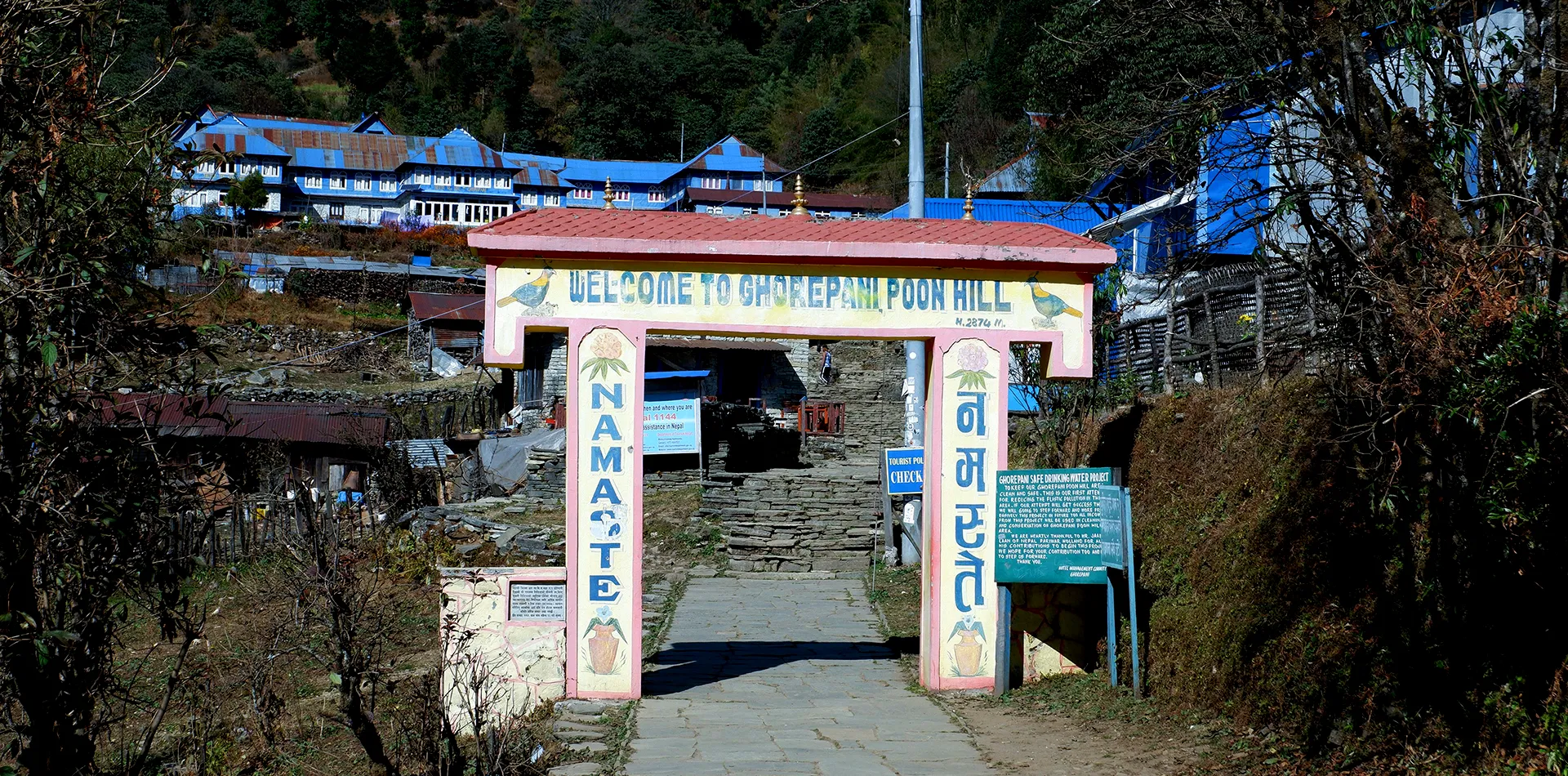
Ghorepani Poon Hill Trek

Duration
7 Days

Trip Difficulty
Easy

Max. Altitude
3,210m

Destination
Nepal

Group Size
1-16 People

Accommodation
Hotel, Teahouse

Transportation
Tourist Bus

Meals
B L D
Explore more facts about the trip
Overview of Ghorepani Poon Hill Trek
The Ghorepani Poon Hill Trek is a fascinating short trek in the Annapurna region of Nepal which offers the perfect blend of natural scenery, cultural interactions, and moderate exercise level. This 7-day adventure offers the opportunity to explore the most beautiful villages of Nepal, terraced fields, Rhododendron forests, and ridge trails, and goes to the iconic, breathtaking viewpoint of Nepal–Poon Hill (3,210 meters).
Trekkers rewarded here with the inch-wide vantage point to view fantastic snowcapped giants such as Annapurna South, Dhaulagiri, Nilgiri and Machhapuchhre (Fishtail) all of them glimmering under the initial light of dawn.
The Ghorepani Poon Hill trek technically begins by driving to Pokhara, which is an overland route to Kathmandu along Trishuli river and through the hilly landscapes and farmlands. Pokhara itself is a peaceful place situated along the bank of the Phewa Lake and the Annapurna and Machhapuchhre mountains can be found in the horizon.
After spending the first night in Pokhara trekkers have the opportunity to relax, spend time in the lakeside environment and get set towards the trekking days ahead.
Cultural experience is one of the most enriching parts of Ghorepani Poon Hill trek. Villages on the path consist of the Gurung and Magar people, who predominantly inhabit Ulleri, Ghorepani, Tadapani and Ghandruk. These races are rich in the history of their culture and are dotted with hospitable people with colorful customs.
During the journey, you will witness locals doing their daily activities which may involve farming, weaving, cooking, or tending livestock thus providing you with a glimpse of the actual living conditions in rural Nepal.
Teahouse accommodations are available in every village and trekkers can enjoy homemade food and simple and comfortable lodging during the journey of Ghorepani Poon Hill trek. The evenings of here are amazing and filled with laughter, joy, telling stories with fellow trekkers or maybe dancing and singing in local traditional ways, and this evening is something you should not miss.
Beginning the third day, the trail fully awakens with masterpieces of nature. When you pass through the rhododendron forests during your trekking in Ulleri to Ghorepani, you will be walking through one of the most beautiful rhododendron forests in Nepal.
In case you trek during the spring (March April) the forest is in the glow of its different moods of red, pink, or white so you trek into a forest blazing with the colors that cannot be described in words, and something that will remain memorable in the journey. The fresh mountain air, the taste of pine, and the melodies of the bird makes each step enveloping and refreshing are often the best things to experience during Ghorepani poon Hill trek.
Upon leaving the Poon hill, the hike goes to the beautiful village of Tadapani, which seems like being settled in between forests and mountains. This is the starting point of the trail which goes down to Jhinu Danda- known for the natural hot springs.
Having been hiking a few days, it is just a reward to take these therapeutic waters. The hot springs are located adjacent to the Modi Khola (river), and it provides a great location to relax, unwind, and rejuvenate your muscles and enjoy the calm of the forest scenery.
The last day of Ghorepani Poon Hill Trek takes you again to Nayapul where a car will be available to drive you to Pokhara. The way back provides an opportunity to digest the adventure, rifle through the memories taken and possibly have a celebratory meal in Pokhara.
The final stretch of the tour takes you back to where you started by shipping in a car hire down to Kathmandu. The trekking is over, but the lyrics you formed remain in the form of the trekking sunrise on top of Poon hill, friendship on the trail, smell of rhododendron forest.
The best way to get a taste of the trekking in Nepal is the 7-day Ghorepani Poon Hill Trek. It is a combination of majestic mountain scenery, cultural experience, and easy to navigate scenery in a small and complete trip. You can experience the sunrise over the Annapurna’s, or soak in a natural hot spring set in a jungle clearing, or stroll along ancient footpaths through centuries-old villages, this trek has it all.
With every step, you’re not just walking through a trail—you’re walking through a story woven from nature, heritage, and human resilience. For those seeking a Himalayan escape that’s rich in beauty but low in difficulty, Ghorepani Poon Hill Trek is a journey worth taking.
- Safety first, always
- Best prices guaranteed
- Expert travel team
- Easy booking, no extras
- Customize your journey
Based on 10 reviews

Trip Highlights
- Scenic drive from Kathmandu to Pokhara along the Trishuli River
- Trek through traditional Gurung and Magar villages
- Walk amidst lush rhododendron and oak forests
- Breathtaking sunrise views from Poon Hill (3,210m) over Annapurna, Dhaulagiri, and Machhapuchhre
- Relax at the natural hot springs of Jhinu Danda
- Panoramic mountain vistas without extreme altitude
- Cozy teahouse stays with warm local hospitality
- Ideal for nature lovers, photographers, and first-time trekkers
Photo and Video Gallery


Ghorepani Poon Hill Trek Detail Itinerary

Day 01: Drive from Kathmandu to Pokhara: Drive using a Jeep
Your journey of Ghorepani Poon Hill Treks starts with the scenic drive from Kathmandu to Pokhara. The journey is along the wavy Trishuli and Marshyangdi rivers, which give magnificent scenery of green hills, water falls, and far away snowcapped mountains.
You are moving through villages in rural countryside and you can witness the routine daily life of countryside and every rhythm of rural Nepal. after your arrival into a beautiful lakeside city of Pokhara where you will check into a hotel and have a relaxing time near the vast calm waters of the Phewa Lake. To start your adventure in the Himalayas, there is no better city than this one full of peace and the lovely views of the Annapurna range. Overnight stay at a hotel in Pokhara.

Activity: 6-7 hrs drive

Max. Altitude: 850m/2,789ft. (Pokhara)

Meal: Dinner

Accommodation: Hotel
Day 02: Drive from Pokhara to Nayapul & Trek to Ulleri
After breakfast in Pokhara, you will drive to Nayapul, from where the trek begins. At this point, your trek commences on a soft track along the Modi Khola River with the reflection of tiny villages such as Birethanti and Tikhedhunga.
Your trail will ascent gradually through the subtropical forests, suspension bridges and terraced fields. The final stretch involves ascending a long series of stone steps leading to the Magar village of Ulleri, set against the backdrop of Annapurna South and Hiunchuli. This first day tests your endurance but rewards you with charming views and cultural encounters. Overnight stay at a teahouse in Ulleri.
Activity: 5–6 hrs
Max. Altitude: 1,960m/6,430ft. (Ulleri)
Meal: Breakfast, Lunch & Dinner
Accommodation: Teahouse
Day 03: Trek from Ulleri to Ghorepani
Today’s journey takes you deeper into the heart of the Annapurna region. The trail ascends gradually through lush rhododendron and oak forests, which come alive with color during the spring bloom. Along the way, you may hear the chirping of exotic birds and see langurs leaping among the trees.
As you gain altitude, the air grows cooler and fresher. You’ll pass small villages like Banthanti before reaching Ghorepani, a picturesque settlement perched high in the hills. The village offers spectacular mountain views and serves as the gateway to the famed Poon Hill viewpoint.
Activity: 5–6 hrs trek
Max. Altitude: 2,860m/9,383ft. (Ghorepani)
Meal: Breakfast, Lunch & Dinner
Accommodation: Teahouse
Day 04: Hike to Poon Hill for Sunrise & Trek to Tadapani (2,710m)
Before dawn, you’ll begin a torch-lit ascent to Poon Hill, one of Nepal’s most celebrated viewpoints and a major attraction of Ghorepani Poon Hill Trek. Reaching the summit just in time for sunrise, you’ll witness a breathtaking panorama of Himalayan giants—including Dhaulagiri, Annapurna I, Machhapuchhre (Fishtail), and Nilgiri—glowing in golden light.
After soaking in this awe-inspiring moment, you’ll return to Ghorepani for breakfast. The trek then continues through dense forest trails, with occasional glimpses of the mountains, as you head toward Tadapani. This stretch offers one of the most scenic forest walks of the entire journey.
Activity: 6–7 hrs hike
Max. Altitude: 3,210m/10,531ft. (Poon Hill)
Meal: Breakfast, Lunch & Dinner
Accommodation: Teahouse
Day 05: Trek from Tadapani to Jhinu Danda
After breakfast, the trail descends steeply through rhododendron and bamboo forests toward the charming Gurung village of Ghandruk. You’ll pass cultivated farmlands and traditional stone houses. The path then leads downhill to Jhinu Danda, located above the Modi Khola.
One of the highlights of the day is the natural hot spring just a short walk below the village. A refreshing soak in these therapeutic waters, surrounded by forest and the sound of the river, is the perfect way to relax after several days on the trail.
Activity: 5–6 hrs trek
Max. Altitude: 1,780m/5,840ft. (Jhinu Danda)
Meal: Breakfast, Lunch & Dinner
Accommodation: Teahouse
Day 06: Trek to Nayapul and Drive to Pokhara
On the final day of Ghorepani poon Hill Trek, you’ll follow the trail along the Modi Khola, passing through terraced rice fields and vibrant village life. The descent is gentle and scenic, offering ample opportunities for photography and reflection.
Reaching Nayapul by midday, you’ll be picked up and driven back to Pokhara. The return to civilization, with lakeside cafes, restaurants, and peaceful streets, feels both rewarding and nostalgic. You can spend the evening exploring the lakeside markets or relaxing in a café.
Activity: 6–7 hrs trek
Max. Altitude: 820m/2,690ft. (Pokhara)
Meal: Breakfast, Lunch & Dinner
Accommodation: Hotel
Day 07: Drive Back to Kathmandu
After breakfast, you board the vehicle for the return drive to Kathmandu. The road retraces the stunning river valleys and terraced hillsides you saw on day one. Upon reaching Kathmandu in the afternoon, you’ll be transferred to your hotel for a well-earned rest.
This marks the end of your Ghorepani Poon Hill experience, if you would like to extend your trip in Nepal, simply let us Know we will be happy to customize trip as per your reference, otherwise, leaving you with lasting memories of Himalayan beauty, culture, and adventure. Wish to serve you in another vacation. Have a good time.
Activity: 6–7 hrs drive
Max. Altitude: 1,400m/4,593ft. (Kathmandu)
Accommodation: Hotel
If our standard itinerary doesn't fully meet your needs, we are happy to tailor it to your specific preferences and requirements.

Includes and Excludes
What’s Included?
- Airport pickup and drop in Kathmandu by private car
- Ground transport from Kathmandu to Pokhara and back (tourist bus or private vehicle depending on group size)
- Hotel accommodation in Kathmandu before and after the trek (standard hotel, twin sharing)
- Teahouse or local lodge accommodation during the trek
- Three meals per day during trekking (breakfast, lunch, dinner)
- Breakfast included in Kathmandu hotel
- Licensed and experienced trekking guide for the entire trek
- Porters as required for your group size
- Guide and porter salary, meals, accommodation, insurance, and transport
- Annapurna Conservation Area Permit (ACAP)
- Trekkers’ Information Management System (TIMS) card
- Basic first aid kit carried by the guide
- Trekking equipment if needed (sleeping bag, down jacket, duffel bag, trekking poles – must be returned after trek)
- Trek completion certificate
- All government taxes and company service charges
What is not Included?
- International flights to/from Nepal
- Nepal entry visa fee
- Lunch and dinner in Kathmandu
- Personal expenses such as bottled drinks, snacks, hot shower, Wi-Fi, and device charging
- Alcoholic drinks and extra beverages
- Personal trekking gear not mentioned above
- Travel insurance (must cover high-altitude trekking and emergency evacuation)
- Tips for guides, porters, and drivers
- Extra accommodation or transport due to road closures, weather, or itinerary changes
- Expenses caused by natural disasters, political issues, strikes, or other unexpected events
- Any service not mentioned in the “What’s Included” section
Departure Dates
Departure Date
Duration
Availability
Price
10 Mar 2026
7 Days
Available
US$ 600
Route Map & Altitude Chart

Trip Information of Ghorepani Poon Hill Trek
Best Time for Ghorepani Poon Hill Trek
Ghorepani Poon Hill trek is the most illustrious in autumn (September to November). The sky is clear, the air is crispy and when the monsoons end the views of other Himalayan peaks all around it like Dhaulagiri, Annapurna-I, Machhapuchhre (Fishtail) and Nilgiri, are really sensational.
It has moderate temperatures in the days and they are rather cold at night, particularly at high altitudes. This season is also marked by great Nepalese festivals like Dashain and Tihar, which makes your trek more colorful due to cultural flavor that surrounds such festivals.
The other good time to trek is in spring (March to May). Rhododendron forests can also be found in these months and are in full bloom with a lot of color adding red, pink and white to the trail. Wildlife is more dynamic and the weather becomes mild and hence the walking conditions are very delightful. The mountain outlooks are generally very much visible and the general nature appears elegant and green.
The monsoon (June to August) is not advisable as the trails are usually wild and wet; it is also not a good time because the visibility is low. But again, it can also be done by the people who will not mind rainy trekking as long as they will feel the quieter path by being well-equipped and ready.
Altitude Sickness and Awareness for the Ghorepani Poon Hill Trek
Altitude Awareness of the Ghorepani Poon Hill Trek Even though the Ghorepani Poon Hill Trek is classified as a moderate trek in terms of altitude, one should be sensitive to altitude variation. Poon Hill, at 3,210 meters, is the highest point of the trek, which is below the normal altitude sickness level. Nevertheless, each person responds differently to altitude and you still may experience some symptoms such as a headache, dizziness, fatigue, or nausea, particularly when you ascend too fast or are not well-hydrated. The altitude ascent of this trek is gradual and your body gets time to adapt to each day.
The most important preventive measures are staying hydrated, eating well, getting rest, and climbing at a moderate level. Alcohol and smoking should be avoided on the trek as it can alter acclimatization. The best remedy is to move to a lower altitude and rest in case any symptoms of Acute Mountain Sickness (AMS) are observed.
Although there is a low probability of the risk on this route, it is important to stay vigilant, knowledgeable, and pay attention to your body. It can also be useful to have a basic knowledge of AMS, and to have medication such as Diamox (ask your physician in advance).
Preparation and Fitness
The Ghorepani Poon Hill trek is perhaps one of the finest short and moderate treks in Nepal which most people can carry out despite their level of fitness. Nevertheless, good preparation makes fun and helps to stay safe. Exercise Health You should not be a professional athlete; however, you must be in good physical condition.
Endurance can also be enhanced through regular cardio activities such as brisk walking, jogging, swimming or cycling a few weeks before your trip. Uphill and downhill trekking also benefit with strength training particularly leg strength training.
Trekking Experience
It is an ideal trek suitable to the first-time trekkers because it is relatively low altitude and has well-maintained treks. With that, previous hiking experience will prove beneficial, especially those who are not accustomed to lengthy walking days or terrain variations.
The Duration of Trek Per Day
You should expect a 5-7 hour per day walking in Ghorepani Poon Hill Trek. Backpack training and engaging in successive long walks will prepare your body and your mind. Mental Preparation Hiking in the Himalayas is not only strenuous; one need to be mentally strong too. There are weather changes, simple accommodation, and rustic routes, which are part of the experience. Positive attitude and patience are the main things.
Hydration and Food
In training, train yourself to be hydrated and to eat balanced meals. Throughout the trek, it is extremely important to drink sufficient water (34 liters every day), and you should not consume alcohol or excessive amounts of caffeine.
Medical Considerations
Altitude sickness is uncommon before 3,000 meters of altitude, but understanding the symptoms is in any case a good idea. In case you experience some pre-existing health conditions (such as asthma, diabetes, or heart disease), you need to consult your doctor before you take the trek.
Equipment Training
Break in your trekking shoes before the trip to avoid blisters. Train with the same backpack you plan to use so you’re used to its weight and fit.
Difficulty for Ghorepani Poon Hill Trek
The difficulty of Ghorepani Poon hill Trek is considered to be moderately easy in nature varying from person to person as of their experience in trekking journey. If you are experienced and have done some of trekking journey before than the Ghorepani could be taken as an easy choice but as beginner and the journey could be a bit harder or at least, moderate to complete.
But in overall the trekking journey of Ghorepani consists of regular and an easier trail and slightly inclined ascends making it an ideal for beginners as well for those who seeks to have a proper Himalayan trekking journey in a shorter period.
Accommodation and Food During the Ghorepani Poon Hill Trek
There are simple teahouses or guesthouses with local families, with a moderate Mongolian dining experience, on the Ghorepani Poon Hill Trek. Such lodges offer simple rooms with twin beds and blankets, and bathrooms are common.
Hot showers could also be provided at extra cost or may be found only in larger villages like Ghorepani and Tadapani. There is electricity and Wi-Fi, which are scarce but may be available in larger stops. The facilities are very basic; however, they are generally decent and clean enough to get some rest and relax after a day of trekking.
Dining on the trek is usually Nepali regular and fattening to give the energy that is required on long hiking days. Dal bhat, a combination of steamed rice, lentil soup, vegetables and meat in some cases, is the staple meal. Other dishes that are common are momos (dumplings), noodles, soups and fried rice. Western cuisine such as pasta, and omelets are also served.
Fresh vegetables and fruits may not be available at higher altitude and this way menus can be simplified. Foods are prepared daily and the meals will be served in regular dining places and even hot drinks are provided Trekkers prefer to have hot beverages such as tea, coffee, or chocolate powders etc. to warm over the cold evenings in the mountains. The food in general is healthy and satisfying, which gives trekkers the energy and makes the journey more comfortable.
Transportation During Ghorepani Trek
The transportation for Ghorepani poon Hill Trek goes up to the Nayapul from the city of Pokhara. Form there the nature trail will appear, as the region is especially for the trekking journey.
The transfer from Kathmandu to Pokhara is done with the private vehicle or in a comfort coach if the number of members is bigger. From Pokhara to Nayapul the transport is managed with shared vehicle or with booked vehicle similier to the coach following the group size.
And until the trekking journey you will not get any or do not need any transport service to use during your journey inside the nature.
While returning from Pokhara to Kathmandu, you will get the same treatment as of what you got while coming to Pokhara with private vehicle or with private comfort coach according to the group size.
Also, with the additional charges, you have an option to upgrade your transfer between Pokhara to Kathmandu from drive to flight enjoying the Areil view of landscapes of Nepal.
Communication During Ghorepani Trek
The communication and internet are a bit off due to the remoteness of geography and the availability of electricity. You can use the local SIM to get the voice and the data connection. The local network providers like Ncell and NTC are both commonly used and offers the best data packs.
But still getting the cellular network is a bit out and is sometimes hard to find the proper signal for both voice and data services.
Alo the WIFI facilities are too costs extra charges in some locations due to the above-mentioned reason of electricity and the remoteness which makes it a very hard task to manage in there. So, you too need to compromise and convince with the services and some struggles to face. But it is too an ultimate experience in such remote places to have with out the modern services to distract you to enjoy the journey.
Packing Gear Checklist for Ghorepani Poon Hill Trek
Packing the right gear ensures a comfortable and safe trek. Here’s a practical checklist organized by categories which will help you and ensure your comfort in Ghorepani Poon Hill Trek:
Clothing
Base Layers
- Moisture-wicking t-shirts (2–3)
- Thermal underwear (top & bottom)
Insulation Layers
- Fleece or down jacket
- Lightweight insulated vest (optional)
Outer Layers
- Waterproof windproof jacket (Gore-Tex or similar)
- Waterproof trousers
Bottom Wear
- Trekking pants (2 pairs)
- Thermal pants for colder nights
- Shorts (optional for warmer days)
Undergarments & Sleepwear
- Quick-dry underwear (3–4)
- Sports bra (for women)
- Pajamas or lightweight sleepwear
Accessories
- Woolen hat/beanie
- Sun hat or cap
- Lightweight gloves (fleece or wool)
- Buff or neck gaiter
- Rain poncho or pack cover
Footwear
- Broken-in trekking boots
- Lightweight sandals or slippers (for tea houses)
- 2–3 pairs of moisture-wicking socks
- 1 pair of warm thermal socks
Backpacking Gear
- Daypack (25–35L with rain cover)
- Duffle bag or rucksack (if porter service is used)
- Dry bags or ziplocks for organizing
Sleeping
- Sleeping bag (rated to -10°C is ideal)
- Sleeping bag liner (optional for hygiene and extra warmth)
Essentials & Accessories
- Sunglasses (UV protection)
- Sunscreen (SPF 50+)
- Lip balm with SPF
- Headlamp with extra batteries
- Trekking poles (adjustable, shock-absorbing)
- Reusable water bottles or hydration bladder (2–3L)
- Water purification tablets
- Quick-dry towel
- Small lock (for lockers in guesthouses)
Toiletries & Hygiene
- Toothbrush & toothpaste
- Biodegradable soap & shampoo
- Wet wipes
- Toilet paper
- Hand sanitizer
- Nail cutter & small mirror
First Aid & Medications
- Basic first-aid kit
- Altitude sickness medication (Diamox, if needed)
- Anti-diarrhea medicine
- Pain relievers
- Blister care (moleskin, Compeed)
- Band-aids & antiseptic cream
Documents & Money
- Passport + copies
- TIMS card & ACAP permit
- Passport-sized photos (2–3)
- Travel insurance
- Cash in NPR (ATMs limited along trail)
Gadgets (Optional)
- Phone + charger + power bank
- Universal travel adapter
- Camera/GoPro
- Offline maps app (Maps.me, Gaia GPS)
Permits and Paperwork for Ghorepani Poon Hill Trek
To trek to Ghorepani–Poon Hill, you’ll need the following official permits:
TIMS Card (Trekkers’ Information Management System):
- Cost: NPR 1,000 for group trekkers; NPR 2,000 for individual trekkers
- Issued by: Nepal Tourism Board or Trekking Agencies’ Association of Nepal (TAAN)
Annapurna Conservation Area Permit (ACAP):
- Cost: NPR 3,000 per person for foreigners
- Issued by: Nepal Tourism Board in Kathmandu or Pokhara
These permits are mandatory and must be carried at all times during the trek.
What to Expect?
- Meals are mostly simple, nutritious, and homemade by local families.
- Dal bhat is usually served twice a day and provides energy for trekking.
- Vegetarian options are available but meat dishes (chicken, yak, or goat) can also be ordered.
- Snacks like biscuits, nuts, and instant noodles are sold at teahouses for quick energy.
- Drinking plenty of water and staying hydrated with tea or soup is important.
- Food prices are slightly higher than in Kathmandu due to transportation costs.
- Bringing some favorite snacks or energy bars from Kathmandu is recommended.
Overall, the food is wholesome and warming, helping trekkers recover and enjoy their journey in the Himalayas.
Most Asked Questions
 General
Can the itinerary be customized?
Yes, we offer flexibility in duration and stops to suit fitness levels or interests.
Can children or elderly people do Ghorepani Poon Hill trek?
Yes, many families and older travelers successfully complete the Ghorepani Poon Hill trek. However, it’s important to consider individual health and fitness levels. Gradual acclimatization and proper rest days are advisable.
What kind of health risks should I prepare for?
Besides mild altitude sickness risk, common issues include dehydration, blisters, and digestive upset. Carry a basic first-aid kit, stay hydrated, and eat well-cooked food.
How do I handle waste and environmental impact on the trail?
The Annapurna Conservation Area has strict rules to protect nature. Always dispose of waste responsibly, avoid plastic, and use eco-friendly products.
What cultural experiences can I expect during Ghorepani Poon Hill trek?
You’ll visit villages inhabited by Gurung and Magar ethnic groups, witnessing traditional lifestyles, architecture, festivals, and hospitality.
 Preparation & Fitness
How physically demanding is the Ghorepani Poon Hill Trek?
The trek involves moderate hiking with some steep sections, especially the climb from Ulleri to Ghorepani and the early morning ascent to Poon Hill. While no technical skills are needed, a reasonable level of fitness and stamina is required to comfortably complete daily hikes of 5 to 7 hours.
 Insurance and Visa
Do I need travel insurance for Ghorepani Poon Hill Trek?
Yes, travel insurance covering medical emergencies, evacuation, and trekking at moderate altitudes is highly recommended.
 Guides & Support Staff
How much luggage can porters carry?
Porters typically carry up to 15 kg (33 lbs) of luggage. Ensure your belongings are securely packed in waterproof bags.
Is tipping expected for guides and porters?
Tipping is customary but not mandatory. Recommended tips are about 10-15% of the total trekking cost, depending on service quality.
 Accommodation and Facilities
What are the accommodation facilities like on the trail?
Tea houses provide basic twin-sharing rooms with simple beds and blankets. Bathrooms are usually shared and may lack hot water, except in larger villages. Facilities improve slightly in places like Ghorepani and Tadapani.
How reliable is the mobile phone network and internet?
Mobile coverage is available in most villages, though it may be weak or absent at higher elevations. Some tea houses provide Wi-Fi for a fee, but connectivity can be slow.
Are there ATM facilities on the trail?
No ATMs are available during the trek. It’s recommended to carry sufficient cash in Nepali Rupees for accommodation, food, tips, and emergencies.
Are there places to charge electronic devices?
Electricity is available in larger villages, but power outages are common. Bringing a power bank is advisable.
 Food and Drinks
Is it possible to get vegetarian or vegan food on the trek?
Yes, most tea houses offer vegetarian meals like dal bhat, vegetable curry, rice, noodles, and soups. Vegan options may be limited but can be arranged by requesting in advance. Th foods are in found in verities in Ghorepani Poon Hill Trek.
Can I drink tap water along the Ghorepani Poon Hill trek?
It’s safer to drink boiled or purified water. Many tea houses provide boiled water or bottled mineral water for purchase.
 Weather & Seasons
How is the weather along the trail of Ghorepani Poon Hill Trek?
Weather varies with seasons and altitude. Spring and autumn have clear, pleasant days and chilly nights. Winter can be cold with possible frost or light snow, while monsoon brings heavy rain and slippery trails.
What happens in case of bad weather or emergencies during Ghorepani Poon Hill Trek?
Your guide will make decisions prioritizing safety, including possible route changes or evacuation. Mobile and radio communication are used in emergencies.
- Safety first, always
- Best prices guaranteed
- Expert travel team
- Easy booking, no extras
- Customize your journey
Based on 10 reviews
Have Questions?
+977 9767224414