
 English
 Dutch
Dutch Japanese
 Hindi
Hindi Italian
 Spanish
 French
 German
 Chinese
 Korean
 Arabic
 Hebrew
 Russian
 Portuguese
 Danish
 Czech
Czech Polish
 Swedish
Have Questions?
+977 9767224414
Unmissable holidays deals - Save up to 20%
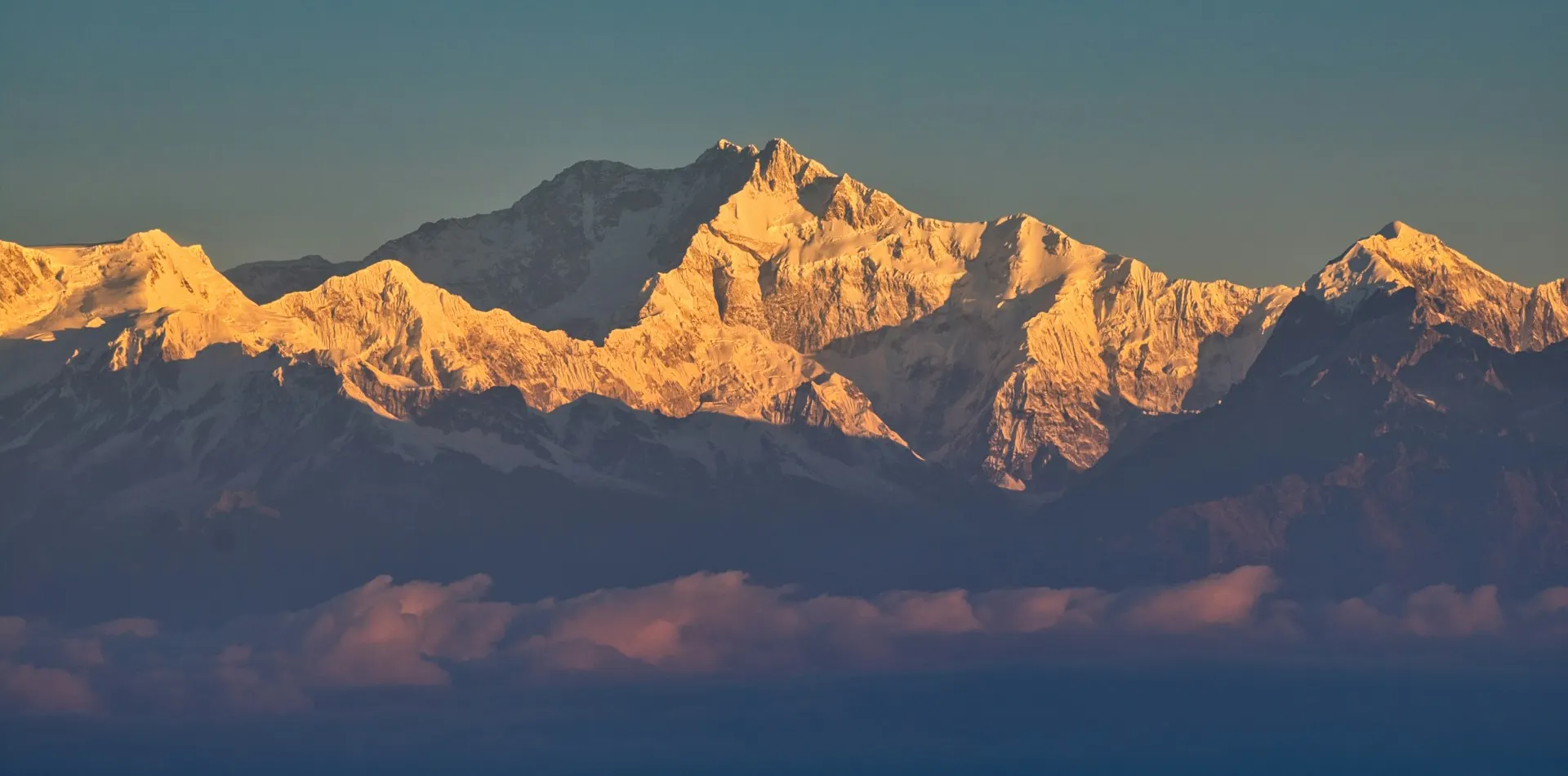
Kanchenjunga Circuit Trek – 18 days

Duration
18 Days

Trip Difficulty
Moderate

Max. Altitude
5,143m

Destination
Nepal

Group Size
2-16 pax

Accommodation
Hotel, Lodge

Transportation
Bus , Flight

Meals
B L D
Explore more facts about the trip
Overview of Kanchenjunga Circuit Trek – 18 days
The Kanchenjunga Circuit Trek is one of the most remote and gratifying upper-level treks in Nepal. Circling the third-highest mountaineer, the trek comprises 2 base camps: North, Pangpema 5143 metres, and South, Oktang 4730 metres. This route gives trekkers a special chance of experiencing both sides of Kanchenjunga, each with its own diversity in scenery and cultural encounters.
To get to the trailhead, one has to fly to Bhadrapur, followed by a drive through Ilam or Kanyam, and another leg to Taplejung, which is the district headquarters and the most common starting point of the trek. This is then followed by a trek on foot since there is no road access, and during the monsoons, the area becomes inaccessible.
The Kanchenjunga Circuit Trek is the tallest, having its climax at Pangpema and some high passes such as Sele Le between Ghunsa and Cheram are a real challenge. The trek is a physically challenging one, as it is long and requires high altitude, and thus, only experienced trekkers will have an easy time on the route.
There is basic accommodation along the trail in the form of teahouses, which have simple rooms with shared facilities. This is followed by Ghunsa, where facilities are fewer and communications are less frequent, with no Wi-Fi and generally spotty mobile coverage.
The permits needed on the Kanchenjunga Circuit Trek include a Restricted Area Permit (RAP) that covers such regions as Olangchung Gola and a Kanchenjunga Conservation Area Permit (KCAP). These should be procured by use of a licensed agency. Morning Star Treks has the capabilities of helping to arrange these permits and work on the logistics to make the trekking experience smooth and well-supported.

Price starts
US$ 2250
US$ 2500
- Safety first, always
- Best prices guaranteed
- Expert travel team
- Easy booking, no extras
- Customize your journey
Based on 10 reviews

Trip Highlights
- Expeditions of the Pangpema (North Base Camp, 5,143 m) and Oktang viewpoint near Ramche (South Base Camp, 4,730 m).
- Less-crowded paths in remote areas that provide a wilderness experience.
- Visit villages, gompas, and monasteries of the Limbu and Sherpa, seeing local culture.
- Smooth, green forested areas, covered with beautiful rhododendrons, appear in the spring.
- Sights of giant mountains such as the Kanchenjunga massif, Jannu (Khumbhakarna), and Tent Peak.
- Cross the Mirgin La complex (Sinion La, Mirgin La, Sinelapche Bhanjyang) between Ghunsa and Cheram.
- The outstanding feature of the trail is that it passes through alpine fields, icebergs, and very high mountains.
- Vigorous path that can reward trekkers with some of the best scenery and cultural enrichment possible.
Photo and Video Gallery


Kanchenjunga Circuit Trek – 18 days Detail Itinerary

Day 01: Kathmandu to Bhadrapur Flight and Drive to Fikkal/Kanyam
The journey begins with an early morning flight from Kathmandu to Bhadrapur, which is 45-50 minutes long. There, you drive about three to four hours straight to Fikkal or Kanyam at around 1,500 metres in the tea country of Ilam.
Kanyam is famous for its rolling tea gardens, pleasant climate, and quiet environment in a peaceful setting. Basic accommodations are provided at comfortable lodges that allow trekkers to rest and acclimatise a bit before the actual trekking.
This smooth warming up would enable you to wind through scenery, bask in the impending foliage, and be ready to face more distant stretches of the Kanchenjunga Circular Trek.

Activity: 45-50 minutes flight &3 tto 4 hours drive

Max. Altitude: 1,500m/4,921ft. (Fikkal/Kanyam)

Accommodation: Lodge
Day 02: Drive from Fikkal/Kanyam to Taplejung/Phungling
The second day of the Kanchenjunga Circuit Trek is dedicated to a scenic 5- to 7-hour bus ride between Fikkal or Kanyam and Taplejung (Phungling) with scenic views of the eastern Himalayas on the way. The road meanders through tea plantations and villages and river streams, ascending step-by-step to reach Taplejung, with an elevation of about 1,820 metres above sea level.
Taplejung is the administrative centre of the trek, and it’s a good time to recheck that all trekking documents and permits are in place with your agency. This will make sure that you have a Restricted Area Permit (RAP) and Kanchenjunga Conservation Area Permit (KCAP) ready prior to the trailhead.
The remaining part of the day is free to be utilised in getting acclimatised to the trekking ahead and also in exploring the town.
Activity: 5 to 7 hour drive
Max. Altitude: 1,442m/4,731ft. (Taplejung/Phungling)
Accommodation: Lodge
Day 03: Drive from Taplejung to Sekathum, Trek Option via Classic Trail
On Day 3 of the Kanchenjunga Circuit Trek, most teams take a rough road to Sekathum via Taplejung, and this takes about 6 to 7 hours. Sekathum is a solid 1,650 metres and is the entry point to the more distant and harder parts of the trek. It runs through terraced fields, small villages, and forested valleys, providing an insight into life in the area.
Traditional trekkers who want to enjoy the old route can go down the lower trail through Mitlung and Chirwa. An addition of more days means less sound and more experience of getting to know the region. Sekathum is a nice resting place with a setup base to acclimatise before proceeding into the Kanchenjunga Circuit.
Activity: 6 to 7 hours drive
Max. Altitude: 1,570m/5,151ft. (Sekathum)
Accommodation: Lodge
Day 04: Trek from Sekathum to Amjilosa
The Sekathum to Amjilosa trail is about 6-7 hours, with a length of a day. The trail starts by climbing through bamboo thickets, forests of oak and other shrubs and grass, and at some points the trail ascends through the open ridges, which provide open airways with tenacious views of the other hills nearby.
Some parts are also steep, and direct care to the footing is required, especially after a rain. Trekkers cross small rivers and farm holdings, revealing the village life of this distant area. After a full trekking day, Mjilosa, located at approximately 2,510 metres, is a sweet camp that offers a simple teahouse facility to rest.
The elevation change is not very steep, yet the path is tricky enough to keep you mindful and active on your way.
Activity: 6-7 hours trek
Max. Altitude: 2,310m/7,579ft. (Amjilosa)
Accommodation: Lodge
Day 05: Trek from Amjilosa to Gyabla
Day 5 is approximately a 4- to 5-hour hike along a path that cuts through lush forest and cascades waterfalls, providing shade and fresh natural environments. The trek then slowly ascends to Gyabla (Kyabla), which is at about 2,730 metres.
This segment is not as steep as the previous day, but some crossings of rivers and some slippery sections occur after rain, so trekking poles can be advantageous.
On the road, trekkers get a taste of the peace of the eastern Himalayas with remote villages through which people practise traditional farming. Gyabla has some basic teahouses where you can stay overnight and which can be used as a departure point for higher altitude treks onwards.
Activity: 4 to 5 hour trek
Max. Altitude: 2,725m/8,940ft. (Gyabla)
Accommodation: Lodge
Day 06: Trek from Gyabla to Ghunsa
On day six, trekkers embark on a 4–6-hour journey into the scenic Ghunsa Valley, taking in alpine forests, rhododendron groves, and farmsteads that still emphasize rural life in the Himalayas.
Ghunsa is an important village at 3,475 meters that hosts a monastery, traditional hydropower, and stone buildings. It is a large stopping point in which trekkers can regroup, replenish, and determine weather conditions before entering more secluded land.
Simple teahouses and a calm environment make Ghunsa comfortable and acclimatizing to more challenging parts of the Kanchenjunga Circuit.
Activity: 4–6 hour trek
Max. Altitude: 3,400m/11,155ft. (Ghunsa)
Accommodation: Lodge
Day 07: Acclimatization in Ghunsa
An acclimatization day is scheduled today, so your body gets readier for the high altitude before you venture into the high pass. Trekkers are also allowed to make short side trips of up to 3,900-4,000 meters, then spend the night in Ghunsa to ensure proper acclimatization techniques.
Ghunsa has quite poor connectivity, no good Wi-Fi, and some intermittent mobile connection, so it is worth saving battery on key tools. Full day acclimatization is quite safe and will help in better performance of the trek.
It trains the trekkers both physically and mentally in advance of the Kanchenjunga Circuit Trek, which is more remote and demanding with high passes and base camp approaches, as well as gives trekkers an opportunity to savor the distinct Himalaya milieu and the local culture.
Max. Altitude: 3,400m/11,155ft. (Ghunsa)
Accommodation: Lodge
Day 08: Trek from Ghunsa to Kambachen
On day 8 of the Kanchenjunga Circuit Trek, we trek about 5-6 hours further up to Kambachen (4,100m). The route goes along alpine woodlands, open slopes, and small streams, and some parts with landslides are to be taken with caution.
The commanding Jannu (Khumbhakarna) looms in the background, providing a stunning landscape and unmatched pictures.
Kambachen is a small, remote village with basic teahouse facilities. Spending time here gives trekkers a chance to relax, acclimatize, and prepare mentally before taking on the more difficult higher passes of the trail, all the while enjoying the quiet glacier scenery of the upper parts of the Kanchenjunga Circuit.
Activity: 5-6 hours trek
Max. Altitude: 4,000m/13,123ft. (Kambachen)
Accommodation: Lodge
Day 09: Acclimatization in Kambachen
Day 9 is for acclimatizing, so that trekkers can settle well in the high altitude. A popular side trip to the optional viewpoint of Jannu provides a beautiful panoramic view of the mountains around.
The remainder of the day is to be spent resting, hydrating, and organizing gear on the difficult days of trekking to come. Sleeping at a lower altitude when hiking at higher altitudes reduces away chances of altitude sickness and improves overall ability to endure the hike.
This day is important to spend in proper acclimatization to the rest of the trekking, it is vital in both terms of safety and comfort through the rest of the trekking to Kanchenjunga Circuit, and also being able to trek the higher camps with fewer risks.
Max. Altitude: 4,000m/13,123ft. (Kambachen)
Accommodation: Lodge
Day 10: Trek from Kambachen to Lhonak
On the 10th Day of the Kanchenjunga Circuit Trek, the path makes a gradual elevation of about 4 -5 hours to reach Lhonak, located at about 4,785 meters. The landscape is rocky and uneven, and trekkers have to pay more attention to their steps as they walk higher and higher up because the air gets thinner and thinner there.
The path is breathtaking with beautiful glacier flows, magnificent mountains, open ridges, and summits. Lhonak is a little, distant village with simple guesthouse facilities, and is the main base camp of trekkers as a rest camp before heading to the North Base Camp. Staying here will help to adjust and to get ready to attempt the day trip to Pangpema.
Staying in Lhonak is serene, an area where one can absorb the stark damage of the high-altitude environment. It is also an ideal place to inspect equipment and take a break before moving to the upper part of the trek.
Activity: 4 -5 hours trek
Max. Altitude: 4,780m/15,682ft. (Lhonak)
Accommodation: Lodge
Day 11: Lhonak to Pangpema/North Base Camp and Back
It is the most interesting day of the Kanchenjunga Circuit Trek with a round trip to Pangpema, North Base Camp, at an altitude of about 5,143 meters. This day is 7 to 8 hours and exposes a windy part that needs warm clothing, boots, and pacing.
The trek to Pangpema is rewarded with spectacular vistas of Kanchenjunga North Face, huge glaciers, and snow-capped ridges. The feeling of achievement is there because this is the ultimate point in the trek.
Trekkers come back to Lhonak to see the view and take photographs, and it is night there. A high level of physical fitness and acclimatization is required, but the views and an extreme feeling of isolation in one of the least visited areas of Nepal are priceless.
Activity: 7 to 8 hours trek
Max. Altitude: 4,780m/15,682ft. (Lhonak)
Accommodation: Lodge
Day 12: Trek from Lhonak to Ghunsa
On Day 12 of the Kanchenjunga Circuit Trek, trekkers will have to retrace their steps back to Ghunsa (via Lhonak), and this trek will take about 6-7 hours. The descent offers simpler breathing since the altitude slowly goes down after the high elevations that were encountered at Pangpema.
The trail goes through known glacial valleys, streams, ridges, and alpine mountains, which is an additional chance to observe the mesmerizing landscape. Trekkers get to enjoy the scenery from another angle and at a higher speed than ascending.
By resting at Ghunsa, it will be quite a relief to have a good night’s sleep in simple teahouses before another tough session. This hike also aids in acclimatization to the gradual change of altitude and helps the trekkers get prepared for the climb to Sele Le the next day.
Activity: 6-7 hours trek
Max. Altitude: 3,400m/11,155ft. (Ghunsa)
Accommodation: Lodge
Day 13: Trek from Ghunsa to Sele Le/Selele High Camp
On Day 13, there will be a 4 to 6-hour walk to Sele Le (or Selele High Camp) that sits at an altitude of about 4,290 to 4,390 meters. The path is steeper than in the previous days, crossing alpine forests and open ridges, and slowly acclimatizing people to the Sele Le Pass, the more difficult part of the trek.
The high camp enjoys a good position of rest, hydration, and gear preparation before the pass day. Trekkers get the beautiful panoramic views of surrounding peaks and glaciers, and so the climb is not only scenic but also fulfilling.
An overnight stay at Sele Le helps the body to adjust to a higher altitude. Both rest and an adequate supply of food are necessary since the next day is one of early mornings and more demanding climbing in order to safely go through the pass.
Activity: 4 to 6 hour trek
Max. Altitude: 4,290m/14,075ft. (Sele Le/Selele High Camp)
Accommodation: Lodge
Day 14: Trek from Sele Le to Cheram via High Passes
This is also one of the most difficult yet the most rewarding days of the Kanchenjunga Circuit Trek. The trail goes across the Mirgin La complex (Sinion La (4,440 m), Mirgin La (4,665 m), and Sinelapche Bhanjyang (4,840 m), depending on the map and local variations).
Trekkers are treated with wide panoramas of Jannu and Kanchenjunga, after which they are forced to descend an ultimate, long length to Cheram (3,870 m). The walk will need a good deal of strength and stamina and will be about 7-8 hours. Cheram is a place of simple accommodation and is the launching point of the southern routes to the bases of the mountains.
Activity: 7-8 hours trek
Max. Altitude: 3,870m/12,697ft. (Cheram )
Accommodation: Lodge
Day 15: Trek from Cheram to Ramche, then Oktang Viewpoint, and return to Ramche
The trail leads us slowly to Cheram through alpine meadows and then to Ramche (≈4,580 m), where the bags are normally left behind before further ascent. Then the path descends into the valley to Oktang Viewpoint (4,730 m), where you can see the close views of the south face of Kanchenjunga and the surrounding mountains.
It is one of the most outstanding parts of the trek when the mountain stays incredibly close. It takes approximately 5 or 6 hours to go round-trip to Oktang. Trekkers usually spend the night at Ramche but can sometimes spend the night back in Cheram when all the lodges are full.
Activity: 5 or 6 hours trek
Max. Altitude: 4,580m/15,026ft. (Ramche)
Accommodation: Lodge
Day 16: Trek from Ramche to Tortong/Torongding
The route today is a steady descent of about 5–7 hours that brings welcome relief after the high passes. The trail drops through alpine scrub and thick forests filled with moss, ferns, and rhododendrons, following the Simbua Khola valley.
By late afternoon, trekkers reach Tortong/Torongding (2,980–2,995 m), a riverside settlement with a handful of teahouses. This point is often confused in older maps as being much lower (2,080 m), but the more accurate altitude is just under 3,000 m.
Activity: 5–7 hours trek
Max. Altitude: 2,980m/9,777ft. (Tortong/Torongding)
Accommodation: Lodge
Day 17: Trek from Tortong/Torongding to Yamphudin via Rani Pul, then drive to Taplejung or Khamdime
This is a long day of walking, 7-8 hours, as the trail gradually descends through beautiful forests to the low-hanging bridge at Rani Pul. Here, there is a last steep ascent to Yamphudin (2,080 m), the first substantial village in the nation’s days.
Yamphudin signals the end of the far-flung trek stretch. The trekker will continue up the road by jeep (dependent on road conditions) at Yamphudin or Rani Pul to Khamdime and then to Taplejung/Phungling.
Max. Altitude: 1,800m/5,906ft. (Taplejung or Khamdime)
Accommodation: Lodge
Day 18: Drive from Taplejung/Phungling to Bhadrapur, then flight to Kathmandu
The coming back starts with an all-day drive of the Taplejung/Phungling-Bhadrapur drive, and this too on the winding roads in the hills. After arriving at the Terai lowlands, trekkers tend to take an afternoon or evening flight to Kathmandu.
In this last transfer, you will have come full circle in the Kanchenjunga Circuit, and you shall end up in the capital after an almost three-week stay in Nepal in the eastern Himalaya.
Max. Altitude: 1,400m/4,593ft. (Kathmandu)
Accommodation: Hotel
If our standard itinerary doesn't fully meet your needs, we are happy to tailor it to your specific preferences and requirements.

Includes and Excludes
What’s Included?
- Flight from Kathmandu to Bhadrapur and return
- Road transfers by 4×4 jeep between Bhadrapur and Taplejung, and Taplethok
- Hotel accommodation in Kathmandu before and after the trek
- Comfortable teahouse or lodge accommodation during the trek (twin-sharing)
- Breakfast in Kathmandu hotel, and three meals (breakfast, lunch, dinner) each day during the trek
- Professional, English-speaking trekking guide and required porters
- Trekking guide salary, insurance, meals, accommodation, equipment, transportation, etc.
- Seasonal fresh fruit during the trek
- All necessary trekking permits and national park entry fees
- Basic medical kit and safety equipment during the trek
- Sleeping bag, down Jacket, walking poles, duffel bags (you have to return after the trek)
- Certificate of achievement at the end of the journey
- Government taxes and agency service charges
What is not Included?
- International flights to and from Nepal
- Nepal entry visa fees upon arrival
- Lunch and dinner in Kathmandu
- Personal expenses such as drinks, snacks, hot showers, Wi-Fi, and device charging
- Travel insurance that covers medical emergencies and helicopter evacuation
- Tips for guides, porters, and drivers
- Extra hotel nights caused by flight delays, early arrival, or late departure
- Personal Travel insurance and emergency rescue evacuation
- Extra cost caused by natural or political disturbances beyond our control
Trip Information of Kanchenjunga Circuit Trek – 18 days
Best Time
The best time of the year to trek to the Kanchenjunga Circuit is during spring (March to May). Days grow warmer, the skies mostly remain clear, and the forests are filled with the blooming rhododendrons. Trails are glowing and vibrant, and this season is famous among trekkers because of its landscapes and flowers.
Late September to November is equally rewarding. The monsoon rainfall will have gone, leaving behind very clean trails and clear skies. This season is characterized by clear mountain sceneries, moderate temperatures during the day, and stable weather, which is why it is the most predictable season to take photos and form longer trekking days.
The winter months (December-February) are more difficult. The upper regions are very cold, and snow would frequently cover the passes. Villages beyond Ghunsa can have teahouses closed down (during the season), so there may be little shelter. In winter, unless you are very, very experienced and highly prepared, it is not prudent to take on the route.
The most unfavorable season is the monsoon (June to early September). The trail can be slippery, there are leeches in the lower forests, and when there is heavy rainfall, landslides become more likely. Clouds also conceal mountain ranges that make the Kanchenjunga Circuit Trek so gratifying. Many trekkers who do not want the solitude of this season avoid it.
One of the details is the Sele Le pass day. This area is the most weather-conscious, and it is closed by snow in winter or early spring storms. It is important to time your Kanchenjunga Circuit Trek properly to prevent heavy snow or rain during a trek.
Elevation & Distance
The Kanchenjunga Circuit Trek is one of the most satisfying treks in eastern Nepal. The northern route via the trail reaches Pangpema, or North Base Camp (5,143 m), and the southern path leads to Oktang (4,730 m) at the base of the steep south face of Kanchenjunga.
The Kanchenjunga Circuit Trek is one of the longest in Nepal as well as one of the most strenuous, covering a distance of 170-220 km, depending on road access and side trips. It is also characterized by continuous ups and downs, gaining or losing more than a thousand meters per day, and this is why it requires pacing and fitness, which are essential.
The path begins at Taplejung (1,650 m at Sekathum) and is steadily ascending into the alpine area of Ghunsa (3,595 m), Kambachen (4,100 m), and Lhonak (4,785 m). On the south route, major pitstops would be Cheram (3,870 m) and Ramche (4,580 m).
Difficulty & Altitude Sickness
The Kanchenjunga Circuit Trek is deemed to be strenuous not only because of the distance and elevation but also because of the remoteness and the lack of facilities. Evacuation is also hard compared to popular trails, further making it hard. The trek is more than three weeks, and there are advised acclimatization days at Ghunsa and Kambachen before moving on to the steep climbs.
Trekkers normally take between four and eight hours out in the field. Some sections are gentle as well as punishing ascents and descents. The most challenging part of the Kanchenjunga Circuit Trek is crossing Sele Le Pass, which may be covered with snow and may be quite slippery, and this requires endurance and peaceful strides.
Another factor is altitude. The risk of Acute Mountain Sickness (AMS) is also real because it has several high points over 5,000 meters. The golden rule is to ascend high and sleep low and give time to rest. It is important to drink lots of water and have rest days. Trekkers must also be prepared to retreat when the adverse effects of headache, dizziness, or lack of breath worsen.
Maximum & Minimum Walk per Day
On the Kanchenjunga Circuit, you should expect the walking hours to differ greatly according to terrain and altitude. During acclimatization days, trekkers typically do only day hikes to higher ground (3 to 4 hours) prior to returning to sleep at a lower altitude. Such shorter walks will allow it to adapt and still enjoy a good landscape.
At the end, there can be long days, such as the push to Pangpema or the crossing of the Sele Le pass, that can take 8 or 9 hours on broken trail. The alternating easy and tough days keep the ratio right as trekkers gear up to reach the high points of the Kanchenjunga Circuit Trek.
Accommodation
The Kanchenjunga Circuit Trek will provide simple lodges and teahouses, most of which are traditional and basic. Rooms are tiny, with shared toilets and very little furniture.
The option is more available at lower villages, but higher camps like Lhonak and Ramche have less space; therefore, it is prudent to make prior bookings during peak season. Some teahouses in winter or during periods of heavy snow are closed, so planning is important.
A sleeping bag is highly advisable, especially for four seasons, as it gets rather cold at night at Kambachen, Lhonak, and Ramche. There are facilities such as hot water and charging points, but they are also shared and limited.
The meals are basic—dal bhat, noodles, and soups—but satisfying. The hospitality and cozy environment help to tone down these kinds of harsh conditions in this challenging trail that is nevertheless worth the experience.
Food & Drink
Foods on the Kanchenjunga Circuit Trek are plain but wholesome. Typical food served by most teahouses includes local staples of dal bhat, noodles, soups, and potato foods.
Meals get cheaper and more filling at lower altitudes and gradually increase in price at higher altitudes and at remote locations. Trekkers tend to depend on calorie-rich meals in the pursuit of their activities throughout the day.
Breakfast consists of porridge, eggs, or bread and tea, whereas lunch and dinner consist of hefty soups, rice, and noodles. Seasonal vegetables and a few meat or lentil curries are used as a way of variety. Muscle food like chocolate, biscuits, and nuts is helpful as an afternoon energy booster.
Consume only boiled or treated tap water sold in teahouses, or personal antibacterial filters, or UV purifiers. Untreated stream water should not be drunk because of the possibility of gastrointestinal illness. A reusable water bottle that features a dependable treatment method ensures that you stay hydrated without any health hazards.
Alternative Routes & Variations
Several route variations are available to trekkers on the Kanchenjunga Circuit Trek, depending on time, fitness, and interest. A popular route is north only, ascending to Pangpema (North Base Camp) and exiting through Ghunsa. This alternative lets trekkers concentrate on the uppermost stretches by bypassing the southern side and saves on the area and time.
The single path to the south leads trekkers towards Oktang, going via Cheram and Ramche. It is suitable for people who are interested in getting plenty of closer views of the southern and eastern aspects of Kanchenjunga with fewer high passes to traverse.
There is also flexibility in start and finish points. Other trekkers start lower in the hills, at Mitlung or Chirwa, and have a gentler rise in elevation, or drive to Sekathum to save time.
Again, exits may depend upon the access of routes to roads, such as exits either in Yamphudin or other alternatives, Khamdime, or further to Khebang or Tharpu. The seasons usually determine the best exits on roads.
These alternatives enable trekkers to customize the Kanchenjunga Circuit Trek according to their time plan and physical ability and to be more or less scenic. With an option of high- or low-altitude views, both offer a highly diverse experience of one of the remotest trekking areas in Nepal.
Can a Beginner Join Kanchenjunga Circuit Trek?
The Kanchenjunga Circuit Trek is considered one of the most challenging treks in Nepal, and it is not advisable as an initial Himalayan trek. The route is isolated and extensive, and there are several high passes that demand stamina and gradual acclimatization.
Compared to other trails like Everest Base Camp or Annapurna, the number of facilities here is limited, and rescue or exit plans may take days.
But even a beginner, with sufficient effort, can achieve it. A person with good fitness, previous experience of multi-day treks, and mental preparation could or should pass, especially with the guidance and assistance of an experienced guide and porter.
A buffer day will allow some recovery of delays due to weather or health issues, and by being sticklers with acclimatization (rest days, gradual elevation, and adequate hydration), risk is significantly mitigated.
A beginner can, of course, go but should first test himself on a shorter route of the Himalaya and then on Kanchenjunga with due preparation. Those willing to take on the challenge get incomparably rewarded with raw scenery, lonesome paths, and sheer views of the third-highest mountain in the world.
Preparation & Fitness
The Kanchenjunga Circuit Trek is challenging, so preparation is an essential accompaniment to safety and fun. A constant 8–12-week program gets the body ready. Start off doing back-to-back treks on the weekend to develop the stamina to trek multiple days in a row.
Adding weighted stair climbs, hill walks, and cardio, such as running, cycling, or swimming, helps with endurance, and strength training allows you to carry a loaded pack at altitude much more easily.
The next crucial aspect is equipment. It is necessary to have sturdy boots, trekking poles, and a four-season sleeping bag. Layering: dress in layers that include a base layer and an insulating and waterproof clothing layer. Headlamps, gloves, hats, and dry bags to cover gear are also required.
Logistics are important as the trail goes through remote spaces. Weather, locally available transport facilities, and contingency days must be planned. By joining a reputable local tour operator, like Morning Star Treks, it is easy to plan the trip. Prepping will help you have the best experience on this tough journey.
Gadget Charging, Internet & Communication
It is difficult to remain connected on the Kanchenjunga Circuit. Some cell phone service is provided in lower villages, but after Ghunsa, it is unreliable and can go out altogether. Wi-Fi on the route is limited and few teahouses and lodges offers it for a small fee.
There is the possibility of charging up gadgets in teahouses, but that is normally by use of solar panels. Since supply is scarce, the price of the teahouses can be nominally charged due to the device or an hourly rate. Bringing spare power banks is highly advised, particularly due to the difference between the actual and theoretical velocity of light, but in this post, we will not be doing so.
Satellite communicators and devices, such as a Garmin in Reach, are the safest modes to enable one to communicate better. It supports the possibility of you sending out check-ins or calling out in case of need. In this remote corner, this additional security can come in and give real peace of mind.
Permits
Trekking the Kanchenjunga Circuit: To trek the Kanchenjunga Circuit, you must have two permits. There is the Restricted Area Permit (RAP) to a region such as Olangchung Gola, Lelep, Papung, and Yamphudin in Taplejung.
The fees are set at US$20 per person per week during the first four weeks and 25 per week thereafter and have to be paid through a government-approved trekking agent in groups of not less than two trekkers and a licensed guide.
A KCAP (Kanchenjunga Conservation Area Permit) is also required. Foreigners pay NPR 2,000, SAARC nationals pay NPR 500, and Nepali citizens pay NPR 100; children under 10 enter free.
The good news is that you can travel without a TIMS card into the restricted areas that are to be covered under RAP.
To most trekkers, this is simple: make arrangements in advance. A solid local operator, such as Morning Star Treks, will provide everything RAP, KCAP, and paperwork, thus you have time to prepare instead of getting mired in permit offices. Just give them your copy of the passport and a few passport-sized pictures of yourself with your planned itinerary, and they will do the rest.
Transportation
The Kanchenjunga Circuit is a combination of flight and overland journey. The surest alternative is by air with a flight to Bhadrapur (Chandragadhi Airport), a low-altitude city in East Nepal that has several flights. Bhadrapur is three to four hours away by road to Ilam or Kanyam and longer over the road to Taplejung, the district headquarters and typical starting point.
Although an airport is available at Suketar, Taplejung, the reliability of flights to this airport is very low, and thus, trekkers tend to use the Kathmandu-Bhadrapur route. Jeep access is now available to shorten sections of the classic Kanchenjunga Circuit Trek, and alternatively, you can get out at Yamphudin or Khamdime, depending on road conditions. Buses operate, but they are very slow and overcrowded, so many trekkers use jeeps. Local companies such as Morning Star Treks are able to book you flights, jeeps, or shared transport.
Insurance
Kanchenjunga Circuit Trek comes with taking appropriate insurance to be safe and secure. All trekkers are required to possess trekking insurance that covers helicopter evacuation and health emergencies up to at least 6000 meters. Such things as accidents or altitude-related illnesses may occur suddenly, and evacuation may be a matter of life and death in remote areas.
You must ensure to carry a copy of your policy and should always have the emergency contacts on hand. Your trekking guide, as does Morning Star Treks, will organize in case of any medical or emergency evacuation scenario. Getting insured is not only a guarantee of professional care but also provides a person with the confidence that unforeseen circumstances will not be problematic since their insurance covers such situations.
What to expect
On the Kanchenjunga Circuit Trek, mornings begin early to make the most of a weather window and stay out of the afternoon clouds. At the top above Ghunsa, facilities are minimal—small rooms, communal toilets, and basic food like dal bhat, noodles, and potatoes. It is important to carry cash because there are no ATMs.
One should respect the local culture. Trekkers walk through Limbu and Sherpa villages, monasteries, and gompas, where niceties, removing their shoes, and taking pictures with the locals are important. The trail is dramatic with landscapes of rhododendron forests and glacier moraines, with rare wildlife sightings of blue sheep or tahr.
Nights at Lhonak, Ramche, and Kambachen may go down to freezing point at high altitude. Adherence to leave-no-trace ideas leaves a low impact. Kanchenjunga Circuit Trek is a beautiful mix of natural Himalayan beauty, along with a cultural experience that could not be easily forgotten with some preparation.
Most Asked Questions
Price starts
US$ 2250
US$ 2500
- Safety first, always
- Best prices guaranteed
- Expert travel team
- Easy booking, no extras
- Customize your journey
Based on 10 reviews
Have Questions?
+977 9767224414