
 English
 Dutch
Dutch Japanese
 Hindi
Hindi Italian
 Spanish
 French
 German
 Chinese
 Korean
 Arabic
 Hebrew
 Russian
 Portuguese
 Danish
 Czech
Czech Polish
 Swedish
Have Questions?
+977 9767224414
Unmissable holidays deals - Save up to 20%
Pikey Peak Trek

Duration
8 Days

Trip Difficulty
Moderate

Max. Altitude
4,065m

Destination
Nepal

Group Size
2-16 People

Accommodation
Hotel, Lodge

Transportation
Tourist Bus

Meals
B L D
Explore more facts about the trip
Overview of Pikey Peak Trek
The Pikey Peak Trek is one of the least-visited trekking destinations in Nepal. One of the best things about this trek is the short itinerary paired with stunning views of the surrounding hills and peaks. This short 8-day trek takes you to the Everest region of Nepal, offering a remote countryside experience, a great alternative to the popular Everest Base Camp trek. Since it is easier than the standard EBC trek, it is a great option for beginners and first-timers.
The trek to Pikey Peak takes you through a culturally rich region. The villages en route are dominated by Sherpa, Rai, Tamang, and Magar communities who are known for their culture and tradition. Each of them has different practices and cultures with vibrant attire and soulful dishes. However, the one thing in common is their warm smile and welcoming traits.
Most of the families in the region are devoted to Buddhism. This can be seen throughout the trek as you will pass by many chortens, mani walls, and a handful of monasteries. We will also get to visit them extensively, appreciating their traditional architecture and intricate interiors. You might also get to join the morning prayer rituals in a couple of the gompas.
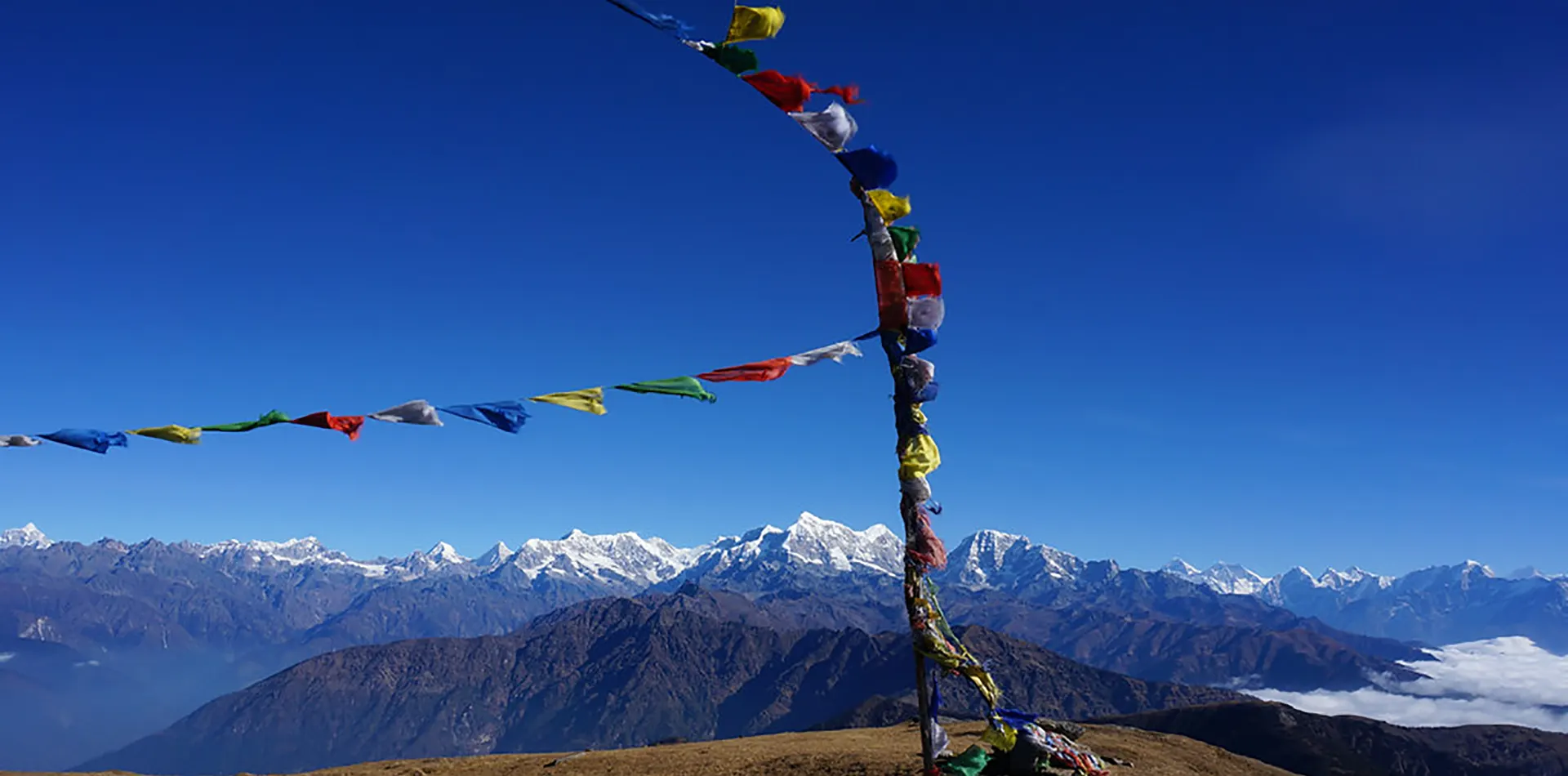
All along the way, you will get to enjoy many stunning scenes of the surrounding landscape. One of the most memorable ones will be the scene from the Pikey Peak viewpoint, the summit of the peak. Reaching 4068 meters above sea level, you will get to see a panoramic scene of Everest, Lhotse, Makalu, Kanchenjunga, Annapurna, Numbur Himal, and more. If you visit the region in spring, you will also get to enjoy a vibrant scene of blooming Rhododendron forests.
Here at Morning Star, we offer a safe and carefully crafted trekking experience so that all you have to do is enjoy the trek and the scenery while everything else is handled by us. To learn more about this trek, go through this detailed article explaining the itinerary, highlights, and everything in between.
- Safety first, always
- Best prices guaranteed
- Expert travel team
- Easy booking, no extras
- Customize your journey
Based on 10 reviews

Trip Highlights
- Stunning sunrise view from the summit of the Pikey Peak.
- Experience the culture of Sherpa people, along with Rai, Tamang, and Magar communities.
- Visit the ancient Thupten Chholing Monastery for a spiritual experience in the Himalayas.
- Trek through lush and vibrant Rhododendron forest, wide open ridgelines, and grazing lands.
- Experience a beginner-friendly trekking experience with natural scenery for days.
- Get to peek inside the daily lives of the locals in the remote countryside of the Everest region.
Photo and Video Gallery


Pikey Peak Trek Detail Itinerary

Day 01: Drive from Kathmandu to Dhap
Starting from Kathmandu, we will have to cover about 230 km of distance to get to Dhap. Our first day on the Pikey Peak Trek itinerary will be full of driving, taking us about 7 to 9 hours to reach our destination. The net elevation gain of the day is almost 600 meters.
Leaving Kathmandu, we will head east and drive over the Araniko Highway. After about 4 to 5 hours on the road, we will stop for lunch at a highway restaurant. Post-lunch, we will continue the drive and soon arrive at Okhaldhunga. From there, we will take a left turn and head north. This road leads us to Dhap.

Activity: 7-9 hrs drive

Max. Altitude: 2,900m/9,514ft. (Dhap)

Meal: Breakfast, Lunch & Dinner

Accommodation: Lodge
Day 02: Trek from Dhap to Jhapare
On the 2nd day of the Pikey Peak Trek, we will cover about 6 km with an elevation gain of about 600 meters. The estimated trek duration of the day is 3 to 4 hours. Starting off, we will get on a remote and dusty trail that leads us all the way to Sigane village. Passing through a recently constructed trail, we will cross a couple of bridges en route.
Soon enough, we will get to a small gompa where you can visit for a short time. You will get to enjoy occasional scenes of Everest, Ganesh Himal, and other peaks in the distance. After a short break there, the trek continues over a well-maintained trail, leading us to Jhapare village, reaching 2815 meters above sea level. There is also a viewpoint north of the village, which we will check out after we check in at our accommodation for the night.
Activity: 3-4 hrs
Max. Altitude: 2,921m/9,583ft. (Jhapare)
Meal: Breakfast, Lunch & Dinner
Accommodation: Lodge
Day 03: Trek from Jhapare to Pikey Peak Base Camp
Day 3 of the Pikey Peak Trek is one of the highlights of the journey; we will cover about 12 km with an elevation gain of about 720 meters. The estimated trek duration of the day is 5 to 6 hours. Post-breakfast, we will begin a gentle climb through a lush forest. This trial leads us to the village of Bhulbhule, where we will take a short break. From there, the trail continues to ascend, and we will arrive at the village of Lahmujhe shortly.
After that, the trail features many ups and downs, and steepens a little as we get closer to the base camp. Eventually, we will arrive at alpine meadows, entering the alpine zone, where the forests are thinner, and the temperature drop can be felt easily. You will get to see Yaks grazing the alpine meadows. Soon after, we will reach a zigzagging trail and pass a Mani wall to reach the base camp.
Activity: 5-6 hrs trek
Max. Altitude: 3,640m/11,942ft. (Pikey Peak Base Camp)
Meal: Breakfast, Lunch & Dinner
Accommodation: Lodge
Day 04: Trek from Pikey Peak Base Camp to Viewpoint, then trek to Lamjura Danda or Jase Bhanjyang
Today is one of the longest trekking days of the entire Pikey Peak Trek itinerary. The trek starts with an ascent to the Pikey Peak Viewpoint. We will start the day before the break of dawn and reach the viewpoint in about 2 to 3 hours. This viewpoint sits at 4068 meters above sea level, offering a 360-degree view of Everest, Lhotse, Makalu, Kanchenjunga, Annapurna, Manaslu, Dhaulagiri, Numbur Himal, and Thamserku.
Paired with the golden hours of the sunrise, this view will be one that will leave a deep imprint on you. After soaking in the sunlight for some time, we will head back to the base camp for breakfast. Descending to Jase Bhanjyang is a 5 km long trek which takes about 3 to 4 hours.
The descent starts with a plain trail over a ridge. Soon after, we will enter a forested section and steeply descend over undulating trails. After reaching Jase Bhanjyang, we will check in at our accommodation for the night.
Activity: 2-3 hrs trek
Meal: Breakfast, Lunch & Dinner
Accommodation: Lodge
Day 05: Trek from Jase Bhanjyang to Junbesi
On the 5th day of the Pikey Peak Trek, we will be on the trails for about 5 to 6 hours, losing 820 meters of net elevation by the end of the day. The total trek distance is about 10 km. The initial part of the trail is well-defined, descending through a forest of rhododendron and pine. During the spring season, these forests will bloom vibrantly with shades of red rhododendron flowers.
Traversing through the forest, we will reach a series of gentle slopes with a few sets of stone steps. Along the trail, we will pass by a handful of Sherpa settlements with views of the peak in the north. Eventually, we will pass by grasslands where cattle can be seen grazing; this is a sign that we are closer to our destination of the day. Continuing the descent, we will soon reach Junbesi, reaching 2700 meters above sea level.
Activity: 5-6 hrs trek
Max. Altitude: 2,700m/8,858ft. (Junbesi)
Meal: Breakfast, Lunch & Dinner
Accommodation: Lodge
Day 06: Trek from Junbesi to Thupten Chholing Monastery and back to Junbesi
From Junbesi, we will have to cover about 4 km to reach Thupten Chholing Monastery. This short trek takes about 2.5 hours, making it the shortest trekking day of the Pikey Peak Trek itinerary. The elevation gain of the day is 200 meters, but we will lose it all after returning to Junbesi. Today’s short trek starts with a gentle walk heading north from the village. Following a well-defined path, the trail ascends steadily and crosses the Junbesi River over a suspension bridge.
From there, we will pass by a tiny village and terrace farmlands with the sounds of the river and nature. Sitting at 2900 meters above sea level, the Thupten Chholing Monastery is a major religious site in the region, offering shelter to hundreds of monks. We will spend some time exploring the gompa, its beautiful interiors and complex exteriors. After a while, we will have our packed lunch before heading back to Junbesi. Retracing our steps, we will descend to Junbesi and spend the night there.
Activity: 2.5 hrs trek
Max. Altitude: 2,900m/9,514ft. (Thupten Chholing Monastery)
Meal: Breakfast, Lunch & Dinner
Accommodation: Lodge
Day 07: Trek from Junbesi to Phaplu via Chiwang
The 7th day of the Pikey Peak Trek features a solid 12 km trek with an estimated trek duration of 6 to 7 hours, which will lose us almost 300 meters of elevation. Departing from Junbesi, the trail heads towards the village of Phalpu, one of the major towns in the region. Gently descending from Junbesi, we will go through a dense forest of oak and pine. This part of the trail is shaded and often covered in moss.
Continuing the descent, we will cross many wooden bridges and enjoy scenic views of the valley. Soon enough, we will reach Chiwang village after about 3 hours of trekking. We will stop there for lunch. From there, we will pass by more Sherpa settlements before reaching Phaplu village. It will take us about 3 to 4 hours to reach our destination for the day.
Sitting at 2413 meters above sea level, this town offers a great range of services and also has an airstrip. This is our final trekking day of the Pikey Peak Trek 8 Days itinerary.
Activity: 6-7 hrs
Max. Altitude: 2,413m/7,917ft. (Phaplu)
Meal: Breakfast, Lunch & Dinner
Accommodation: Lodge
Day 08: Drive from Phaplu to Kathmandu
Today is the last day of the Pikey Peak Trek; after a filling breakfast, we will get on a jeep to take us out of Phaplu. From Phaplu, we will cover about 270 km to reach Kathmandu. This is going to be a 10-hour drive with a net elevation loss of 1013 meters. We will start the drive at around 6 or 7 in the morning. Leaving Phaplu, the road winds down the valley passing by villages, terraced farmlands, and hills. The initial part of the road is bumpy.
After about a couple of hours, we will reach the road that leads us to Salleri. This road eventually connects to the Prithvi Highway. We will have lunch at one of the eateries en route. Before long, we will reach Kathmandu.
Max. Altitude: 1,400m/4,593ft. (Kathmandu)
If our standard itinerary doesn't fully meet your needs, we are happy to tailor it to your specific preferences and requirements.

Includes and Excludes
What’s Included?
- Private vehicle transportation between Kathmandu and Phaplu, both ways
- Hotel accommodation in Kathmandu before and after the trek
- Comfortable teahouse or lodge accommodation during the trek (twin-sharing)
- Breakfast in Kathmandu hotel, and three meals (breakfast, lunch, dinner) each day during the trek
- Professional, English-speaking trekking guide and required porters
- Trekking guide salary, insurance, meals, accommodation, equipment, transportation, etc.
- Seasonal fresh fruit during the trek
- All necessary trekking permits and national park entry fees
- Basic medical kit and safety equipment during the trek
- Sleeping bag, down Jacket, walking poles, duffel bags (you have to return after the trek)
- Certificate of achievement at the end of the journey
- Government taxes and agency service charges
What is not Included?
- International flights to and from Nepal
- Nepal entry visa fees upon arrival
- Lunch and dinner in Kathmandu
- Personal expenses such as drinks, snacks, hot showers, Wi-Fi, and device charging
- Travel insurance that covers medical emergencies and helicopter evacuation
- Tips for guides, porters, and drivers
- Extra hotel nights caused by flight delays, early arrival, or late departure
- Personal Travel insurance and emergency rescue evacuation
- Extra cost caused by natural or political disturbances beyond our control
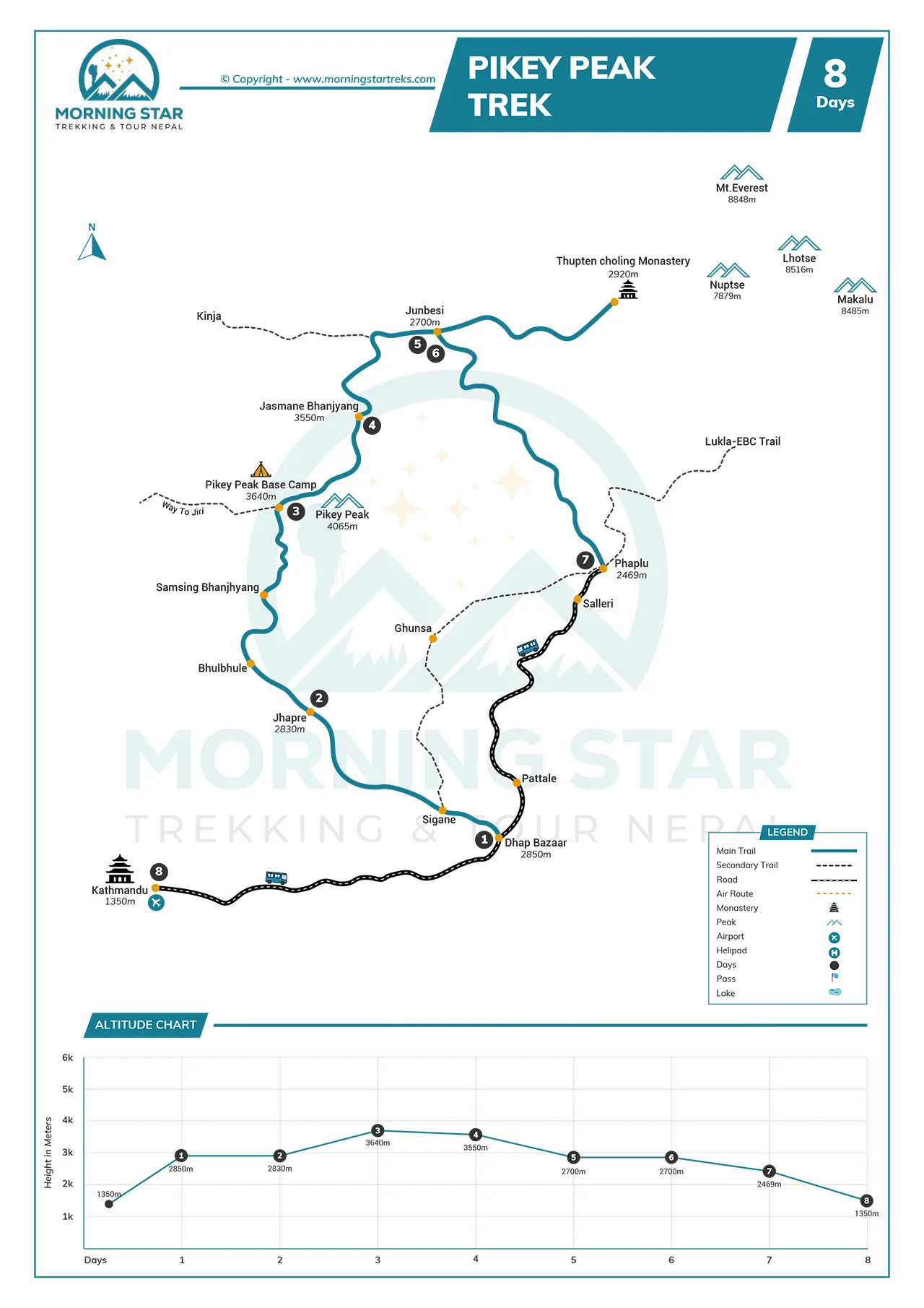
Route Map & Altitude Chart
Trip Information of Pikey Peak Trek
Best season and weather
The best season for doing the Pikey peak trek 8 days is spring and autumn. The highlands of the Solukhumbu region are not suitable to visit year-round since climate and weather conditions are not trek-friendly all the time. During the spring season, the weather remains clear for the most part, and the visibility is great; it is also the time for flowers to bloom, making it a vibrant experience. It is the greenest time of the year, making the landscape scene appear lush and dense.
Likewise, the autumn season is also one of the best trekking periods as it offers minimal rainfall, great visibility, overall dry trails, and stable weather conditions. Autumn is also the season of festivals in Nepal. You will get to see many celebrations, especially during your time in city areas. Regardless of the season, the highlands’ weather conditions are often unpredictable because of the afternoon winds that bring in clouds and rain.
Difficulty
The Pikey Peak Trek 8 days is a moderately difficult trekking destination. This trek features a couple of exhausting ascents and high elevation hikes, but they are very manageable. The porters will carry your heavy bags while the trek guide will make sure that you are on the right path. The trails themselves are not technically challenging, nor are they very physically demanding. Our trek experts and guides have given this trek a 7 out of 10.
Altitude Sickness
Altitude sickness starts from 3500 meters above sea level, but it does not have major effects until we reach around 5000 meters of elevation. This will keep us safe from the harmful effects of altitude sickness since this trek reaches a maximum height of 4068 meters at the Pikey Peak viewpoint. For most of the Pikey Peak Trek 8 days, we will be under 3500 meters of elevation. We will only spend 2 nights above 3500 meters.
Preparation and Fitness
Preparing for the Pikey Peak Trek 8 days is easy. You just have to prepare a 6 to 8-week training period plan where the main focus should be endurance training and leg muscle workout. Cardio workout plans are the best option since they engage your core, your legs, and also increase your stamina. If you are some who is physically active on a daily basis, preparing for this trek should be a breeze.
This trek requires you to trek an average of 4 to 5 hours per day, which is physically demanding. So, make sure that you are well-prepared for this journey to the Himalayas. Being underprepared will have you struggle to reach the daily destinations and the ascents we will have to cross en route. If you are a gym goer, using a treadmill and a ladder machine is the best way to train.
Food and Accommodation
Your breakfast options during the Pikey Peak Trek are Tibetan bread, pancakes, eggs, cornflakes, porridge, with a warm cup of tea or instant coffee. The lunch and dinner options are Dal Bhat (Rice, lentils, and veggies/meat), momo, thukpa, chowmein, pasta, noodles, stir-fried veggies, different types of curry, veg stew, dry-aged meat, etc. While there are many local dishes available, the aforementioned are consistent meal options. You can always go for regional and local dishes if you have the option.
Vegetarian options are mostly available throughout the trek, and we recommend that every trekker not eat meat during the trek. Some of the meat is carried on the back of cattle for a day or two to reach your plate, which is not a hygienic and germ-free way to transport raw food. Staying away from meat products, unless it is dry-aged meat, is the best and safest way to ensure your stomach does not suffer.
Tea houses, lodges, inns, and homestays are the only accommodation options in the highlands of the Solukhumbu district. Since this trek passes through a seldom-visited part of the Everest region, the services and infrastructure might not be equally great. Every room we arrange for your stay is based on a twin-sharing basis; if you want a private room, you should request it at the booking phase. Private rooms will be an additional expense for you.
The tea houses do not offer attached bathrooms or heated bedrooms; the facilities are very basic. Hot showers will cost you a few bucks, and so will device charging and WiFi connectivity. Blankets are provided at every night stay accommodation.
Transportation
All the ground transportation, including the drive from Kathmandu to Dhap and the drive back to Kathmandu from Phaplu, is a part of the Pikey Peak Trek package. You do not have to pay extra for the transportation unless you are tipping the driver; tips are not covered by the package. Please note that flights are not a part of the trek package.
Communication
At the lower region of the Pikey Peak Trek 8 Days, you will have good mobile network connectivity, but as we gain elevation and head deeper into the valley, the network strength diminishes completely. You will not have any reception after day 2 until we reach Junbesi on day 6. If anyone in the group needs immediate medical attention, the trek guide will contact the emergency services via a satellite phone.
Permit
The permits required for this trek are the Gaurishankar Conservation Area Permit (GCAP) and a TIMS card (Trekkers’ Information Management System). Both of these permits are a part of the Pikey Peak Trek 8 Days package. The permit fees will be covered by the package.
Visa
Your visa fees upon arrival in Nepal are not covered by our package. Depending on your intended days of stay, you need to pay your visa fees at the bank counter beside the immigration section. They accept international card payments, but they might not work at times, so it’s recommended to carry some cash.
Travel Insurance
Travel insurance is a must for this trek; without being insured, we can not take you along. Your insurance fees are not covered by the Pikey Peak Trek 8 Days package. Make sure that your insurance covers medical expenses up to 4000 meters of elevation.
Extra Expenses
Expenses such as extra meals, additional night stays, travel insurance fees, emergency medical services, accommodation in Kathmandu, flight fares, visa fees, any kind of beverages, tips for the crew members, and other things not mentioned as included are your extra expenses.
Private vs. group trek
In a private setting, you can go on this beautiful Pikey Peak Trek 8 Days with your close ones, your friends, your partner, your parents, your kids, etc. You can choose the number of members in the group and the people who will be joining the trek group. Meanwhile, group trekking is a mix of random trekkers who want to go on the same trek. Group trekking is cheaper in comparison to a private trek.
Most Asked Questions
 General
How long does the Pikey Peak Trek take to complete?
In general, a trek to Pikey Peak can be completed in 7 to 10 days, depending on the itinerary taken.
Are there any restrictions on drone usage for photography on the Pikey Peak Trek?
Yes, there are restrictions on drone usage. You need to have special permits to fly a drone inside the Everest region.
Is the Pikey Peak Trek suitable for beginners?
The ascents are tiring, but not heavily physically demanding, and most of the nights are spent under 3500 meters, making it a beginner-friendly trek.
How does the Pikey Peak Trek compare to other Everest region treks like Everest Base Camp?
The Pikey Peak Trek 8 Days is a much simpler trekking experience compared to Everest, and the region is much less crowded as well.
What is the best way to communicate with family back home during the trek?
If you really need to communicate with your family back home, you can use the satellite phone to call them.
 Preparation & Fitness
What gear and clothing should I pack for the trek?
You should pack a sleeping bag, gaiters, rugged trekking shoes, layers of clothing, including a base layer, mid layer, and an outer layer. Other essentials include sunscreen, sunglasses, a beanie, trekking poles, etc.
What fitness level is required for the Pikey Peak Trek?
An average fitness level should be enough for this trek. You should be able to walk 5 to 6 hours daily without any major setbacks.
What specific exercises should I do to prepare for the steep ascents?
You can just use the ladder climbing machine at the gym or go on a similar incline hike to a nearby hill.
Should I practice using trekking poles?
There is no need to practice using trekking poles; it will come to you naturally as you move your legs and hands to walk.
How many days of acclimatization are recommended before reaching the Base Camp?
Acclimatization days are not required to reach the base camp since it sits at just 3640 meters above sea level.
 Insurance and Visa
Do I need a visa to trek in Nepal for the Pikey Peak Trek?
Yes, a visa is the first step to get started on your journey to the Himalayas. Without a visa, you can not enter the country and explore the beautiful, remote villages of the Everest region.
Does travel insurance need to cover emergency helicopter evacuation for the Pikey Peak Trek?
Yes, the insurance provider should cover the emergency evacuation costs.
What type of travel insurance is required for the Pikey Peak Trek?
There are many travel insurance policies for trekking adventures, just choose one that covers high-altitude risks such as altitude sickness and natural calamities.
Are there any age restrictions for obtaining trekking permits for Pikey Peak?
No, there are no age restrictions for obtaining trekking permits for Pikey Peak.
What documentation should I carry to prove insurance coverage during the trek?
You can just carry the physical insurance certificate to prove insurance coverage during the trek.
 Guides & Support Staff
Can I trek without a porter, and what are the benefits of hiring one?
Yes, you can not trek without a porter, but the heavy weight of the luggage might slow you down. The main benefit of hiring a porter is that you can focus on the trek while someone else takes care of the luggage.
How do I ensure the guide I hire is familiar with the route?
An experienced guide will tell you all the info about the sites en route and alternative routes you can go for.
What is the standard tip amount for guides and porters on this trek?
There is no standard tip amount for guides and porters; trekkers are expected to tip as much as they are comfortable with.
Can porters carry personal items like camera gear?
Yes, they can carry your personal items too, but we recommend trekkers carry them in their own day pack for safety reasons.
 Accommodation and Facilities
How reliable is the availability of hot showers in teahouses along the route?
While hot drinking water is almost readily available, hot showers are prepared based on requests.
What are the accommodation options like on the trek?
Your accommodation options are limited to inns, lodges, tea houses, and homestays. The best option is tea houses since they cater to trekkers the most.
Can I expect Wi-Fi or charging facilities in teahouses?
No, most of the teahouses do not have Wi-Fi connectivity, but you will be able to charge your devices.
 Food and Drinks
Is clean drinking water readily available at teahouses?
No, clean drinking water is not readily available at teahouses. We recommend using water purification tablets every time you refill your water bottle.
Are vegetarian options consistently available at teahouses on this trek?
Yes, you will find mostly vegetarian meals in comparison to meat options.
What is the typical cost of meals at teahouses during the trek?
There is no one-size-fits-all answer for this question because the price changes with the increment and decrement of altitude.
 Weather & Seasons
Are there any seasons to avoid due to weather conditions?
You should avoid doing this trek in winter and the monsoon, since the cons are way too many and the experience will not be a good one.
How likely are trail closures due to snow during late autumn?
While it is not highly likely, the possibility of closures is never zero since the weather conditions can be unpredictable in the highlands.
What are the typical daytime and nighttime temperatures in spring?
The average daytime temperature is 10°C to 17°C, while the nighttime temperature can reach 5°C or below.
Are microspikes or crampons necessary in early winter?
Yes, microspikes or crampons are necessary during the early winter season since snowfall can occur anytime.
 Health & Safety
What are the risks of altitude sickness on the Pikey Peak Trek?
The risks of altitude sickness on this trek are very low. In addition to that, we will also practice the preventive measures and acclimate well.
Are there medical facilities available along the trek route?
There are a couple of health posts at every will we stay at, but these facilities are limited in equipment and health workers.
Are there specific vaccinations recommended for trekking in the Solu Khumbu region?
No, there are no such things required to trek to the Solu Khumbu region.
How can I identify early signs of altitude sickness?
Early signs of altitude sickness include a slight headache, nausea, shortness of breath, etc.
What precautions should I take to avoid foodborne illnesses at teahouses?
You should avoid having meat items unless they are approved by the guide to be safe for consumption.
 Booking & Payment
What is the refund policy if I need to cancel my trek?
Canceling the trek does not return you the full deposited amount; a certain amount will be held as a service charge since the preparation work begins from the moment of booking.
Can I book the trek independently, or is a tour operator required?
If you can find a licensed guide willing to take you on a trek, you do not need a tour operator. However, this can be risky since you do not know who the guide is, and if he is an authentic license holder, so a tour operator is the best way to book.
What are the typical deposit requirements for booking?
We require at least a 50% deposit after you book the trek with us.
Are there penalties for changing trek dates after booking?
If you decide to change the date on the same day as the booking, there likely will not be any penalties. The later you change the date, the more penalties will be charged.
Can I get a partial refund if I complete only part of the trek due to unforeseen circumstances?
No, that is not how standard refund policies work. Your trek package payments are spent on booking rooms, meals, paying for permits, daily wages of the porters and guides, etc.
 Transportation & Flight
What are the transportation options for the return journey from Phaplu to Kathmandu?
The only transportation options from Phaplu to Kathmandu are land transportation and a short 45-minute flight.
How reliable are bus schedules from Phaplu to Kathmandu?
The schedules are not exactly on time, and there are delays when leaving.
Are there private jeep options from Junbesi to Phaplu for faster travel on Day 7?
No, there are no private jeep options from Junbesi to Phaplu. Everyone must trek to Phaplu.
Can I book a flight from Phaplu to Kathmandu?
Of course, you can opt for a flight instead, but this will be charged separately.
Is airport pickup and drop off included in the Pikey Peak Trek 8 Days package?
No, we will not pick you up or drop you off at the airport.
- Safety first, always
- Best prices guaranteed
- Expert travel team
- Easy booking, no extras
- Customize your journey
Based on 10 reviews
Have Questions?
+977 9767224414